She shared that this Soviet mechanical calculating machine was purchased by her husband at a flea market for a symbolic price. “He passed away a year ago, but I keep this calculator as a memory of him and that era. This mechanical device, known as 'Iron Felix', was named after Felix Dzerzhinsky,” Aizhan said.
It is known that calculating machines were produced from 1929 to 1978, with a circulation of several million units. The main factories that manufactured these calculators were located in Kursk, Penza, and Moscow. This is not a modern gadget with electronics — it performs four basic arithmetic operations: addition, subtraction, multiplication, and division. More "advanced" models, such as the "Felix-M," which Aizhan has, can work with fractions. For calculations, levers were used to input numbers, and turning the handle performed the operations: one turn for addition or subtraction, several turns for division and multiplication.
“My husband bought this calculator about eight or ten years ago at a flea market. He came home with such joy and said, 'Do you know what I brought you? This is the very first calculator.' I work as an accountant, but I didn’t know about such things. I started looking for information online. He was always interested in unusual items. He bought it for 100 or 150 soms. I was very intrigued by this rarity and wanted to touch it. Previously, people used paper and logarithmic rulers for calculations, and some bought mechanical calculators to simplify their work. The last of such calculators was produced in 1978, marking the end of the era of calculating machines. I want to note that I don’t know how to calculate on it, but it functions — all the gears and levers work. If one desires, they can learn; there are tutorial videos online. This is truly an example of Soviet quality: after half a century, the device is still operational, and it doesn’t require lubrication. The main thing is that it doesn’t need electricity or solar panels to work. It even has a price indicated — 15 rubles. My 'Felix' was produced in 1970 and weighs three and a half kilograms,” Aizhan shared.
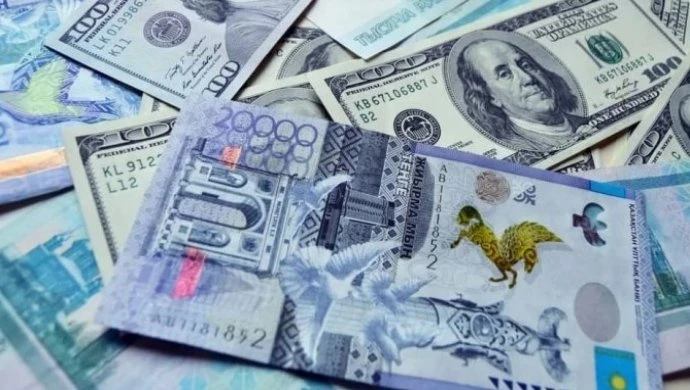
In addition to the calculator, her collection includes other interesting antique items, including a spinning wheel that was gifted to her by an elderly neighbor. The family also preserved one of the first defective national banknotes with the image printed upside down.
Aizhan is so passionate about vintage items that even her wall clock is made in a retro style.
“If you have items from the USSR stored in your garage, at your dacha, or in the attic, don’t rush to throw them away. You might possess something that will interest collectors. Many of these items are commonplace for us; we are used to them. Often, unique specimens can be found at flea markets for very low prices. For some people, strolling through antique markets is like a sport or fishing. I understand collectors of antique items. Each antique piece holds the history of its owner. Many of us have relatives who carefully preserve items connected to their ancestors, and they don’t have to be expensive — sometimes they are just trinkets. Such items can hold memories even better than photographs. For example, girls might have powder compacts or mirrors that their grandmothers or great-grandmothers used. There is something magical and mysterious about this,” she added.
Aizhan believes that touching the past is a wonderful way to feel a connection to history. Without this past, it is impossible to understand the present and the future.
So why should modern people turn to history and study it? For some, it is an opportunity to avoid repeating mistakes; for others, a way to indulge in nostalgia. Old things remind us that time cannot be turned back…