He was born on August 2, 1962, in the village of Choloq-Kayin. He completed his studies at Lenin Secondary School No. 1 (now named after Berdaly Kalenderov) up to the eighth grade, after which he continued his education at a vocational college in Naryn.
After successfully graduating from the vocational college, Mambetkalyy enrolled in the Industrial Pedagogical College in Karaganda (Kazakhstan). Later, on April 4, 1981, he was drafted into the Soviet Army and sent to Afghanistan, having completed a two-month course in Samarkand (Uzbekistan). His participation in combat operations lasted two years and one month, after which he returned to Karaganda to complete his studies. He began his professional career as a master of industrial training at vocational educational institution No. 27 in Frunze (now Bishkek), and later worked as the deputy head of a department at the Frunze factory.
With the collapse of the USSR and the formation of farming enterprises, Mambetkalyy returned to his native village, where he became a labor and pre-military training teacher at the school named after Berdaly Kalenderov. In 1996, he received a plot of land in the village of Zherge-Tal and settled there. Currently, Mambetkalyy works as a security guard at the "Aruu-Nur" kindergarten, engages in beekeeping, and produces honey. Together with his wife, they are raising six children — three sons and three daughters. For his merits, Mambetkalyy was awarded the titles of "Honorary Citizen of the Village of Zherge-Tal" and "Honorary Citizen of the Ak-Talinsky District."
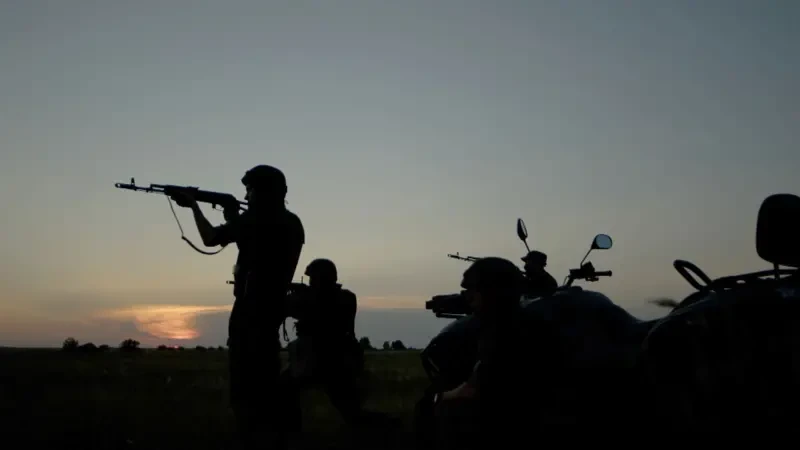
According to Artykov's recollections, he arrived in Afghanistan on June 5, 1981. "First, we were taken to Kabul, and then sent to the 66th Motorized Rifle Brigade in Jalalabad, where I served as a grenade launcher. For good performance in service, I was promoted to the rank of junior sergeant, and later became a sergeant. In 1983, I found myself in the province of Asadabad. Perhaps many know the film '9th Company,' and it was in this company that I served. I was part of a group that organized ambushes. If intelligence indicated the movement of a convoy or a concentration of enemy forces, we would take positions under the cover of night. During my service, I often found myself in ambushes; it was a real 'snake's den' where there was no opportunity to rest.
The events depicted in '9th Company' correspond to 80-85% of what we experienced. When you are eighteen and young guys, who have not known life, are dying next to you, and you see their mutilated bodies and the wounded, it is beyond words... Carrying the bodies of the dead and wounded across the mountain slopes was extremely difficult," recalls the veteran.
Fifteen days after arriving at his place of service, Artykov was sent on a mission. "On the way to the destination, enemy fire began. For me, a guy who had never seen such fire, it was shocking. I looked for cover, but soon the company commander, a Kazakh who has since risen to the rank of general, shouted: 'Get up, take cover among the rocks!'. The shooting intensified, and once I regained my composure, I managed to run to the rocks. Later, my comrades noted that bullets flew a meter away from me. At that moment, I felt a strong fear, but gradually, after several encounters, the fear dissipated. However, as demobilization approached, I became more cautious, trying not to die in my two years of service," shares Mambetkalyy's memories.
According to Artykov, he spent most of his time on combat missions. "When we returned to the unit, we stayed there for only 4-5 days, and then went back to the mountains for weeks and months. Once, after a long mission, we engaged in a battle with the enemy at a distance of 20 meters from each other. There were only 90 people in the company, and after the clash, only 28 remained alive. We had guides, local Afghans, who wore our uniforms and accompanied us. After the assignment, they disappeared from sight. In one of the battles, we encountered the enemy at a distance of 15-20 meters, and we had the feeling that we were deliberately led into an ambush. The shooting came from the opposite bank of the river, but thanks to good positions, we managed to avoid significant losses. One Kazakh soldier, unfortunately, received a fatal wound," he recounts.
"When we returned to the unit, our compatriots from the Kyrgyz organized a celebration. They waited for us on a hill, and upon seeing us, they tossed their hats in the air, shouting: 'Oh, dear Kalenbay, have you returned safely!'. The joy of the meeting was indescribable. They welcomed us, set a table with the available food, and asked us to tell about our mission," says Mambetkalyy.
This year marks the 35th anniversary of the withdrawal of Soviet troops from Afghanistan, as well as 45 years since the beginning of the war. Mambetkalyy became a beekeeper after returning from Afghanistan when his health deteriorated. "I suffered from insomnia and headaches, and underwent treatment courses at a hospital for Afghan veterans. During one of the courses, I came across a book on beekeeping and learned about the beneficial properties of honey. This piqued my interest," he shares.
Mambetkalyy completed courses in beekeeping and currently manages 50 hives. "Doctors are surprised at how I managed to restore my health. Even in Islam, it is said that honey heals many ailments. I used to sleep for 2 hours, but now I sleep up to 8 hours," concludes the veteran.