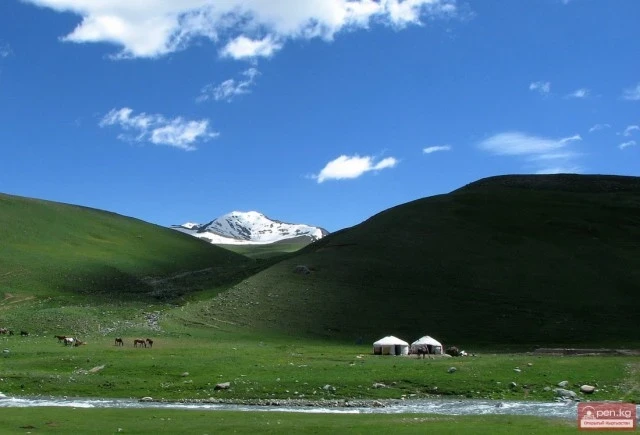
Previously, this settlement was called Epkin until it was named after the Minister of Finance of the Kyrgyz SSR.
The correspondent of Turmush was informed about this by the head of library No. 5 in the village of A. Toktonaliev.
According to her information, historical data about the village were collected in works written by Zhyldyzy Ermekovna Sagynbekova, the head of the local club. During the period of the Russian Empire, before the Great October Socialist Revolution, Russian settlers from central Russia began arriving in the Chui Valley with the aim of Russifying Kyrgyz lands. Initially, they settled in places such as Kalinovka, Kegeti, Yurievka, and Gorno-Serafimovka.
After the I Congress, which took place in 1921 in Verny (Semirechye), the Russians living at the foot of the mountains were resettled to the valley. In 1925, among the first settlers to arrive in Epkin was an elderly man named Sultan. In 1930, the artel "Orto-Zhol" was established, headed by Ablas Zhantaev, a native of Epkin, who was sent to study in Frunze in 1926 by Kantkom.
In 1931-1932, the artel was renamed the cooperative "Epkin," and Samanchy Osmonbekov became the chairman. Among the activists who actively participated in the life of the village were Muratbek, Samanchy, Yzagaaly, Murzakmat, Sulaymankul uulu Syrdybek, Daiyrbek Karmysakov, teacher Altynkul, and Baisabay uulu Duyshobay. The youth union "Zhylyu-Suu" was founded on June 3, 1927, on the territory of modern Epkin.
From 1935 to 1937, the collective farm "Orto-Zhol" was headed by Temirbek Madiyarov, and from 1937 to 1939 — Bugubaev Zhapар.
Between 1940 and 1942, Ukrainians were resettled to the village, and during this time, one of them became the chairman. During the war, when the men went to the front, from 1942 to 1944, the chairman remained Ukrainian Korniyenko. In 1945-1946, the position was held by Kara Niyaz. In 1945, Epkin was divided into two villages — Epkin and Kalinin. After that, among the leaders were such figures as Urkunchu Artykbaev, Sabyrbek, Ismail Egemberdiev, Medet Moldobaev, Esen Choybekov, and Chotaly Kulzhabaev.
In 1950, the collective farms Kalinin and Epkin were merged into one called "Kalinin," with Zainidin Niyazov (Sakpay) as the chairman. From 1951 to 1954, the position was held by Baiteliyev Zarlyk, who significantly contributed to the electrification and provision of clean water to the village. From 1954 to 1958, it was led by Abdyrazak Shambetov. In the spring of 1958, the collective farm "Kalinin" was transformed into a state farm of the same name, and the first director was an Uzbek by the surname Afidjanov, known for writing with his left hand.
From 1961 to 1963, the state farm was headed by Bokonchiev, then from 1964 to 1968 — Oginsky, from 1968 to 1976 — Jumai Sydykov, then in 1976-1977 — Mambetov, and from 1977 to 1979 — Tenti Isakov. Throughout the 1980s and 1990s, the longest-serving chairman was Sagyndyk Bazarkulov.
After the collapse of the state farm "Kalinin" in 1991, the temporary leader became Turdubek Andashev, who worked until January 1992. In 1992, the cooperative "Epkin" was reorganized, and Gazinur Dumanaev was elected as the chairman. In 1994, Boloтbek Osmonbekov became the chairman of the cooperative. In 1995-1996, the residents of Epkin received their land shares, and the village began to divide into small farms. In 1993, the village of Epkin was renamed the village named after Aliaskar Toktonaliev.
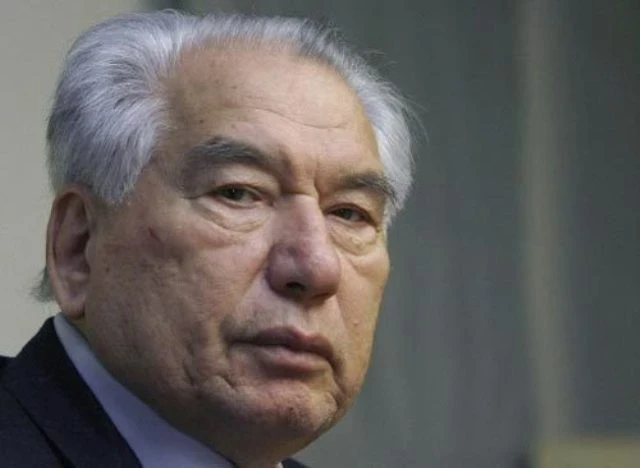
Who is Aliaskar Toktonaliev?
Aliaskar Toktonaliev, born on May 24, 1929, in the village of Epkin, was an outstanding Soviet Kyrgyz statesman who served as the Minister of Finance of the Kyrgyz SSR from 1960 to 1986. He graduated with honors from the Tashkent Financial and Economic Institute and began his career as a senior inspector for human resources in the State Insurance system. Just six months later, he became a senior economist in the financing department of the housing and communal services and road transport of the Ministry of Finance of the Kyrgyz SSR, which allowed him to head a department in the ministry at the age of 23.
In 1955, he took the position of head of the finance department of the Frunze City Executive Committee, then the head of the finance department of the Jalal-Abad Regional Executive Committee. After the merger of the region with the Osh region, he became the deputy head of the finance department of the Osh region. From 1960 to 1985, he served as the Minister of Finance of the Kyrgyz SSR, during which time the financial and economic system of the republic underwent significant changes.
Aliaskar Toktonaliev is remembered as the youngest minister in the history of Kyrgyzstan, having taken office at the age of 30 in February 1960 and serving for nearly 26 years.
The first secretary of the Central Committee of the Communist Party of Kyrgyzstan, Turdakun Usubaliev, emphasized the importance of figures like Toktonaliev for the history of Kyrgyzstan, noting that "they should be known and remembered by future generations, as such people are the elite and pride of the nation."
Infrastructure and Population
The village named after A. Toktonaliev has 10 streets: Tümönbay, Sagyndyk, Chotaly, A. Chokoev, A. Toktombaev, Madiyar, Naizabek, Orozaliev, Z. Niyazov, Soltonkul, S. Ryspaev, Abdrasak, and Sultanaliyev.
The village has a school, a health post, a kindergarten, a library, a club, and several other social facilities.
As of 2025, the population of the village named after A. Toktonaliev is approximately 2400 people, with about 400 households. The main activities of the local residents are livestock breeding and agriculture.