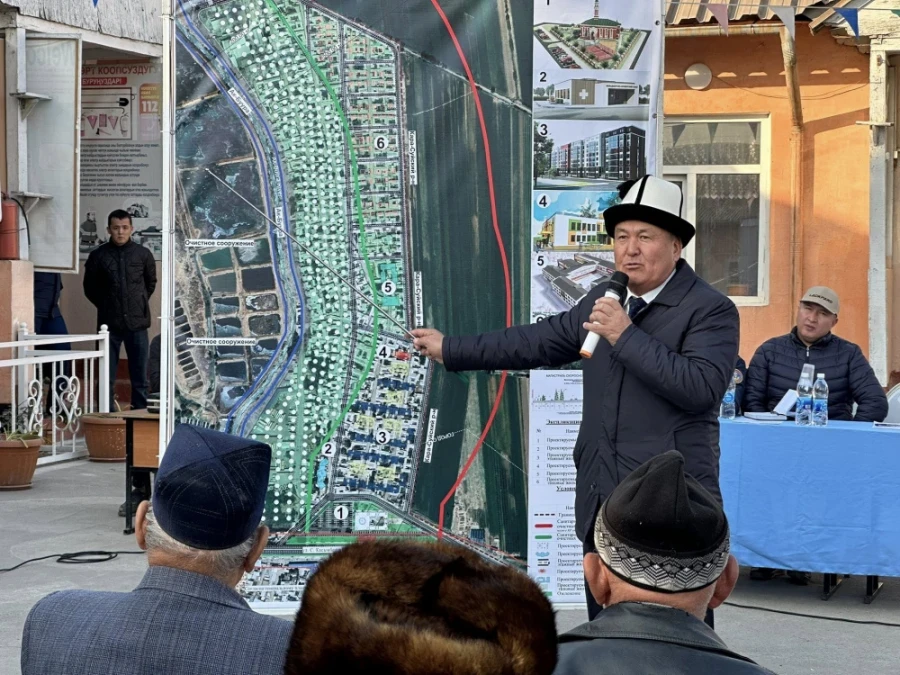
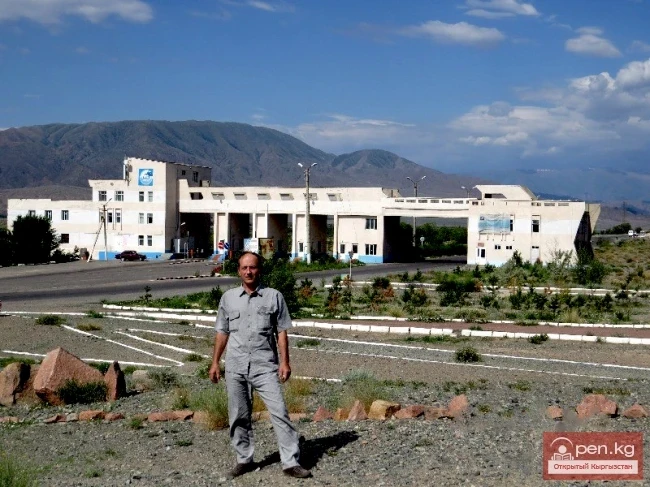
This was reported to the Turmush correspondent by the local rural municipality.
Until 1928, no one lived in Jany-Jer — it was an empty field.
“In 1928, a decree from the Soviet government was issued to create new state farms for the cultivation of technical crops — this is how this wasteland began to be utilized, and people appeared.
According to local residents, the first inhabitants of Jany-Jer were those who fell victim to the conveyor of Stalin's repressions in 1931.
According to some data, hemp was grown in the Jany-Jer state farm until 1956. However, we do not have precise information on why this was done. Presumably, hemp was cultivated for medical purposes,” the report states.
Initially, Jany-Jer was a village, but it later expanded and gained the status of a rural municipality. As part of the administrative-territorial reform, the Jany-Jer rural district became part of the Jany-Pakhtinsky rural district in 2023.
Reference
The village of Jany-Jer is located in the Alamudun district of the Chui region. The name translates from Kyrgyz as “New Land,” which is directly related to its historical origins.
Jany-Jer was formed during the Soviet period, mainly in the second half of the 20th century, as part of the development of new agricultural lands in the Chui valley. During these years, families from the mountainous regions of Kyrgyzstan were resettled here, and they were provided with plots for agriculture and livestock farming. The main focus was on the development of crop farming, vegetable growing, and fodder crops.
The village developed as an agrarian settlement: collective farms and state farm divisions were established, residential houses, a school, a medical post, and a club were built. Due to its proximity to the capital, Jany-Jer gradually became not only an agricultural village but also a suburban one — some residents began to work in the capital.
After Kyrgyzstan gained independence, the village transitioned to private forms of farming. The land was distributed among residents, and farms emerged, leading to increased labor migration. In recent years, residential houses have been constructed in Jany-Jer, infrastructure has improved, and the road network and social facilities have developed.
As of January 1, 2025, according to data from the National Statistical Committee, the population of Jany-Jer is 6,253 people. The population has been trending upward in recent years, which is associated with its proximity to the capital, internal migration, and active individual housing construction.
The national composition of Jany-Jer is multinational, which is characteristic of the Chui region. The majority of the population consists of Kyrgyz, Russians, Dungans, Uzbeks, and representatives of other nationalities.
Historically, this multiculturalism formed during the Soviet period when residents from different regions of Kyrgyzstan and other Soviet republics were resettled to the Chui valley to work in agriculture and suburban enterprises.
Today, the residents of the village are engaged in agriculture (crop farming, livestock breeding) and services. Some of the population works or studies in Bishkek.