Many who previously held leadership positions in law enforcement agencies, as well as ordinary citizens, remember that KGB officers were rarely seen during Soviet times. In recent years, the GKNB has faced criticism: it is claimed that its employees too actively display their identification, which undermines the reputation of this service. What is your opinion on such public sentiment?
— Of course, I am aware of this. I have warned my colleagues more than once: “It is necessary to raise the prestige of the GKNB; its authority must be comparable to that of the KGB of the USSR. Otherwise, we will see GKNB employees showing their IDs even in stores. This needs to stop.”
— Some GKNB employees have been detained on suspicion of offenses. Is this related to the fact that they were given too broad powers? We observe how the special service intervenes in various areas, from construction violations to meat prices and combating prostitution.
— On the day the video about the "fight against intimate services" was released, I urged: “Transfer this work to the Ministry of Internal Affairs; this is their area of responsibility. Do not lower the level of the GKNB.”
As for the case of employees involved in corruption, an investigation is currently underway. Details cannot be disclosed yet.
— Recently, you excluded the Border Service and the State Guard Service from the GKNB. Can you tell us about the upcoming changes in the GKNB? What functions will remain with the agency, and will it continue to fight economic crimes and corruption?
— A large-scale reform of the law enforcement agencies awaits us. I had planned to start it earlier, but the timelines were shifted for various reasons.
Now, I hope we will start soon. The GKNB will focus on its key tasks: intelligence and counterintelligence, protection of the constitutional order, combating terrorism, extremism, banditry, and drug trafficking.
The agency will retain the right to investigate in these areas; however, intervention in the economy is excluded. Information about the activities of the GKNB and its employees must remain confidential.
After the reform, it will become a real special service, similar to the KGB. The Ministry of Internal Affairs will only deal with its core functions.
The authority to conduct investigations will remain with the GKNB. We will create a clear list of responsibilities that will be enshrined at the legislative level.
A new Investigative Committee is planned to be established, which will take on the main investigative functions. The General and Military Prosecutor's Offices will oversee the legality of the actions of all structures.
Why is the Investigative Committee being created? We must think about the future and the long-term perspective.
At the moment, both the GKNB and the Ministry of Internal Affairs have operational units and investigators reporting to one minister. For example, an operative can bring a case that unjustly contradicts a person's interests.
When the case is handed over to an investigator, he can refuse: “This case will not pass in court.” However, the minister can force him to accept it and open a criminal case. The investigator finds himself in a hopeless situation.
Thus, cases of injustice cannot be ignored. The Investigative Committee will report directly to the president and will not accept "raw" or fabricated cases from operatives or ministers. Criminal cases will not be opened.
Undoubtedly, citizens who have become victims of injustice will not end up behind bars—they will be released immediately. This will allow us to ensure the protection of human rights at a level of 95%, which will be the foundation of security for future generations.
As for economic crimes: if you have truly committed a crime, you will be punished; if you have been slandered, you will be released. The lack of subordination between the two structures will lead to more objective decisions.
This is work for the future. We will prepare the necessary buildings and technical base. A Decree will be issued, and the relevant bills will be submitted to the Jogorku Kenesh, and after their adoption, organizational work will begin.
This year we will host the SCO summit and the World Nomad Games, so we will start implementing the reform next year.
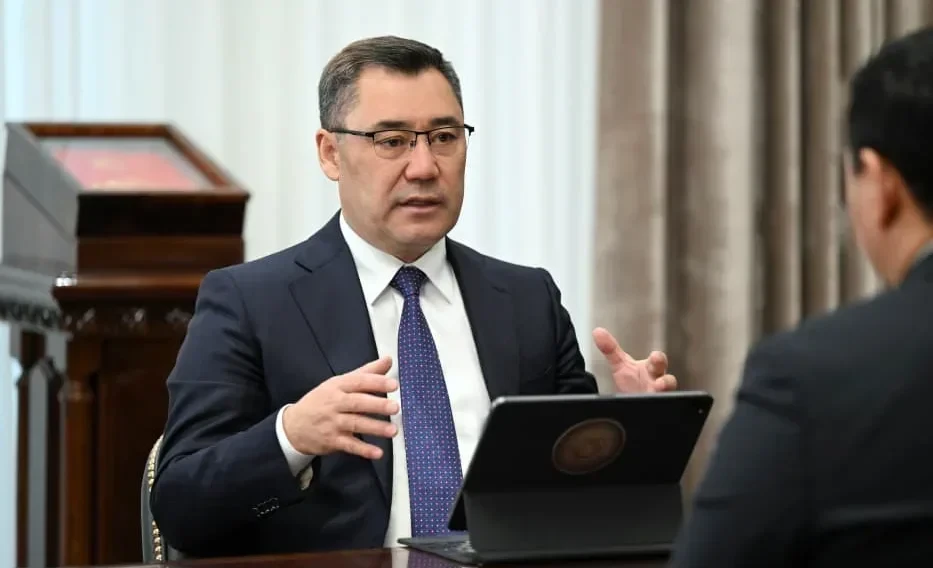
Interviewed by the director of the Kyrgyz National Information Agency "Kabar," Mederbek Shermetaliev