According to CNN, the Trump administration's decision resulted from a conflict between Anthropic and the Pentagon, which could significantly impact the future use of artificial intelligence technologies. Defense Secretary Pete Hegset subsequently noted on platform X that Anthropic would be considered a "supply chain risk," which typically refers to companies that may be linked to foreign adversaries.
This conflict reached its peak on Tuesday when a meeting took place at the Pentagon between the Defense Secretary and Anthropic CEO Dario Amodei. Although the meeting was held in a friendly atmosphere, Trump's comments on Friday indicate an escalation of the situation. Anthropic previously stated that it does not intend to concede to the Pentagon's demands, emphasizing that it is unacceptable for them to use their technologies for mass surveillance or as autonomous weapons.
The Pentagon, which uses Anthropic's Claude AI system in its classified networks, expressed a desire to apply it for all lawful purposes. However, Anthropic set two "red lines" for the Pentagon: the use of Claude in autonomous weapons and for mass surveillance of U.S. citizens is strictly prohibited.
A Pentagon representative noted that they are not interested in using AI with restrictions and need the freedom to apply licensed technologies. Last week, Anthropic confirmed that it does not intend to yield to pressure.
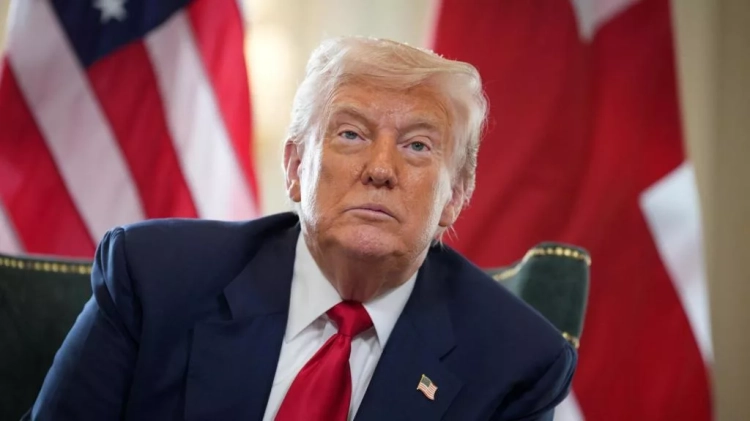
Trump, in his message on Truth Social, accused Anthropic of a "catastrophic mistake" and stated that the company is trying to dictate terms to the military. Shortly after, the General Services Administration announced its intention to exclude Anthropic from its supplier registry on the USAi.gov website.
Hegset confirmed on Friday that no contractor or partner working with the U.S. military will be able to do business with Anthropic. At the same time, representatives from the AI industry, including OpenAI CEO Sam Altman, came to Anthropic's defense, expressing concerns about collaborating with the Pentagon.
Anthropic's Interaction with the Pentagon
The Claude AI model from Anthropic was the first to be integrated into classified military networks, with a contract worth up to $200 million signed last summer. Unlike other major companies, such as OpenAI, which only worked with unclassified networks, Anthropic managed to achieve closer cooperation.
The contract also included an acceptable use policy that prohibits the use of the Claude system for mass surveillance and autonomous weapons.
Gregory Allen, a senior advisor at the Center for Strategic and International Studies, noted that users in the Department of Defense have a positive attitude toward Anthropic and Claude, and their usage restrictions have not caused issues in the past.
However, the Pentagon does not want to depend on the terms of any company. A Pentagon representative stated that they cannot afford to "operate on a case-by-case basis" and that the responsibility for complying with laws lies with them as end users.
The Pentagon seeks to avoid a situation that threatens national security when it needs to coordinate actions with any company.
Breaking ties with Anthropic could create difficulties for the Pentagon, as they would have to replace all internal systems using Claude. Although Elon Musk's Grok AI system could be used in classified settings, it is not considered as advanced as Claude.
Implications for Anthropic's Business
While losing a $200 million contract may seem significant, for Anthropic, whose market capitalization is estimated at around $380 billion, it does not pose a threat to survival. However, supply chain risks could create problems for companies working with the U.S. military, requiring them to prove no ties to Anthropic.
Anthropic's success largely depends on corporate contracts with large companies that may have ties to the Pentagon.
"The existing customer base of Anthropic, a large part of it, could disappear due to government contracts or the desire to contract with them in the future," noted Adam Connor, Vice President for Technology Policy at the Center for American Progress.
Jensen Huang, head of Nvidia, expressed hope for a compromise between the Pentagon and Anthropic, noting that even if this does not happen, it will not be the end of the world, as there are other AI companies the Pentagon could collaborate with.
The Pentagon also mentioned the possibility of applying the 1950 Defense Procurement Act to compel Anthropic to cooperate, but it is unclear how this would align with recognizing the company as a supply chain threat.
Trump's statement did not mention the possibility of applying a deferred prosecution agreement.
"Anthropic is not the only company under threat," added Connor, emphasizing that the Pentagon's actions serve as a signal to other companies working in the AI field and seeking government contracts.
"This is a warning for other companies negotiating for collaboration, so they do not impose any restrictions on AI use," concluded Connor.
If the Pentagon were simply dissatisfied with Anthropic's terms, it could terminate the contract and find another AI model, but it seems the government wants to continue using Anthropic's technologies, applying all possible leverage.
It is unclear how the Pentagon plans to replace Anthropic's systems and what further actions the administration will take in this situation.
"In the context of an AI race with China, comparable to the Cold War space race, we cannot afford to burn companies like Anthropic," Allen noted in an interview with Bloomberg, adding that a better way to resolve the conflict needs to be found.