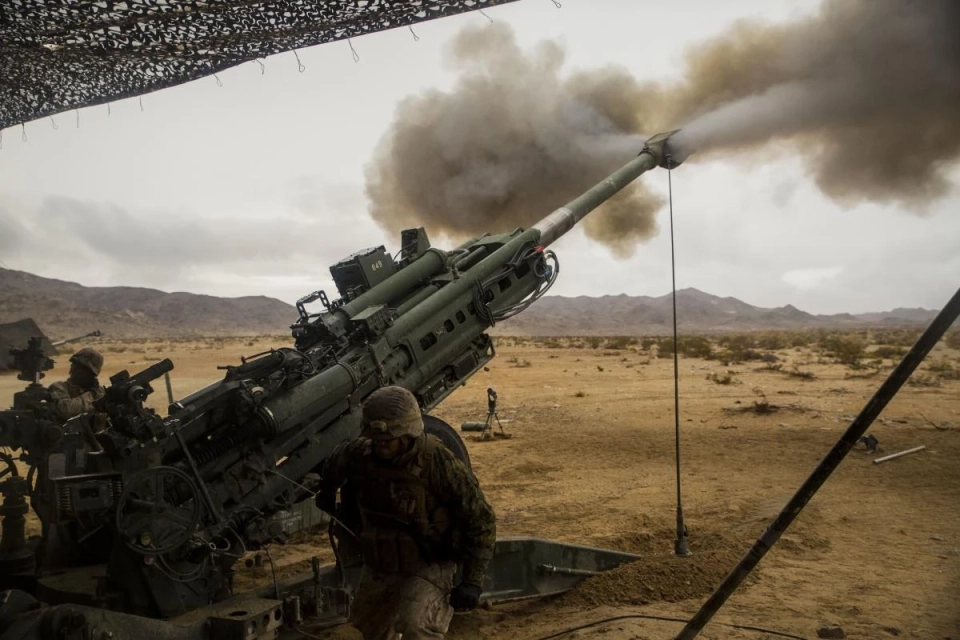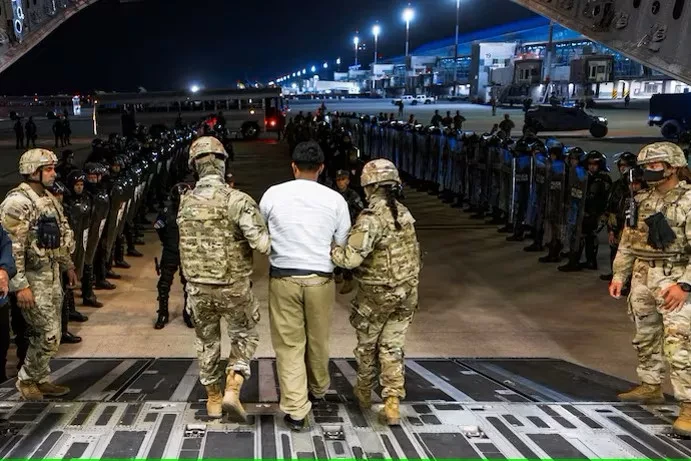
After a recent wave of violence triggered by the death of a well-known drug lord, Mexico is ramping up security measures by deploying thousands of soldiers. This statement was made by the country's security minister.
Defense Minister Ricardo Treviño reported that an additional 2,500 soldiers were sent to the western regions of Mexico on Monday, bringing the total number of deployed troops to 9,500 since Sunday.
As a result of the unrest that erupted following the capture and subsequent death of Nemesio Oseguera Cervantes, better known as "El Mencho," violence has occurred in at least 20 states across the country.
El Mencho, who led the Jalisco New Generation Cartel (CJNG), was one of the most wanted criminals in the country.
The country's security minister stated that at least 25 members of the National Guard of Mexico have died in the state of Jalisco since the violence began.
According to Treviño, the capture of the drug lord was made possible because law enforcement was tracking his partner.
During a shootout with his guards, El Mencho was seriously wounded and died while being transported from the town of Tapalpa to the capital, Mexico City.
Six of the drug lord's guards were also killed during the operation, and three soldiers were injured, according to information from the Ministry of Defense.
Security Secretary Omar García Harfuch reported that as a result of the unrest related to El Mencho's death, a prison guard, a prosecutor's employee, and 30 members of a criminal group were killed.
Mexican President Claudia Sheinbaum praised the army's actions that led to El Mencho's death and emphasized that her main task is to ensure security in the country.
"At this moment, everything is calm; we have a government and armed forces, and coordination is effective," Sheinbaum noted.
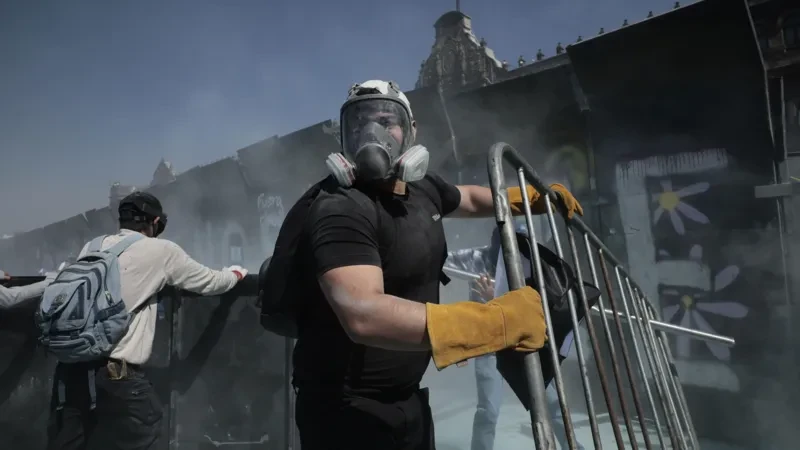
After news of El Mencho's death broke, his cartel began organizing attacks in various cities where the CJNG operates.
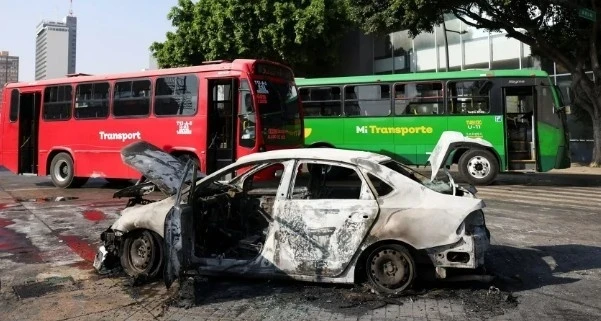
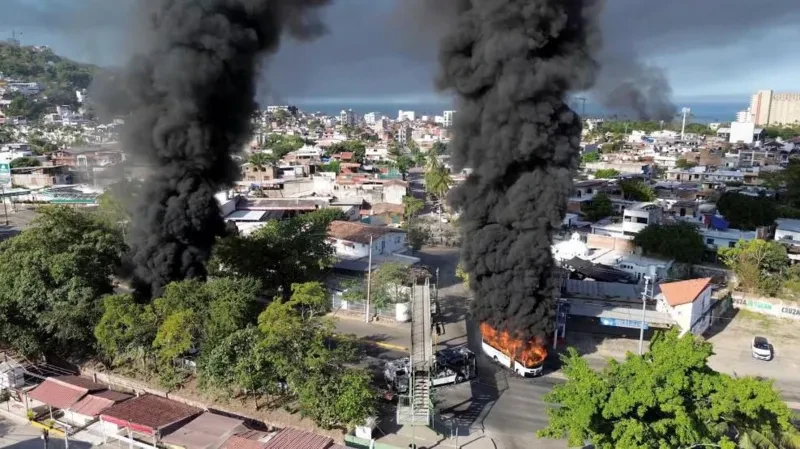
In some places, they blocked roads by placing spikes and nails, while in others, they hijacked buses and set them on fire in the streets.
Sheinbaum reported that by Monday morning, the roadblocks had been removed; however, dozens of banks and local businesses suffered from arson.
Videos surfaced on social media showing tourists watching a military helicopter flying low over their hotel while smoke rose from buildings in Puerto Vallarta.
On Sunday, the streets of many cities were deserted as authorities urged people to stay home.
BBC Verify also confirmed the authenticity of videos showing clashes between cartel members and the National Guard in San Isidro, north of Guadalajara.
In one video, an armed man can be seen shooting at cars, while another shows bodies lying next to a vehicle.
A surveillance camera from a restaurant captured a car crashing into a National Guard truck while cartel members opened fire on it at 11:00 AM local time (05:00 GMT).
The National Guard did not provide additional details about this incident.
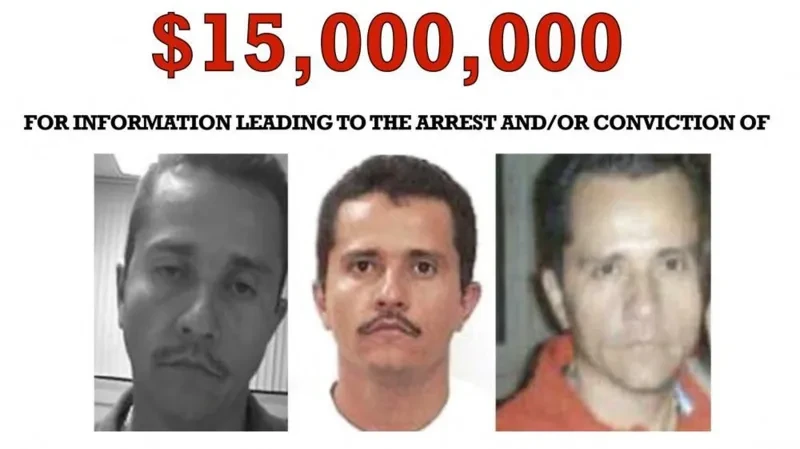
The U.S. State Department offered a reward of $15 million for information leading to the capture of El Mencho.
According to the Mexican Ministry of Defense, the operation to capture El Mencho was conducted by the army with support from the National Guard and the Air Force, although Mexico confirmed that American forces were not involved in his elimination.
Local residents and tourists describe the situation as "heart-wrenching" after one of the country's most influential drug cartels triggered a wave of violence in several states.
Videos taken by locals and tourists show burned cars and plumes of smoke over Puerto Vallarta.
Jerry Jones, a Nashville native who has lived in the city for over four years, shared his impressions, noting that he had "never experienced anything like this" and usually felt "safer than in his hometown."
Jones, who owns a lifestyle magazine for the LGBTQ+ community, moved to Mexico after retiring.
"I love the locals, I enjoy walking around the city, and everyone is so kind. This area is a wonderful and amazing place, which is what prompted me to move here," he added.
He reported that residents were "completely shocked" on Sunday morning when they learned about El Mencho's capture and the subsequent unrest.
"The first signal of what was happening came when one of our readers sent a video of a bus being set on fire," he said.
A few minutes later, he noticed smoke "on the other side of the city."
Jones described how cars were blocking roads and being set on fire, including near a store where "more than 30 cars in the parking lot burned and were destroyed."
A Getty Images photo shows police cars next to a burning bus, with a police officer walking among them. The bus is heavily charred, and flames engulf it from below. Cars are parked on the highway.
On Sunday, unrest erupted in Jalisco: criminal gangs set cars on fire following the killing of cartel leader El Mencho.
Although events unfolded rapidly on Sunday morning, Jones noted that residents did not receive information from local authorities and did not see military or police until noon.
Residents and tourists in several Mexican states were advised to stay home as many businesses, schools, and universities were closed.
He added that some people were "trapped" in stores, unable to leave.
"When authorities realized what was happening, they announced a lockdown," he explained, noting that the streets suddenly became "eerily quiet."
As information began to flow into the local community, people started to come together to help each other.
Following the death of the Mexican drug lord, at least 25 members of the National Guard were killed.
Jones noted that residents helped extinguish fires as fire services were "overwhelmed" and also offered assistance to tourists facing food shortages.
He said a local grocery store opened on Sunday evening, but the line to get in was "incredible."
"I don't know what the next day will bring. I hope for peace," he added.
He expressed concern for the local residents and how this would affect tourism in the region.
"Puerto Vallarta is a strong place; we have weathered hurricanes and pandemics together, and local businesses are coming together," he noted.
"In times like this, they don't compete. They unite and help each other. I believe we will survive and come out even stronger."
Marc-André, a Canadian content creator who also lives in Puerto Vallarta, said the usually peaceful resort town "looked like a real war zone."
He described the atmosphere on the streets as "very quiet and unsettling."
"This is Mexico—usually there is music playing, people are walking around, and enjoying life, but now there is a heavy atmosphere in the air," he added.
Marc-André, who lives with his wife and two small children, noted that his family had never felt danger in the city before.
"It's just heartbreaking to see what's happening," he concluded.
Another blogger, Paul Desmond from California, shared his experience in a video that he said "he never wanted to film."
Desmond, who lives in Bucerías, described what he saw as "very unusual" and showed drone footage of a deserted highway with smoke in the distance.
"In our everyday lives, this rarely happens," he said. "It's alarming, it's upsetting, it's terrible."
Many American and Canadian tourists are also sharing their impressions of the unrest and its developments with news agencies.
Adrian Murfield, a resident of Dallas who was in Puerto Vallarta since last week, described the situation as "a complete shock."
"It was like I had entered the Twilight Zone," he added.
Murfield had visited the city before and thought it would be "the perfect place for a quick and easy beach getaway," but now found himself in a difficult situation after his return flight was canceled.
Tim Spencer from Toronto reported that he watched burning stores and cars from the roof of the Villa Divina hotel.
"I've never seen anything like this in my life, so it's a bit terrifying," he noted.
Jim Beck, stepping out of his hotel for breakfast, saw "taxis exploding all over the city, blocking roads."
"Then everyone started running down the street, screaming and yelling, and everyone was told to return to their hotels," he reported.
Beck noted that he has been coming to this city for several years, but this is the first time he feels unsafe.
Canadian Jeff Pass, who has been in the Puerto Vallarta area for eight days after a wedding celebration, said hotel staff did not comment on the events during the morning hours of Sunday, but by noon he saw fires engulfing the city.
Pass noted that by noon on Monday, the situation had noticeably calmed down, ground transportation, including taxis and Uber, began to recover, but he and his partner still do not know when they can return home.
They tried to register at the Canadian consulate in Mexico, but they said officials were "overwhelmed" with requests.
"We haven't heard back from the Canadian government yet, but the resort is taking good care of us," he added.
Canadian Foreign Minister Anita Anand urged Canadians to travel only when it is "safe."
"The situation remains unstable," she stated on Monday. "All Canadians in affected regions should follow the instructions of local authorities."
She also reported that more than 26,000 Canadians living abroad have registered with the Canadian Ministry of Foreign Affairs—almost 8,000 more than in one day—to receive information about safety and travel.
Flight cancellations continued on Monday, leaving many stranded in Puerto Vallarta. Mexican President Claudia Sheinbaum hopes for the resumption of flights later that same day and on Tuesday.
Air Canada confirmed that it would resume regular flights to Puerto Vallarta on Tuesday and also announced the resumption of flights from Toronto to Guadalajara on Wednesday.