In Astana, claims have been raised against Western oil companies whose contracts were signed many years ago. Proceedings in international arbitration are taking place behind closed doors, but leaks of information indicate that Kazakhstan alleges bribery of officials by foreigners for access to oil fields. The agreements remain opaque, as reported by Azattyq Asia.
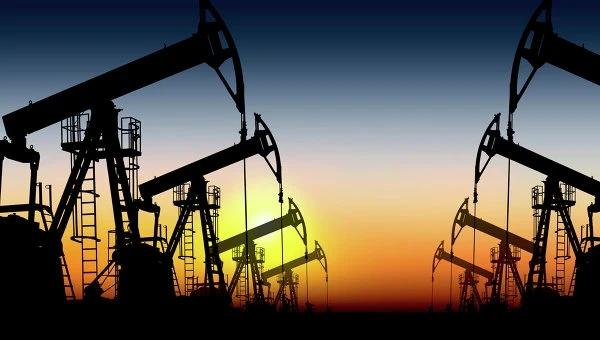
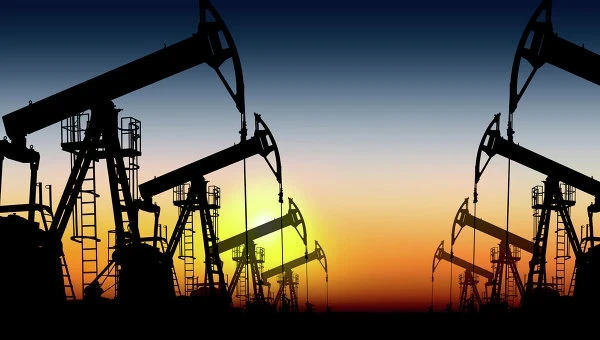
At the end of January, it became known about the decision of the international arbitration in favor of Kazakhstan regarding Karachaganak — one of the three largest oil and gas fields in the country (along with Tengiz and Kashagan), which account for about two-thirds of hydrocarbon production.
Kazakhstan provides limited information about the arbitration: Energy Minister Erlan Akkenzhenov confirmed the existence of the proceedings, emphasizing that it is conducted in a "strictly confidential manner" and without "collusion," but does not disclose details, including amounts and wording of the decision.
Leaks of information indicate that the arbitration partially satisfied Kazakhstan's claims and opened the possibility of receiving compensation of up to $4 billion. Media also claim that Kazakhstan used evidence from a corruption investigation in Italy in 2017, when contractors admitted to bribing Kazakh officials regarding the Karachaganak and Kashagan projects.
At the same time, Kazakhstan continues its disputes over Kashagan, with amounts reaching $160 billion (almost half of the country's GDP). The British company Shell announced a suspension of investments in Kazakh projects, while Chinese CITIC is showing interest in the gas processing plant at Karachaganak. This indicates that Astana is reviewing the terms of oil and gas contracts, paying attention to both the West and Moscow and Beijing.
WHY DID KAZAKHSTAN GO TO ARBITRATION?
The Karachaganak oil and gas condensate field in the West Kazakhstan region is an important asset for the country, providing significant revenue to the budget and second only to Tengiz in scale. The development is managed by the consortium Karachaganak Petroleum Operating B.V. (KPO), which includes Shell (UK), Eni (Italy), Chevron (USA), Lukoil (Russia), and KazMunayGas (Kazakhstan). The consortium operates under a production sharing agreement (PSA) signed in 1997, valid until 2037.
Under the terms of the contract, all produced products legally belong to Kazakhstan, while investors recover their costs and receive profits in the form of a share of oil and gas. The agreement remains opaque despite public calls to disclose the terms of oil production contracts.
This conflict surrounding Karachaganak is not the first. In the late 2000s, Kazakhstan secured a 10% stake in the project for the national company KazMunayGas. In 2020, the parties agreed on changes to the production sharing formula and paid Kazakhstan about $1.3 billion.
In 2023, Kazakhstan again turned to arbitration. The authorized company PSA, led by the president's nephew Kassym-Jomart Tokayev, Beket Izbastin, filed a lawsuit against KPO shareholders, disputing which expenses the consortium classified as "recoverable" from the state's share. Kazakhstan challenges unapproved overruns and other costs that it believes should not fall on the budget.
According to Bloomberg, oil companies may be required to pay Kazakhstan up to $4 billion.
Thus, Astana is attempting to revise the practice of determining recoverable costs, which could change the balance between state revenues and company earnings. Oil and gas industry expert Askar Ismailov highlights several reasons for the dispute's initiation:
The main reason is the decline in revenues from the oil and gas sector to the budget. Investments have decreased, which contradicts the instruction of the President of Kazakhstan to double GDP by 2029. Revising recoverable costs could be one solution to increase revenues. Additionally, there has long been discussion in industry circles about inflated costs that are presented to Kazakhstan for reimbursement. Previously, these issues were not raised publicly.
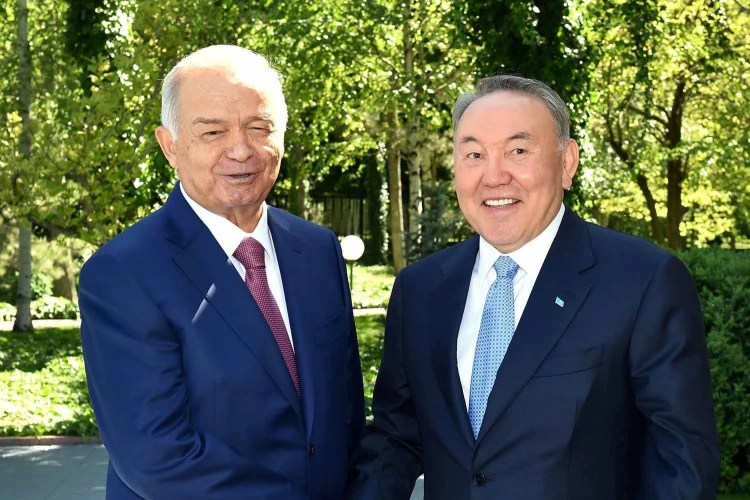
A change in Kazakhstan's leadership may also be a key reason for the disputes. The new leadership is not tied to the "oil compromises" of the 1990s made during Nazarbayev's era. For Tokayev and his team, revising the approach to subsoil use is not only a matter of revenue but also a confirmation of their political subjectivity and strengthening the country's economic sovereignty, notes researcher Rasul Kospanov.
HOW DO THE PARTIES COMMENT ON THE DISPUTE?
Kazakh authorities confirm the existence of arbitration but say little about its content. Erlan Akkenzhenov noted that the proceedings are ongoing in a "strictly confidential manner."
— Everyone has heard that Kazakhstan has been awarded between two and four billion dollars, and I believe this is encouraging news. We have good chances, — said the minister.
The head of PSA, Beket Izbastin, also does not comment on the disputes with oil companies. In 2024, he noted that "resolving the accumulated issues requires attention."
“Yes, I can confirm that there are disagreements between the Republic and the contractors,” said Izbastin. “We were forced to submit claims to international arbitration.”
The Italian company Eni, part of the consortium, also does not comment on the dispute, as all data before a final decision is speculative.
Meanwhile, Shell announced a suspension of new investments in Kazakhstan until legal risks are clarified. The head of the company, Wael Sawan, noted that this affects their desire to continue investing in the country.
Expert Askar Ismailov points out that Shell's decision is a signal of rising legal risks for Western investors.
— This does not necessarily mean leaving tomorrow; rather, it is an attempt to solidify their position and lower expectations for future projects. The company has alternatives for investment, — adds Ismailov.
ALLEGATIONS OF BRIBERY EMERGING DURING THE PROCESS
According to Bloomberg and Reuters, the international arbitration in London recognized the legitimacy of Kazakhstan's claims: some of the costs claimed by the consortium do not comply with the terms of the PSA and should not be covered by the state. The potential compensation ranges from $2 to $4 billion; however, the final amount will be determined later and may become a subject of further discussions.
— This "victory" is not yet an official statement but a leak to the media, — notes Ismailov. — If the arbitration has taken Kazakhstan's position, then it is about how to calculate recoverable costs and by what mechanisms. It is important for Kazakhstan to substantiate its arguments based on criminal cases to avoid manipulation.
Meanwhile, Ismailov emphasizes that past corruption allegations do not mean that the level of corruption in the oil and gas sector has decreased now.
— Systemic changes are not yet visible. The judicial system continues to operate under old rules. It is too early to expect a reduction in the level of corruption. Kazakhstan ranked 96th out of 182 countries in the Corruption Perceptions Index in 2025, — concludes the expert.
CLAIMS REGARDING KASHAGAN AND SEARCHING FOR "A PATH OF ITS OWN"
Kazakhstan also has claims against the consortium operating in Kashagan. The lawsuit against North Caspian Operating Company (NCOC) reaches $160 billion — this is four and a half times more than the revenue part of the country's annual budget. This dispute is becoming one of the largest in the history of international arbitration in the energy sector.
Kazakhstan disputes the structure of expenses presented for reimbursement and discusses delays in launches and the mechanism for calculating shares. The process regarding Kashagan is ongoing separately, and its timelines remain uncertain, potentially lasting until 2028.
Kazakhstan is also engaged in legal disputes with NCOC domestically. The company has already been fined 2.3 trillion tenge ($4.6 billion) for exceeding sulfur placement norms.
A year earlier, the operator of Karachaganak was fined for environmental pollution — 739 million tenge.
Kazakhstan was unable to reach an agreement with Eni and Shell on the construction of a gas processing plant at Karachaganak. Investors requested an increase in the project's cost from $3.5 billion to $6 billion and coverage of additional expenses. The Ministry of Energy refused, and now the prospective partner is Chinese CITIC.
— Kazakhstan is searching for its own development path, and this depends on many factors, including geopolitics. It should not be ruled out that Kazakhstan may not want to spoil relations with the USA or the EU, — adds Ismailov.
There is no information about new claims from Kazakhstan regarding agreements on Tengiz. Earlier, a scandal erupted in the USA over bribing Kazakh officials for access to Tengiz. American citizen James Giffen, acting as an intermediary in bribery, pleaded guilty to a minor tax violation and was only required to cover court costs. Nazarbayev was not held accountable, and Kazakhstan denied the fact of receiving bribes.
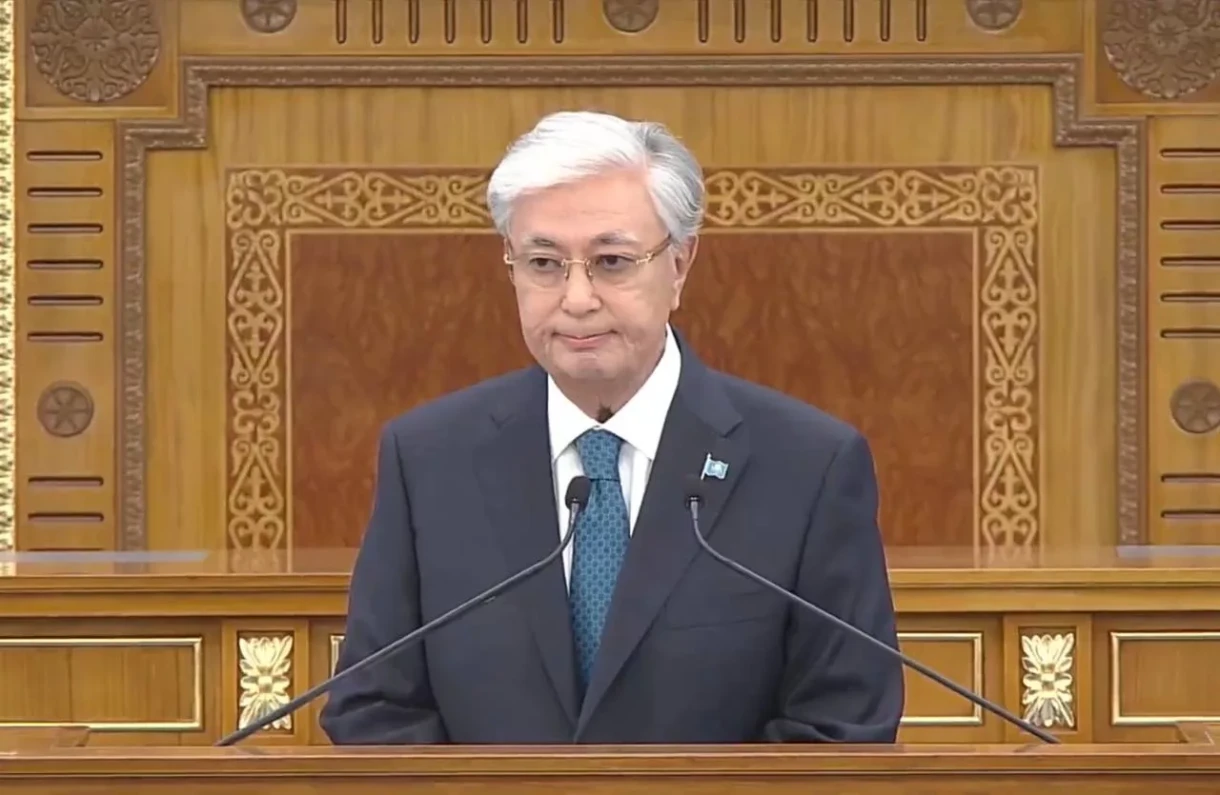
More than 15 years have passed, and now Astana openly states its intention to revise contracts signed in the early years of independence. At a government meeting in 2025, Tokayev noted that production sharing agreements made Kazakhstan a reliable supplier of hydrocarbons, but now it is necessary to intensify negotiations for extending contracts on more favorable terms.
Expert Askar Ismailov believes that the next 2-3 years will show in which direction Kazakhstan is moving, especially in light of the outcomes of the disputes regarding Karachaganak and Kashagan.
The post The country "has endured corruption and kleptocracy." Why Kazakhstan seeks to revise contracts from the Nazarbayev era first appeared on K-News.