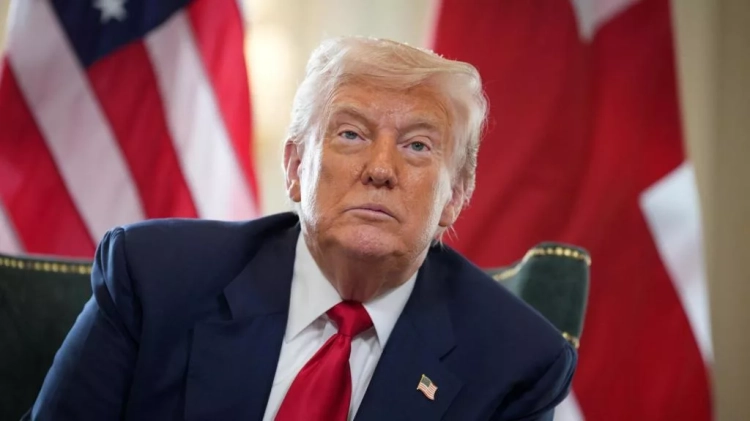
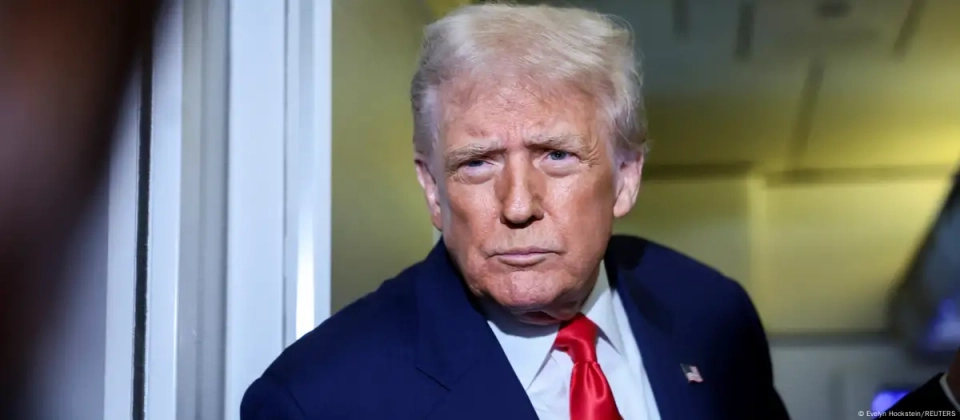
In recent days, President Trump has hinted at the possibility of ending military actions, but this has not happened.
In an interview with NBC News, he stated that, in his opinion, Tehran is ready for negotiations to end the conflict, but added that "the conditions are not sufficient." Iran denied this information.
Trump claimed that American forces destroyed oil facilities on the Iranian island of Kharg — a key center for oil exports — but also noted that he might attack this site again "just for fun."
This weekend, Israeli Defense Minister Israel Katz announced the onset of a decisive phase of the war, which will continue as long as necessary.
Last night and this morning, Iran continued to bombard Israel with rockets.
- The U.S. and Israel continue to attack Iran, striking several sites in the central province of Isfahan. At least 15 people have died.
- Iran also shelled Israel, reporting hits in the city of Holon, and claimed responsibility for attacks on American bases in Iraq and Kuwait.
The Chairman of the Federal Communications Commission (FCC) Brendan Carr accused American broadcasters of "distorting the news" regarding coverage of the conflict in the Middle East.
On Saturday, Carr criticized "fake news" in his social media address, threatening to revoke broadcasters' licenses if the situation does not change.
"Television companies must operate in the public interest, otherwise they will lose their licenses," he emphasized.
His message included a post by Trump on the Truth Social platform, in which he spoke of "misleading" and "horrible reports" during the conflict.
In an interview with CBS News, Carr noted: "People tend to think that licenses are something taken for granted and cannot be revoked."
"I am trying to explain that this is not the case; there is a public interest, and television is something else."
Countries' reactions to Trump's call for security in the Strait of Hormuz
On Saturday, Trump expressed hope in his message on Truth Social that five countries — China, France, Japan, South Korea, and the United Kingdom — would send military ships to the Strait of Hormuz so that it no longer posed a threat to Iran.
Some countries have responded as follows:
United Kingdom: "As we have mentioned, we are discussing various options for ensuring the security of shipping in the region with our allies," said a representative of the British Ministry of Defense.
China: A representative of the Chinese embassy in Washington told CNN that Beijing calls for an immediate cessation of hostilities.
However, he did not specify whether China would heed Trump's request but emphasized that all parties should care for stable and uninterrupted energy supplies, adding that China will continue to strengthen ties with all interested parties.
Japan: Tokyo has not yet provided an official response to Trump's call, but representatives told NHK that this issue may be discussed during Prime Minister Sanae Takichi's upcoming trip to the U.S., which begins on Wednesday.
A representative of Japan's Ministry of Foreign Affairs noted that the country will not send naval vessels solely at Trump's request. "Japan decides how to act on its own, and independent judgment is key," the official said.
France: The French government has also not provided an immediate response.
However, on Saturday, shortly after Trump's statement, the official account of the French Ministry of Foreign Affairs on platform X denied reports that the country was sending its military ships to the Strait of Hormuz.
"No, the [French] aircraft carrier and its group remain in the eastern Mediterranean. The position has not changed: it is defensive at this time," the message stated.
Saudi Arabia, Dubai, and Qatar report interceptions
The Saudi Ministry of Defense reported on its official account on X the interception and destruction of seven drones in Riyadh and the Eastern Province.
This morning, authorities in Dubai and Qatar also reported interceptions carried out by air defense systems.
The press service of Dubai stated on X that the noises heard in the Marina and Al-Sufouh areas were the result of a successful interception.
Kuwait also reported several instances of drone interceptions.
The Qatari Ministry of Defense stated that it intercepted four ballistic missiles and a number of drones launched by Iran on Saturday.
Trump questions the fate of Iran's new Supreme Leader
In a Saturday interview with NBC, Trump also raised questions about the fate of Iran's new Supreme Leader Mojtaba Khamenei, the son of the slain Ayatollah Ali Khamenei.
"I don't know if he is alive. So far, no one has been able to show him," Trump said, as Khamenei issued his first written statement on Thursday, rather than appearing on camera.
"I heard he is not alive, and if he is alive, he should act wisely for his country and surrender," Trump added, calling rumors of his death "false."
Lebanon reports the deaths of 12 medical workers due to Israeli strike
An Israeli strike on a medical center in southern Lebanon on Friday claimed the lives of 12 medical workers, including doctors and nurses, according to the Lebanese Ministry of Health.
This incident was condemned by the head of the World Health Organization. "These events highlight the ongoing assault on Lebanon's healthcare system, which is vital for the population," said Tedros Adhanom Ghebreyesus.
"WHO condemns this tragic loss of medical workers and emphasizes the need to protect all medical personnel," he added.
Israeli military officials stated that they are aware of reports of the attack in the Borj Khalaway area in southern Lebanon, and the incident is under review.
Iranian Foreign Minister Abbas Araghchi stated that the U.S. attacked the islands of Kharg and Abu Musa from two locations in the UAE — Ras al-Khaimah and an area he described as "very close to Dubai."
He called this move dangerous and added that Iran "will try to be careful and not attack populated areas" in this region.
The U.S. Central Command has so far declined to comment on Araghchi's statement.
Meanwhile, the diplomatic advisor to the UAE president stated on social media that the country has the right to self-defense but "still prioritizes reason and logic and continues to exercise restraint."
In the past two weeks, Iran has launched hundreds of rockets and drones at neighboring countries in the Persian Gulf, claiming that the targets were American facilities, although there have also been reports of hits on civilian sites such as airports and oil platforms.
Brief news summary:
- Throughout the night, air raid sirens sounded across Israel amid rocket attacks from Iran and Hezbollah, with falling debris causing a fire in the city of Holon.
- According to Al Jazeera, a rocket strike on the U.S. embassy in Baghdad on Saturday morning damaged part of the air defense system.
- Iran claims responsibility for attacks on American bases in Iraq and Kuwait, while the UAE, Bahrain, and Saudi Arabia also report interceptions of rockets and drones.
- Trump told NBC News that the Iranians had approached him with a proposal for a deal, but the conditions are "not good enough yet."
- France denied rumors of sending its military ships to the Middle East following Trump's call for allies and China to keep the Strait of Hormuz open.
- Israeli attacks in southern Lebanon have resulted in at least 14 deaths.
Iran claims responsibility for attacks on Israel and American bases in Iraq and Kuwait.
The Islamic Revolutionary Guard Corps (IRGC) of Iran confirmed that it carried out strikes against Israel and three American bases in Iraq and Kuwait.
"The continuous sound of ambulance sirens" in Israel and the acknowledgment by Israeli authorities of "increasing numbers of dead and wounded" testify to the "deep impact of heavy rockets" from the IRGC on industrial areas of Tel Aviv, the statement said.
The message also claimed that the Harir airbase in Iraqi Erbil and the Ali Salem and Arifjan bases, where American troops are stationed in Kuwait, were "destroyed by powerful Iranian rockets and drones."
An Iraqi group claims five attacks on American bases on Saturday.
The group "Saraya Awliya al-Dam" stated that it carried out attacks in response to the killing of Iran's Supreme Leader Ali Khamenei by the United States and Israel, as well as the deaths of its fighters.
During the attacks, an American facility in northern Erbil and the Victoria base in Baghdad were hit, according to the statement.
Tucker Carlson stated that the CIA may check his actions.
The journalist said on his YouTube channel that the reason for the check was his contacts with Iranian representatives before the conflict began and his criticism of Israel.
He previously referred to Israel as "one of the ugliest countries in the world" and claimed that Tel Aviv's actions destroy the "beautiful Middle East."
Iran threatens to consider all of Ukraine's territory as a target for attacks — Iranian parliament.
The head of the parliamentary commission on national security, Ebrahim Azizi, stated that Ukraine supports Tehran's opponents and could become a legitimate military target.
"By supporting the Israeli regime with drones, Ukraine is effectively involved in the war and... makes all its territory a legitimate target for Iran," Azizi noted on social media X.
Israel is running low on interceptor missile stocks — their numbers have reached critically low levels, according to Semafor, citing an American official.
A significant portion of the arsenal was used in last summer's conflict with Iran, the publication reports.
The war deepens the rift in the transatlantic alliance over Russia — The Wall Street Journal.
"Europeans were not ready to acknowledge that transatlantic relations are no longer as important, but now they should wake up and realize this," said analyst Ivan Krastev from the Institute for Human Sciences in Vienna.
The U.S. and its allies in the Middle East are depleting munitions in the conflict with Iran, while European governments fear they will be at the end of the line for new supplies.
Western officials also express concerns that the conflict could lead to increased risks of terrorist attacks from Iran and affiliated groups such as Hezbollah and Hamas, and could provoke a new wave of refugees.
According to analyst Mujtaba Rahman from Eurasia Group, the European Union has not coped with the "Iranian challenge." The EU "failed to provide a decisive response, did not protect its interests, and played no role in diplomacy before the war began or in military operations," he noted. Meanwhile, American naval forces are becoming increasingly overstretched in the Persian Gulf, and Washington may soon need help from Europe — for example, in mine clearance, naval air defense, and maritime route protection. Europe's response may be unfavorable.
Even the most resolute critics of the war, such as Spain, quickly responded to NATO's call to provide military resources — for example, ships to protect allies affected by Iranian rocket strikes, including Turkey and Cyprus.
Strategy lecturer at the College of Europe, Slavomir Dembski, believes that the American-Israeli campaign against Iran may enter textbooks as an example of strategic miscalculations.
Such mistakes become more likely when Washington refuses to consult with its allies.
"Americans have accumulated significant strategic experience over 250 years, but they would likely be even more effective if they viewed Europe not just as a source of symbolic support but as a repository of strategic knowledge," Dembski added.
The record "The Iranian war continues into its third week. What happened and what’s next?" first appeared on K-News.