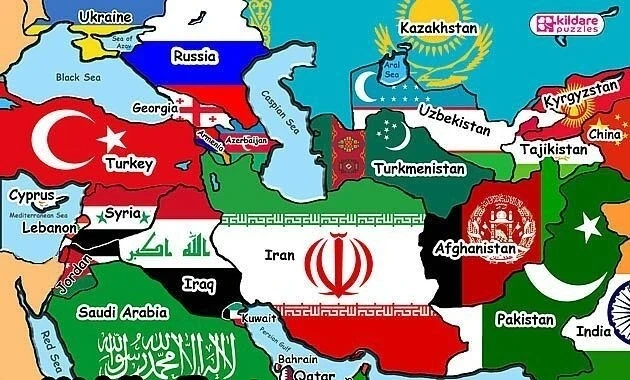
An example is the Islamic Republic of Iran, which has a strategically important location and significant resources. The Islamic Republic is situated at the crossroads of East and West, as well as North and South, making it one of the key players in the region.
The policy of Western powers, starting from the colonial times of Britain and continuing to the present day, when the USA seeks control over oil and other strategic resources, has always been based on the principle of "divide and conquer".
According to this policy, large and independent states must be divided into smaller, weaker, and more easily controlled parts. As long as the rulers of these countries serve as a "cash cow" for the West, they remain safe from threats. But as soon as any of them decides to use their resources for the benefit of their people, it becomes a reason for overthrow, destruction, or dismemberment.
Until the end of the 20th century, the influence of the USA and the West on all spheres of life in Iran was overwhelming. When a national government, similar to that of Mossadegh, was established with the support of the people and the clergy, and the oil industry was nationalized, it was overthrown as a result of a coup.
The victory of the Islamic Revolution in 1979 awakened Muslim peoples, leading to a wave of revolutionary movements across the Islamic world. Many governments were forced to take at least symbolic steps towards changes in their policies.
The United States realized that the Islamic Revolution could inspire other peoples. Therefore, they immediately began organizing coups and internal unrest against Iran.
After the failure of these attempts, an eight-year war of Iraq against Iran was initiated with the support of the USA and the West. Despite significant losses, the Iranian people emerged victorious.
After the war, Iran began to develop rapidly in various fields, including science, industry, medicine, and nuclear technologies. By 2024, the country holds high positions in the world in many of these indicators.
These successes did not sit well with the USA and the West, as they could serve as an example for other Islamic countries. Therefore, from time to time, projects to destabilize the situation in Iran were launched, leading to major unrest every ten years, and in recent years, every one to two years.
Despite support from the USA and Israel, all these conspiracies failed.
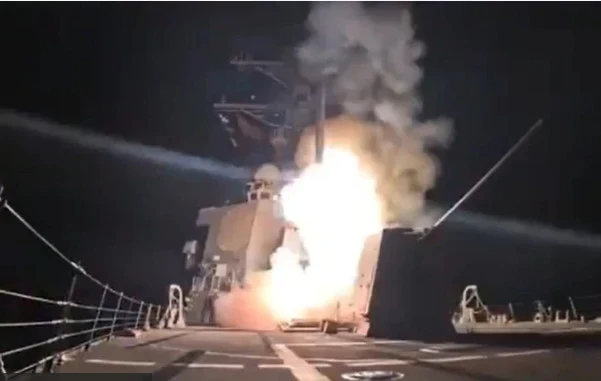
Ultimately, the opponents decided to resort to military attack and the elimination of high-ranking Iranian officials, as well as to engage their network of agents.
However, this plan also failed, thanks to the wisdom of Ayatollah Ali Khamenei and the unity of the Iranian people. After twelve days of conflict, it was the USA and Israel that began to turn to mediators requesting a ceasefire. The President of the USA even acknowledged that he "saved Israel from hell".
Iranian hypersonic missiles and drones, which were previously perceived as a myth, struck opponents who are now trying to reproduce them.
After the military defeat, enemies again focused on espionage and sabotage activities. Under the guise of peaceful economic protests, a terrorist campaign reminiscent of ISIS was launched in more than 650 cities across the country.
Within two days, they brutally killed about 2,500 security personnel and civilians, including children and medical workers. Some of them, posing as ordinary people, deceived the wounded by promising to take them to hospitals, but then dealt with them. Hundreds of those arrested gave shocking confessions that were broadcast on Iranian television with a warning "not for viewers under 18".
The unrest caused enormous damage to both state and private property, including 305 ambulances, 24 gas stations, and 750 bank offices.
Nevertheless, a multi-million rally of the people, including about three million people in Tehran and nearly forty million across the country, put an end to this unrest.
Thus, the elites of Islamic countries must remain vigilant and not succumb to the manipulations of international structures that represent false ideals of human rights and democracy. They should pay attention to the fates of countries such as Palestine, Lebanon, Libya, Syria, Iraq, and Venezuela, and question how these events relate to the norms of international law.
Enemies of Islam see the destruction of the Islamic Republic as a starting point for control over other Islamic states, from Azerbaijan to Algeria.
The elites of the Islamic world must actively inform their peoples about the need to resist this dangerous project. Despite all attempts at destabilization, the Islamic resistance front continues to expand. Hamas, which was once a charitable organization, has become a powerful force of resistance against the Zionist regime. Lebanon, despite the loss of leaders, stands stronger than ever. In Iraq, the forces supporting the resistance are becoming increasingly influential in parliament.