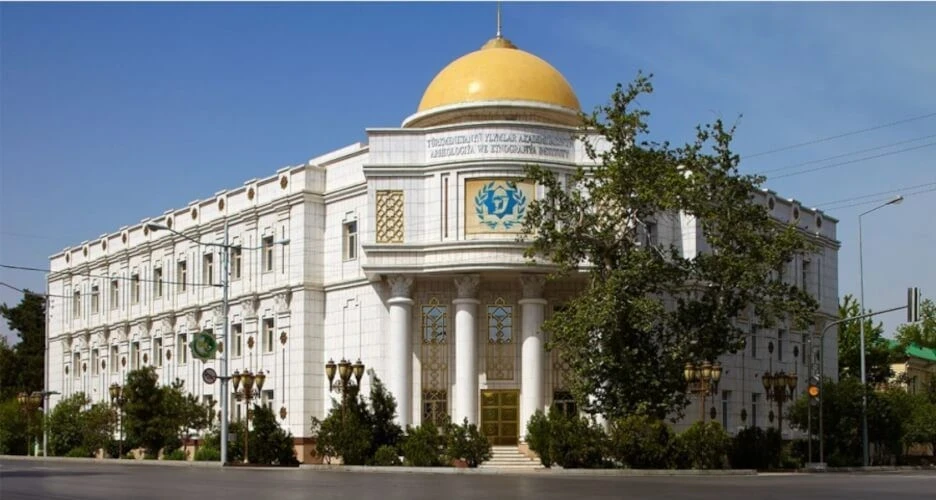
In Ashgabat, the dismantling work on the building, which is almost completely destroyed, has been completed. According to turkmen.news, workers are currently dismantling the walls and clearing debris using construction equipment, and the area is fenced off. There is information that the foundation of the building may have begun to sink.
This structure was originally located at the corner of Lenin Avenue (later named after Saparmurat Turkmenbashi) and Engels Street (now Azadi) and served as a courthouse. The exact date of its construction remains unknown. Engels/Lenin Avenue is one of the key arteries of Ashgabat and was created with consideration of the architectural style that changed over different historical epochs, ranging from neoclassicism to modernism.
The first president of Turkmenistan, Saparmurat Niyazov, decided that the building should symbolize Turkmen culture and his own work "Rukhnama." The reconstruction was carried out by Turkish companies under the guidance of Polimeks: the overall neoclassical style was preserved, a third floor with a characteristic dome was added, and exhibition and conference halls were created inside. Modern traditions required the facades to be clad in white marble, for which 12,000 square meters of material were used.
In 2002, the Center for Cultural Heritage (Medeni Miras Merkezi) opened here, which later replaced the Institute of Archaeology and Ethnography after the restoration of the Academy of Sciences of Turkmenistan. In 2019, Gurbanguly Berdymukhammedov merged it with the Institute of History, and the new institution — the Institute of History and Archaeology — is now located at Saparmurat Turkmenbashi Avenue, 18, just 100 meters from the demolished building.
There are suggestions that the foundation of the old building could not withstand the load from the additional floor and the heavy marble cladding. There is also an opinion that the plot in the city center, located just three blocks from the presidential palace, could attract the attention of investors. However, the authorities of Ashgabat do not inform the public about their plans, and it is unknown what will be built on the site of the Institute.
It is worth noting that just three weeks ago, the "Daihan" hotel (formerly known as "Kolhozchi") was demolished in Ashgabat. In recent years, guests of this establishment often complained about water supply and electricity problems caused by outdated communications. Nevertheless, many residents of the capital valued architectural elements such as columns and balconies, considering this building a symbol of time and continuity.