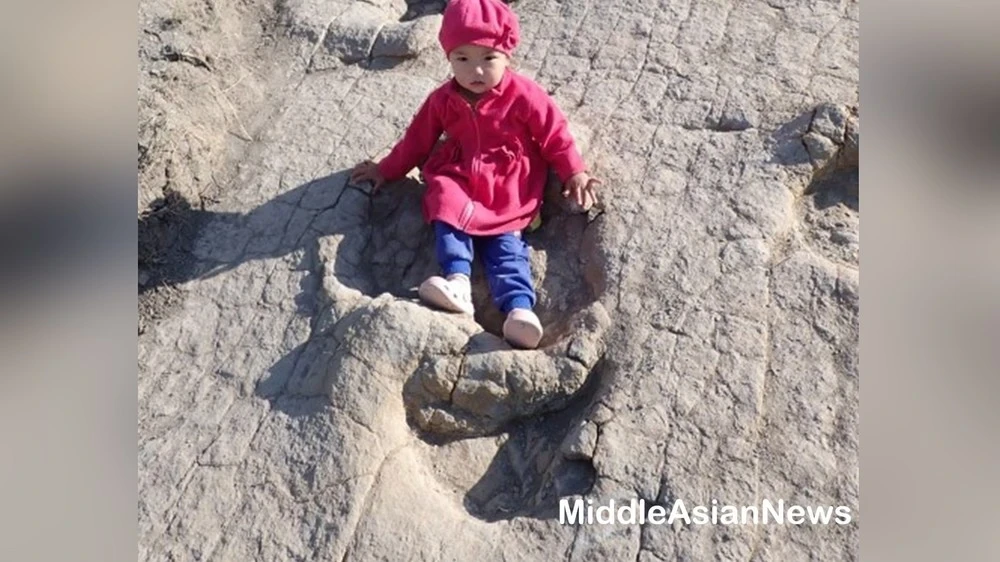
In the history of the world, millions of years ago, fossils, footprints, and traces left behind testify to the existence of various living organisms. In Mongolia, dinosaur tracks are mainly concentrated in the south, and this case marks the first discovery of such tracks in the central part of the country.
According to information published by MiddleAsianNews, a group of scientists led by Mainbayar Buve from the Institute of Paleontology of the Academy of Sciences presented their findings on dinosaur tracks, first identified in central Mongolia, in the Erdenesant sum, in the March issue of the international publication Ichnos.
The tracks in question were briefly mentioned in research reports from the 1950s; however, there is still no data on whether they belonged to dinosaurs.
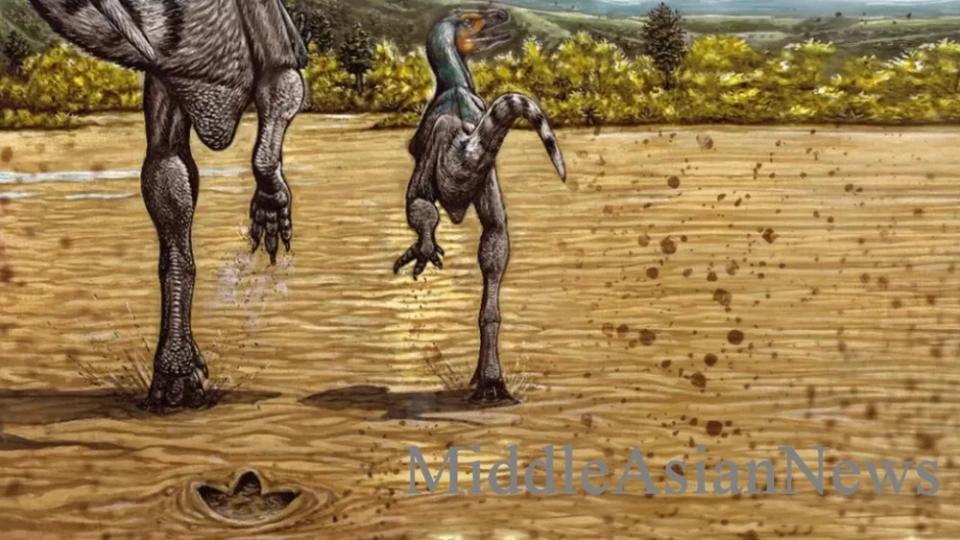
Scientists believe that the tracks were left by two groups of dinosaurs. They consist of two trails (with 19 tracks) left by herbivorous giant sauropods, and five trails (with 12 tracks) left by carnivorous dinosaurs.
This discovery, illustrating the food chain and interrelationship of dinosaur species in the early Cretaceous period, indicates that about 120 million years ago, giant herbivorous dinosaurs grazed on argillites near a lake, and then larger carnivorous dinosaurs joined them.
The ichnofauna of dinosaurs from the Lower Cretaceous formation of Shinekhudag, Mongolia
The study of early Cretaceous dinosaur fauna in Mongolia is quite limited, in contrast to the well-documented Late Cretaceous period. In this study, Mongolian scientists describe new dinosaur tracks discovered in the historical area of Saijrah, which belongs to the Barremian-Aptian formation of Shinekhudag.
The ichnoarchaeological complex includes numerous tracks of large sauropods and theropods preserved on a single plane. The tracks of the sauropods are characterized by a wide gauge and represent a unique mosaic of features: the impressions of the forelimbs have a distinct imprint of the thumb and hind lobes resembling soft tissue pads. The fingers I–IV for these impressions point straight forward.
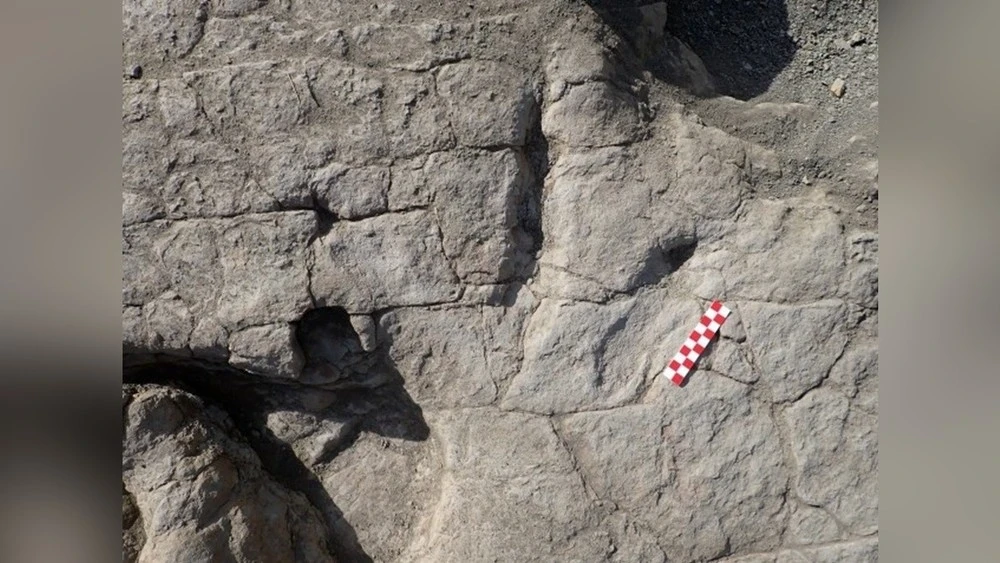
The combination of primitive and derived traits most closely corresponds to a basal organism of the titanosauriform type, leaving tracks, which reveals new aspects of the evolution of sauropod locomotion. The tracks of theropods are large, wide (the length equals their diameter), and functionally three-toed, with wide interdigit angles (>60°).
The theropod tracks confirm the presence of large predators in this ecosystem. Moreover, the high density of tracks with frequent overlaps indicates that this area served as a corridor for intensive movement. The parallel tracks of sauropods may suggest that these large herbivorous animals chose optimal routes to minimize movement costs, similar to modern elephants.
The authors of the study express gratitude to the administration of the Erdenesant sum, especially to Ms. Munkhzorig, as well as to the families of Mr. Ariunbold and Ms. Bayarsaihan from the Saijrah area for their generous cooperation during field research.
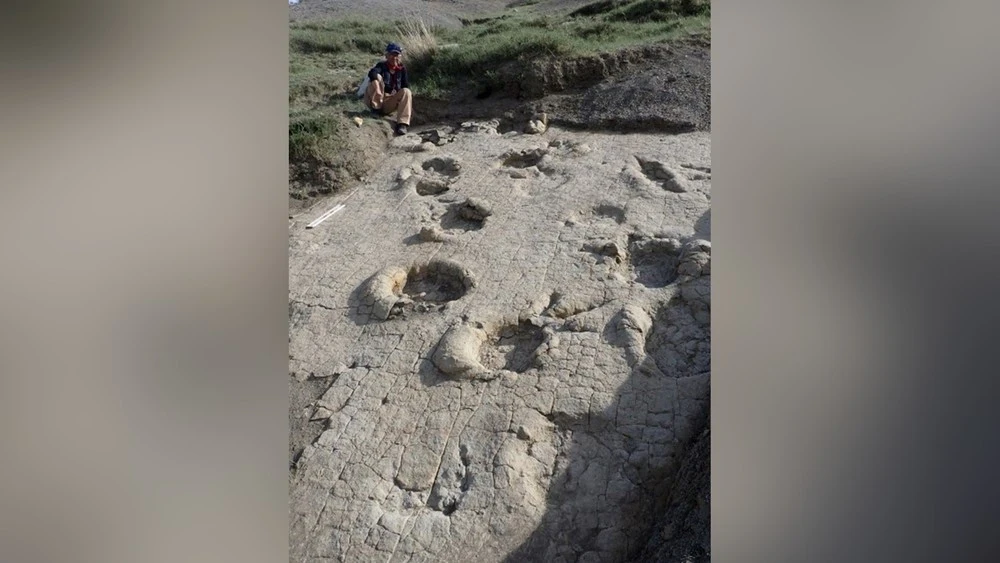
Local volunteers from the nomadic community have made efforts to protect the site of the discovered tracks from erosion.
Scientists also express gratitude to the staff of the Institute of Paleontology of the Mongolian Academy of Sciences and Okayama University of Science for their support of the project. Thanks to the valuable comments from Dr. Kentaro Chiba and Dr. Mototaku Saneyoshi (Okayama University of Science), previous versions of the manuscript were improved. The contribution of two anonymous reviewers should also be noted.