The Mongolian breed of cattle has been studied, resulting in the identification of various cellular clusters in the testes using scRNA-seq technology, as well as investigating the regulation of EGR1/FOS/JUN in Sertoli cells. This data was published in the journal Nature, as reported by MiddleAsianNews.
A group of researchers, including Shuai Peng Gao, Shuiyin Zhang, Hongzhui Zhen, Haoyui Yang, Li Wang, and others, presented their research findings on the international stage.
Despite Mongolian cows successfully maintaining reproductive function in cold and nutrient-deficient conditions, the molecular mechanisms that enable this capability of the testes have remained unclear. As part of this project, an atlas of single-cell RNA sequencing (scRNA-seq) of Mongolian cattle testes was compiled.
The obtained data demonstrated that single-cell RNA sequencing allowed for the isolation of key germ and somatic cells, among which Sertoli cells were divided into four subclusters, reflecting different stages of their development.
Transcriptome analysis and pseudotime reconstruction revealed that the Early Growth Response 1 (EGR1) protein may play an important role in the maturation of Sertoli cells.
To analyze the functions of EGR1 in Sertoli cells, methods such as siRNA knockdown, overexpression, as well as immunohistochemistry and ChIP-qPCR were employed. The results showed that EGR1 can interact with FOS and JUN, activating them, indicating its involvement in the EGR1–FOS/JUN-Nectin-2 regulatory pathway for maintaining reproductive function.
These findings provided new insights into the cellular and molecular mechanisms that support the reproductive function of Mongolian cattle.
The sequencing data obtained during the study has been uploaded to the Genome Sequence Archive (GSA) of the National Genomics Data Center (NGDC) of China under project number CRA024225 (samples: M1_1, M1_2, M2_1, M2_2, Y1_1, Y1_2, Y2_1, Y2_2).
Mongolian cows are characterized by a robust build, strong bones, and good health; they are resilient and have a calm temperament.
One of the features of Mongolian cattle is their ability to quickly gain weight and strength during the summer and autumn periods, and then gradually lose it in winter and spring, while their growth and reproductive abilities are maintained for many years.
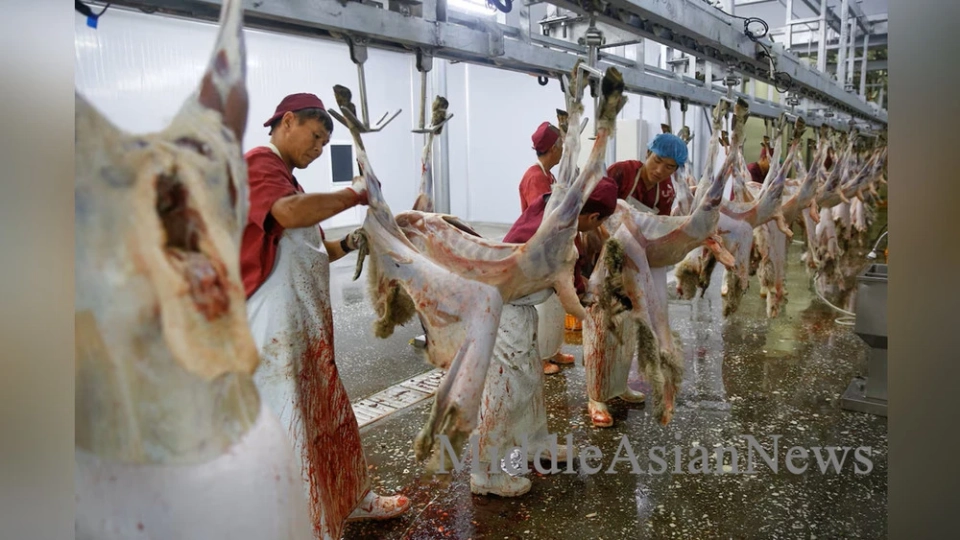
Mongolian breeds of cattle have similar meat yield indicators to specialized beef breeds such as Aberdeen-Angus and Galloway. Mongolian beef is distinguished by its fine-grained structure of muscle tissue and fat, making it tender and flavorful.
Mongolian cattle feed on a variety of vegetation in pastures throughout the year, quickly restoring their fattening capabilities.
By the end of 2025, the country had approximately 5.4 million cows.