Parents and human rights advocates who are calling for stricter regulation of social media welcomed the decision of a jury in Los Angeles, which ruled in favor of a young woman who sued Meta and YouTube over her childhood addiction to social media, reports the BBC.
The jury concluded that Meta (the owner of Instagram, Facebook, and WhatsApp) and Google (the owner of YouTube) intentionally created platforms that foster addiction, which negatively impacted the mental health of the 20-year-old plaintiff known as Kaylee.
Kaylee was awarded $6 million in compensation, and this ruling could influence many similar cases currently pending in American courts.
Meta and Google expressed disagreement with the verdict and intend to appeal. A Meta representative stated, "The issue of adolescent mental health is very complex and cannot be attributed to one specific app." They also added that they would continue to defend their position, arguing that each case is unique.
A Google representative noted that "YouTube is not a social network, but a responsibly designed platform for streaming video," which, in his opinion, was not taken into account during the proceedings.
Ellen Rum, who also sued TikTok after the tragic death of her son, told BBC Breakfast that this is a critical moment when she says, "I've had enough." She posed the question, "How many more children will suffer or die from these platforms?" and added that the "unsafety" of the content is evident, and companies need to do something about it.
**"Malice, oppression, or deceit"**
The jury decided that Kaylee should receive $3 million for damages and another $3 million as a penalty, as they concluded that Meta and Google "acted with malice, oppression, or deceit" in managing their platforms.
Meta is expected to cover 70% of the amount, while Google will cover the remaining 30%.
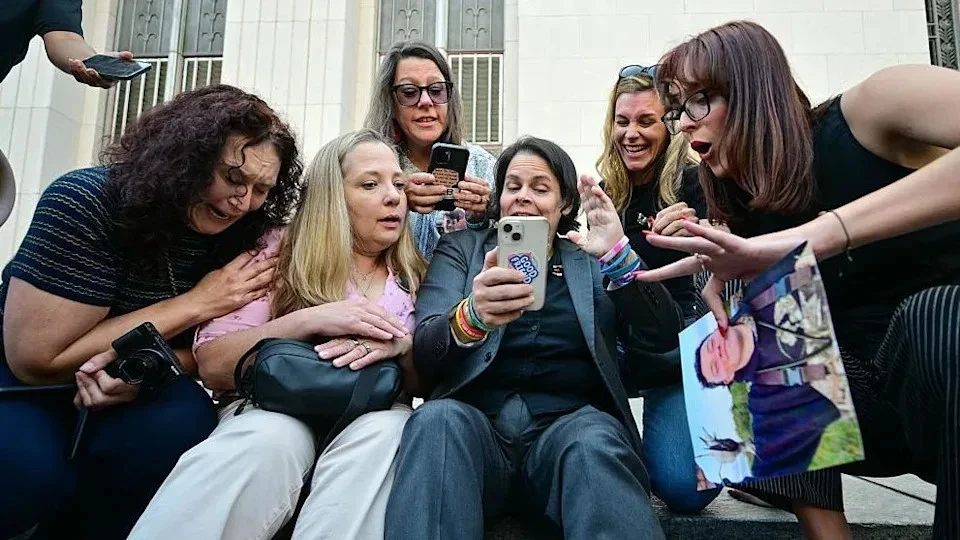
On the day of the verdict, parents of other children who are not part of the case but believe they have also been harmed by social media gathered outside the courthouse. They supported each other, rejoicing at the decision.
The court's verdict was delivered the day after a jury in New Mexico found Meta guilty of putting children at risk by providing access to pornographic materials and contacts with sexual offenders.
Mike Proulx, head of research at the consulting firm Forrester, noted that these decisions highlight an important point regarding social media and the public.
Recently, countries like Australia have begun implementing restrictions for youth to reduce the time spent on social media. In the UK, a pilot project is underway to assess the possibility of banning social media use for individuals under 16 years old.
Proulx added that negative sentiment towards social media has been building for years and has now led to an open conflict. UK Prime Minister Sir Keir Starmer also commented on the situation, calling the current state "unsatisfactory" and calling for additional measures to protect children.
The issue is how much and what exactly will be done to address this situation.
At the same time, the Duke and Duchess of Sussex, who actively speak out against the negative impact of social media, called the verdict a "reckoning" and urged for a shift in priorities so that child safety takes precedence over profit.
Ian Russell, a British internet safety activist whose daughter took her own life after viewing dangerous content, expressed hope that this decision would be a turning point that prompts governments to take action.
During his testimony in February, Mark Zuckerberg, head of Meta, referred to the company's policy prohibiting platform use by users under 13 years old. However, when presented with data showing that children still use their platforms, he stated that he aimed to expedite the process of identifying such users and that the company had made progress.
Although Google was also a defendant in this case, the focus was primarily on Meta's platforms, such as Instagram. Snap and TikTok, which were initially also involved in the lawsuit, reached settlements with Kaylee before the trial began.
Kaylee's lawyers emphasized that Meta and YouTube created "addiction machines" without providing adequate protection for children. Kaylee, who started using Instagram at nine and YouTube at six, did not encounter attempts to block her by age. She noted that her communication with family decreased due to her obsession with social media.
There is an opinion that features like Instagram's infinite scroll were designed to induce addiction. Kaylee's lawyers argued that Meta targets a youth audience, as such users remain active on the platforms longer.
When Kaylee's lawyers informed Instagram head Adam Mosseri that she spent 16 hours on the platform in one day, he characterized it as a "problem," not an addiction.
Kaylee's lawyers noted that the jury's verdict "sends a clear signal that no company can evade responsibility for the safety of our children."
In June, another case against Meta and other social networks for harming children will begin in federal court in California.