A new project aimed at improving the legal and political environment in the field of information and communication technologies, as well as enhancing competitiveness in global markets, is set to launch. The information was published by the MiddleAsianNews agency.
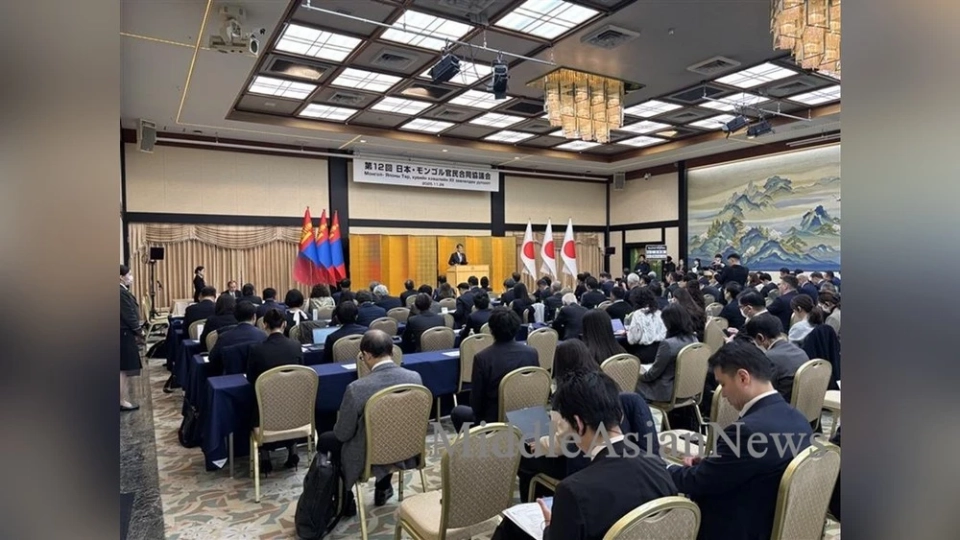
On September 26, 2025, an agreement was signed in Mongolia between representatives of the Japan International Cooperation Agency (JICA), the Ministry of Digital Development, Innovations and Communications, and the National Information Technology Park (NITP). The document concerns the implementation of the project "Development of the Information and Communication Technology Sector."
The main goal of the project is to expand cooperation between the public and private sectors, as well as to support the development of information and communication technologies. Within the framework of the project, a working group will be created, assistance will be provided to local technology companies in entering international markets, and acceleration programs and hackathons will be organized.
Zolzayaa Jargalsaihan, director of NITP, noted that this is an important moment for the telecommunications and information technology sector in Mongolia: "Today we officially launch a three-year project for ICT development in collaboration with JICA. The signing of the memorandum of understanding with JICA took place during the 'ICT Expo' in June 2023," she said.
According to the director, the project includes five key areas, one of which is establishing connections between government agencies, NGOs, and the private sector through public-private partnerships, which will allow all stakeholders to unite.

Zolzayaa also added that Japanese experts will provide consultations on improving regulation and implementing virtual zones in connection with the new law on supporting IT production. This will help define the ways in which technology companies can receive the necessary support.
She emphasized that an important task is for Mongolian IT companies to enter international markets, which will create new opportunities for consulting services and joint events in Central Asia, including Kazakhstan and Uzbekistan. A study will also be conducted to develop startups and identify the needs of market participants. Progress in this area is necessary, as Mongolia ranks low in international ratings.
Given the rapid development of artificial intelligence and big data technologies, various activities will be conducted, including support for companies working in the AI sector, organizing hackathons, and data collection. Representatives from JICA and the Japanese company Deloitte have arrived in the country today, creating all the conditions for starting work.
The main executors of the project will be the Ministry of Digital Development, Innovations and Communications of Mongolia and NITP, which will interact with other ministries.
The project, which involves international organizations and represents a collaboration between the public and private sectors, will be based on a system of key performance indicators (KPI). This implies a high degree of accountability for its implementation. The Mongolian side is optimistic and will strive to achieve all set goals.
Technology companies in Mongolia are targeting not only the domestic market but also the rapidly growing markets of Southeast Asia, Central Asia, America, and Europe. The project will offer them a "soft landing" in these markets, allow participation in major events, and provide funding and methodological guidance.
The effectiveness of the project will be assessed by how well companies are able to receive support through the implementation of virtual zones and the improvement of the legal environment. Today, the sector's share in GDP is only 1.7 percent, but by 2030, this figure is planned to be increased to 5 percent. Cooperation with JICA will be an important stimulus for achieving this goal.
This year, NITP has set three main tasks. First, more than 30 companies have been registered in virtual zones, which will allow real-time data collection about the industry. Second, the construction of the IT park will be completed, and international benchmark centers are planned, including an AI laboratory, a research center, an exhibition hall, and coworking spaces.
The third task is preparation for the first international ICT exhibition, which will take place in Mongolia in September. All these activities fully align with the goals of the joint project with JICA.
"The project aims to develop the information and communication technology sector in Mongolia. We hope that by the end of the project, this sector will be able to develop more independently. The IT park, as a key player, will continue to lead its development," said project leader Yamamoto Shosei.
"The Mongolian ICT sector has so far developed mainly independently and has had limited support from the government. Private companies are actively entering international markets, but research has shown that this is not enough for the overall development of the sector. Therefore, it is important to unite efforts and create a 'Unified Mongolia' to enter foreign markets and expand its development. We plan to provide this support in collaboration with the IT park and the Ministry of Electronics, Innovations, and Communications," he added.

"Japan can contribute to the development of this sector in several ways, highlighting two key areas. First, in the field of technology, there is potential for the implementation of innovative solutions based on big data and AI. Japan has significant experience in these areas.
Secondly, Japan has rich experience in organizing teamwork among enterprises, which will help create a unified brand for the Mongolian ICT sector on the international stage. We have a system that allows for a joint entry into the global market, and this is extremely important for Mongolia.
The completion of the project is scheduled for 2028, but achievements will be assessed using specific key performance indicators (KPI). The indicators for evaluating results will be determined jointly with the Ministry of Electronics, Innovations, and Communications. For example, the effectiveness of the project will be assessed by the number of companies successfully entering foreign markets," added Yamamoto Shosei.