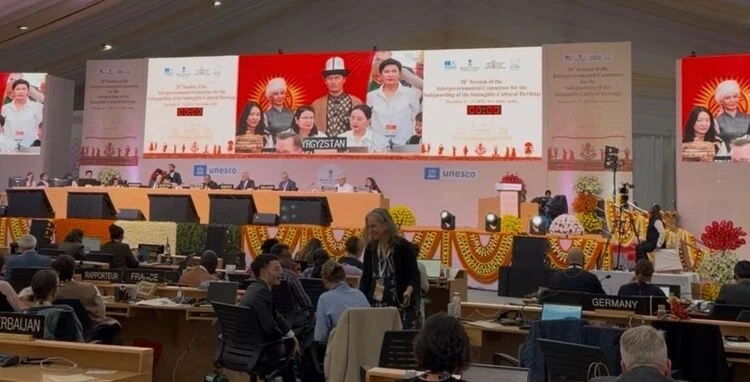
On December 17, the II Global Summit on Traditional Medicine organized by the WHO began in New Delhi, in collaboration with the Government of India. The forum includes ministers, scientists, representatives of indigenous communities, and practitioners from more than 100 countries.
During the summit, major scientific initiatives and new commitments aimed at accelerating the implementation of the WHO Global Strategy on Traditional Medicine for 2025-2034 are expected to be announced. The main directions of the strategy will be strengthening the evidence base, improving regulation, integrating into health systems, as well as community engagement and involvement.
The statement emphasizes that "methods of traditional medicine have been used long before the emergence of modern biomedicine and continue to evolve. For many people, this is the only accessible and affordable way to receive the necessary assistance. Some, even having the option to use modern medical services, prefer more 'natural' approaches to health."
"The WHO aims to connect ancient wisdom with modern scientific achievements to ensure comprehensive access to medical services," noted WHO Director-General Tedros Adhanom Ghebreyesus."An ethical and responsible approach, utilizing innovative technologies such as artificial intelligence and genomics, will help unlock the full potential of traditional medicine and offer safer and more sustainable healthcare solutions for all communities and for the planet as a whole," he added.
According to data, amid growing challenges faced by healthcare systems, nearly half of the world's population—4.6 billion people—lack access to essential health services, and more than 2 billion people experience financial difficulties in obtaining medical care.
The WHO believes that "the integration of traditional medicine into health systems is crucial for expanding access to affordable services and for promoting universal health coverage so that everyone can receive the necessary assistance without financial hardship."
"Data show that such an approach can lead to cost savings, improved prevention, and health strengthening, as well as more rational use of antibiotics," the statement adds.
Traditional medicine is also the foundation of a rapidly growing sector, including the production of medicinal plants. All traditional medicine preparations and more than half of biomedical drugs are made from natural resources, which remain essential for the development of new medications.
Photo on the main page is illustrative: istockphoto.com.