As the Chinese New Year approaches, also known as the Lunar New Year or Chunjie, Asian countries, including China, begin preparations for this grand celebration. With a history spanning over a thousand years, this holiday is rich in various traditions and legends. In this article, we will discuss when exactly the New Year will arrive in 2026 and how it is celebrated in China.
Historical Roots of Chunjie
The Chinese New Year has a history of over 3,000 years, tracing back to the Shang Dynasty (1766-1122 BC), when farmers celebrated the beginning of spring fieldwork. Over time, the holiday evolved, incorporating many regional customs and traditions. For example, in Yunnan, competitions with sky lanterns are held, while in Shandong, stilt parades are popular.
When and How the Holiday is Celebrated
The date of the Chinese New Year is determined by the lunar calendar and shifts each year. In 2026, it will be celebrated on February 17 and will last for a full 15 days, concluding on March 3. The Year of the Fire Horse, according to the Eastern calendar, will begin with the year 4724. China also uses the Gregorian calendar, but the lunar calendar remains an important part of the culture. In 2025, the symbol of the year was the Green Wooden Snake, and in 2024, the Green Wooden Dragon. After the Fire Horse, the Year of the Red Fire Goat will follow in 2027.
The horse in Eastern culture symbolizes movement, hard work, and the pursuit of success, while the element of Fire enhances these qualities, adding passion and activity. The color red, traditionally associated with luck, will dominate the celebrations.
Traditions and Customs of the Chinese New Year
Among the traditions of the Chinese New Year are family gatherings, festivals, and folk celebrations. Fireworks are an integral part of the holiday, and their launch is based on the legend of the Nian monster, which was scared away by loud noises and red decorations.
The color red has become a symbol of protection, and it can be seen everywhere: from lanterns to red envelopes with money that are given to friends. Wearing red clothing or using a red tablecloth is considered a guarantee of financial luck in the new year.
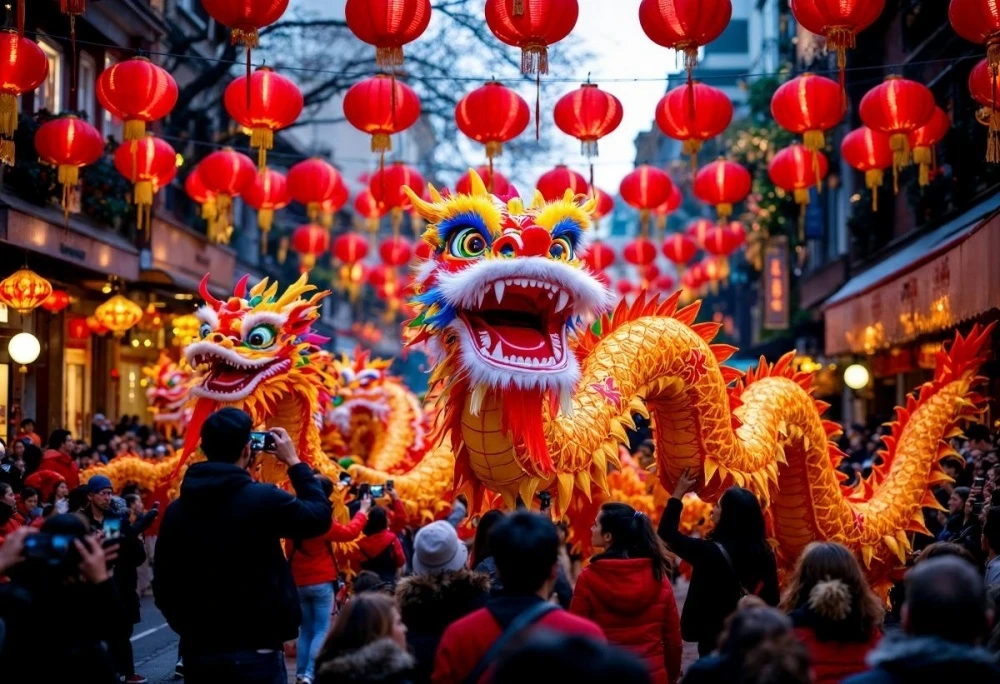
Another vibrant tradition is the lion and dragon dances, which symbolize courage and good fortune. The celebration culminates in the Lantern Festival, where people release lanterns that embody hope and success.
Preparations for Chunjie begin a month before the holiday, during a period known as Xiaonian. During this time, the Chinese clean their homes to "sweep out the old" and ensure good luck in the new year. It is also important to settle all debts to avoid carrying financial difficulties into the next year.
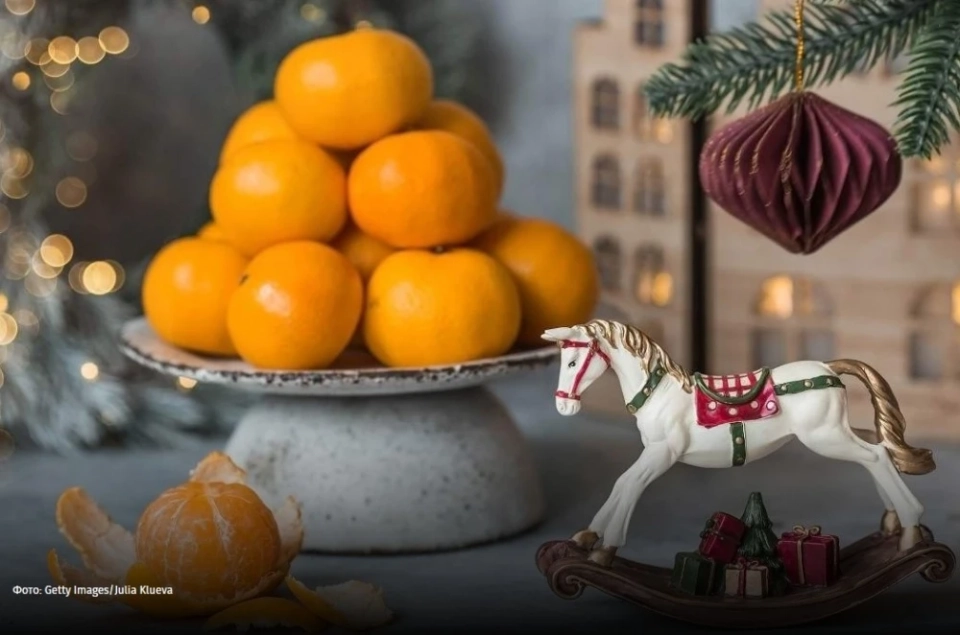
Flowers and plants with symbolic meaning, such as peach tree branches and mandarin trees, decorate homes, symbolizing prosperity and good fortune.
It is worth noting that during the holiday period, a massive migration of people occurs in China, known as "chunyun," when millions return to their hometowns to reunite with families. This migration leads to more than 3 billion trips during the 40 days of celebration.
Symbolism of the Holiday
The Chinese New Year and the two weeks following it are filled with vibrant traditions and deep symbolism. The celebration begins with an important family dinner, where all family members gather. Traditional dishes symbolize abundance, longevity, and family happiness.
The launching of fireworks at midnight serves to scare away evil spirits, although in large cities, this is limited for environmental reasons. The morning of the New Year begins with greetings and the giving of red envelopes with money, which has also become part of digital culture in recent years.
The Chinese New Year is not just a date on the calendar but a whole world of symbols and traditions that reflect the unique wisdom of the people. Understanding the history and rituals of this holiday is key to appreciating Chinese culture. By wishing "Xin nian kuai le!" you become part of an unbroken cultural tradition that connects the past and the present.
The Chinese New Year is also widely celebrated in educational institutions and joint Chinese-Kyrgyz enterprises in Kyrgyzstan.
Source: silunews.kg