The motto of the event: "Hearing is possible thanks to technology. Being heard is thanks to people."“I am the mother of a boy with hearing impairment, his name is Alinur. We have three children, and only he has hearing problems. Alinur is in the second grade of a regular school and is successfully mastering the educational material. He wears binaural hearing aids,” shared Alinur's mother.
As the woman explained, many parents mistakenly believe that after hearing aids are fitted, their children will immediately start speaking. In reality, it is necessary to develop understanding: the child needs to learn to analyze information, highlight what is important, and adapt to the surrounding environment.
“In the rehabilitation process, we implemented numerous activities: in addition to working with a deaf educator, speech therapist, and defectologist, we conducted classes on sensory integration, physical, and motor development. This yielded significant results. Alinur became more stable, his understanding and control of his own body improved, and his movements became more coordinated. Children with hearing impairments often experience dysfunctions of the vestibular system, which can manifest as clumsiness and difficulties in group games,” noted Tatygul Rysbaeva.
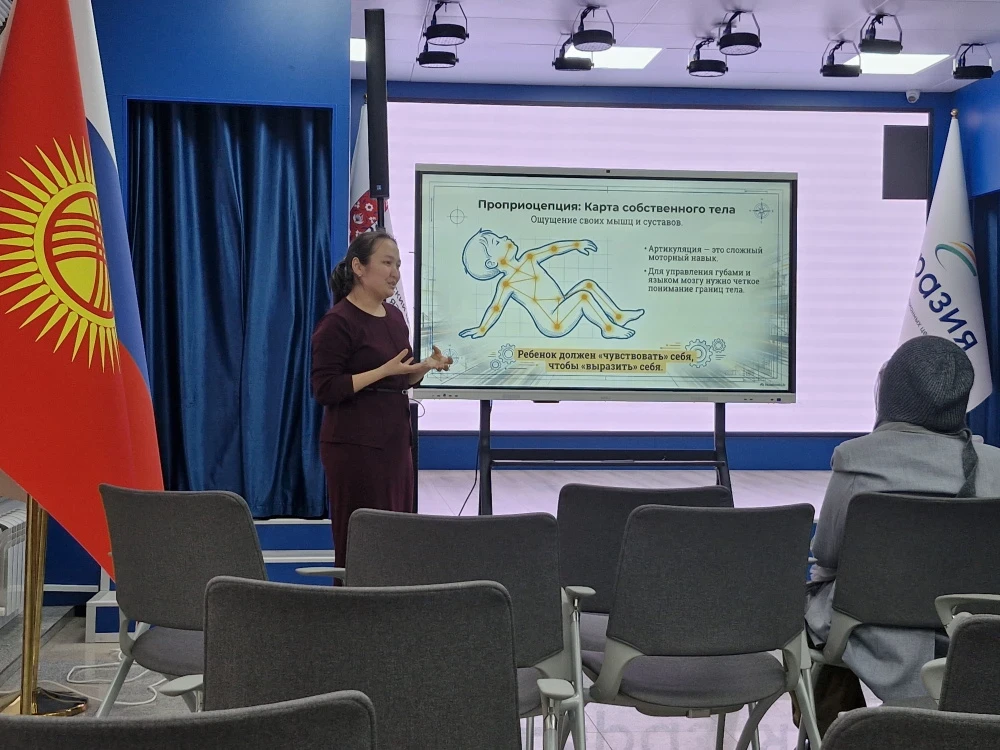
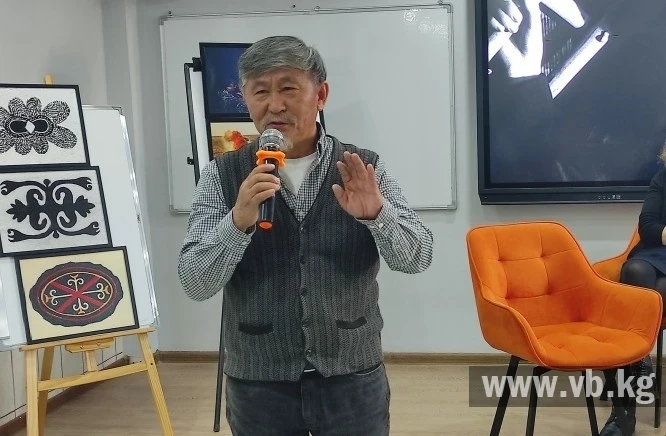
Tatygul Rysbaeva at the event dedicated to the International Day of Cochlear Implantation.
“Children who start hearing later perceive the world primarily visually. They learn to memorize information with their eyes. For example, Alinur mastered the multiplication table at the age of five thanks to cartoons and visual learning. He has a special passion for numbers. He knew numbers in both Russian and English, could count to a million, perform addition, subtraction, and multiplication, and worked with decimal fractions. However, his speech developed more slowly than his mathematical skills,” added his mother.
After fitting the hearing aids, they began actively working on expanding his vocabulary using visual cards. For instance, while showing a picture of a boy opening a window, the mother would say the words and simultaneously demonstrate the action, which helped form a connection between the word and its meaning.
During walks from home to kindergarten, they named everything they encountered: car, house, tree, grass, stone, sky. Thanks to repetitions, Alinur reinforced new words through hearing, visually, and tactilely.
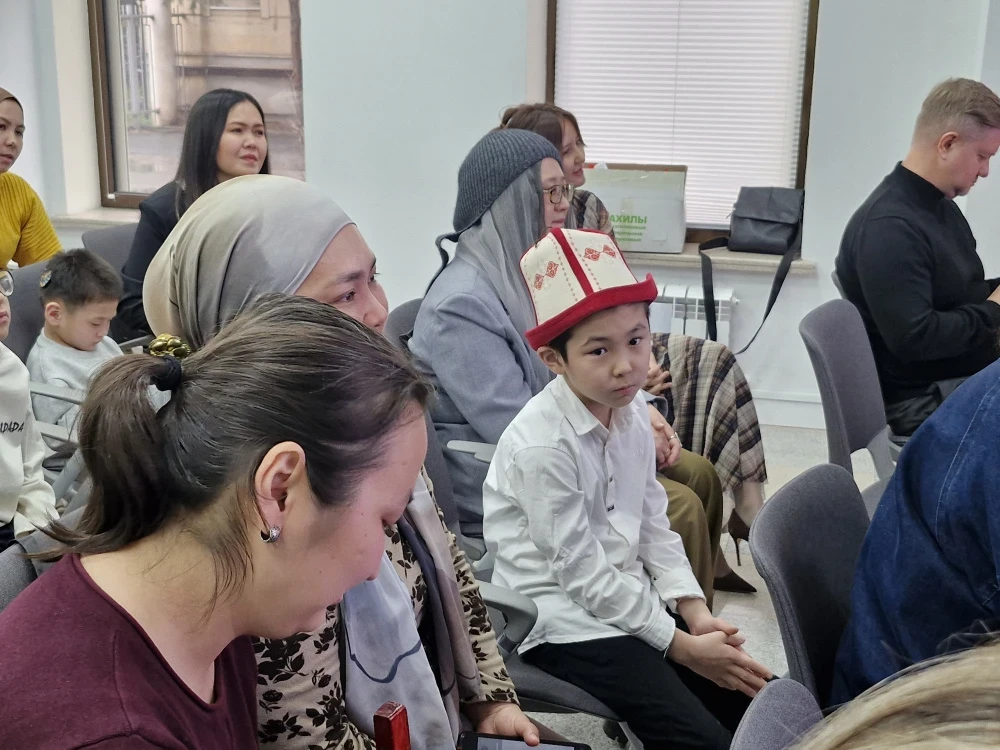
Alinur at the event dedicated to the International Day of Cochlear Implantation.
Tatygul Rysbaeva emphasizes that such work requires constant efforts from the entire family.
“Only with the full involvement of the family can the child succeed in rehabilitation,” she believes.It is also necessary to monitor the condition of the hearing aids, which require regular maintenance. “Batteries discharge quickly. Every day after work, I check the devices: whether he hears and if everything is functioning. We clean them at least every two days, as earwax can clog the tubes and interfere with sound perception. The devices need to be dried properly, removed at night, and the battery compartments opened so they can 'rest' and not whistle,” the mother explained.
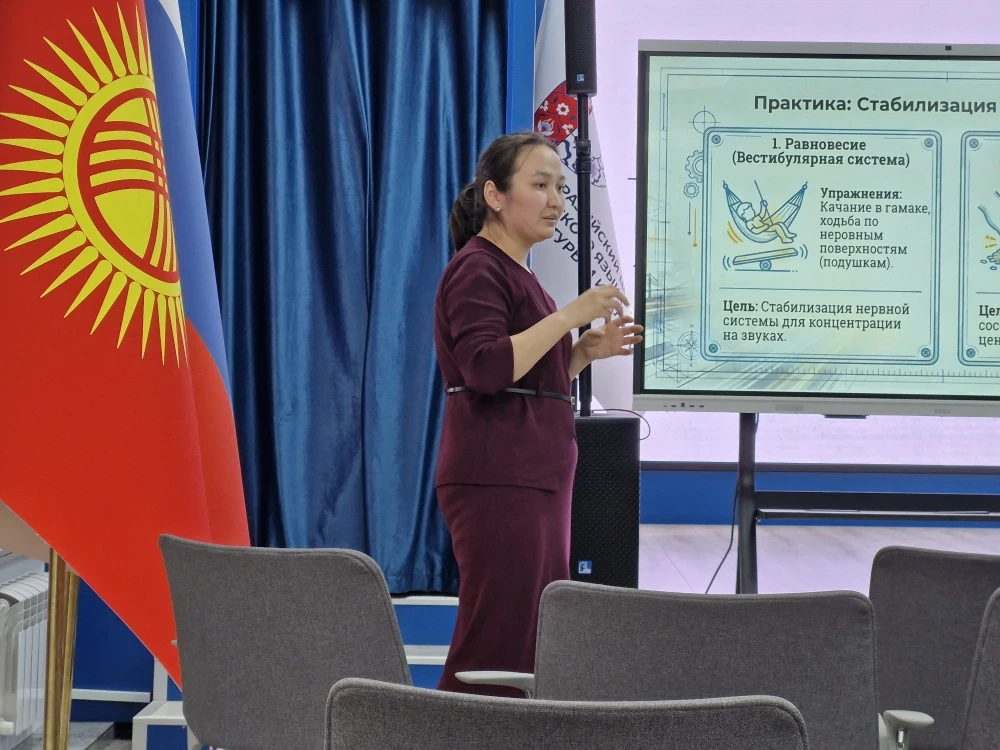
Tatygul Rysbaeva at the event dedicated to the International Day of Cochlear Implantation.
According to Tatygul, it is extremely important to explain to the child that the hearing aids are his devices, and no one has the right to touch them. It is also important to teach him how to properly explain to other children that these are not headphones, but devices that help him hear.
“Once, a classmate asked Alinur if they were headphones. My son calmly explained that these are hearing aids that help him hear,” Rysbaeva shared.“Before sending him to school, I discussed the situation with the deputy principal and the class teacher, explaining that he needs an inclusive environment for full participation in society. He is completely safe, he has no mental or psychological disorders, he is attentive and teachable. Usually, children with hearing impairments are directed to specialized institutions, but we were recommended a regular school for further development,” she added.
According to Rysbaeva, those around them generally react positively to Alinur's characteristics. They have not experienced open discrimination. “Perhaps someone thinks something, but no one says anything out loud. I see my child as a full member of society and never allow anyone to treat him with pity or condescension. On the contrary, I am more demanding of him than of other children because if high goals are not set, he may become lazy and stop developing,” the mother noted.
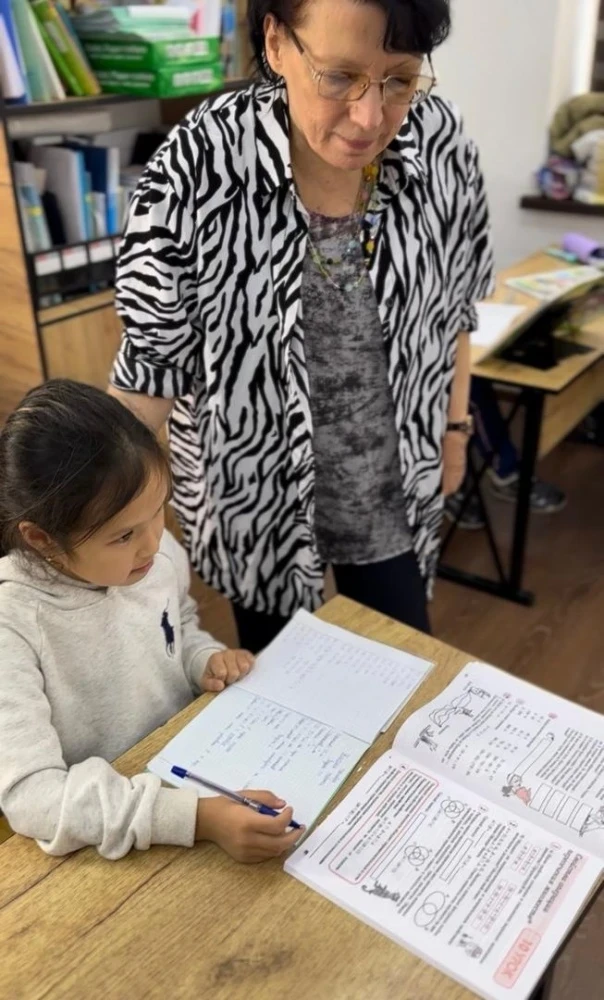
At the moment, Alinur independently handles his homework (except for complex word problems in math) and helps his younger brother, who is in the first grade: he keeps track of the schedule, brings the necessary books, and assists with homework. The boy feels his responsibility as an older brother.
“I want to emphasize again: before losing his hearing, Alinur reacted well to sounds. For example, he could hear us opening a soda bottle from another room and run over, exclaiming, 'Cola, cola.' He could hear, but then he lost his hearing. It is important to be humane and open to children and people with special needs,” concluded Tatygul Rysbaeva.