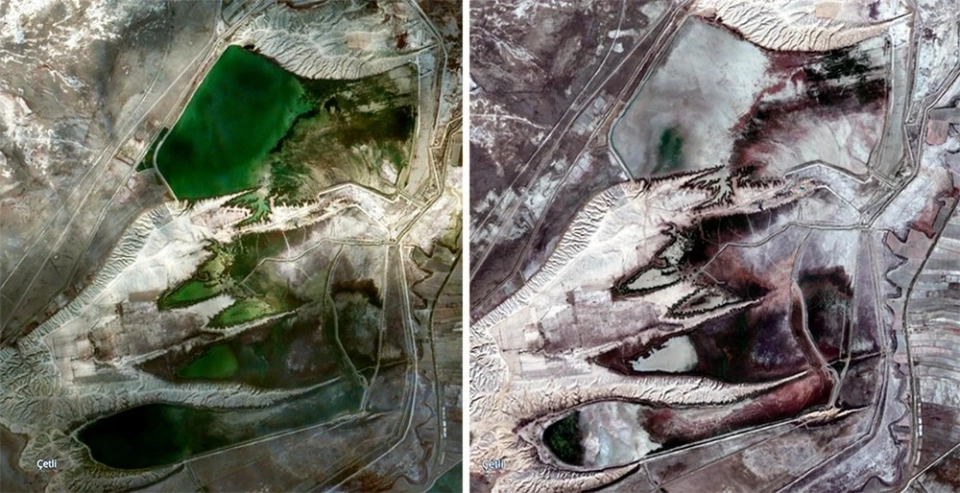
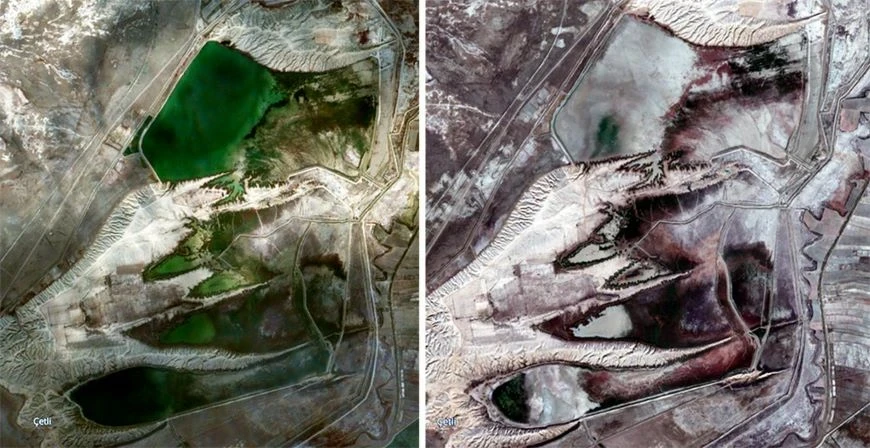
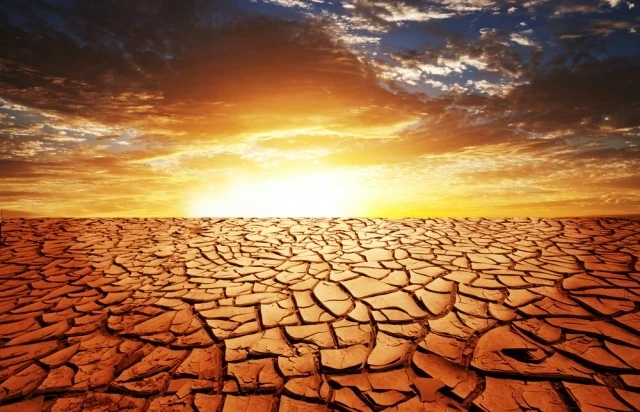
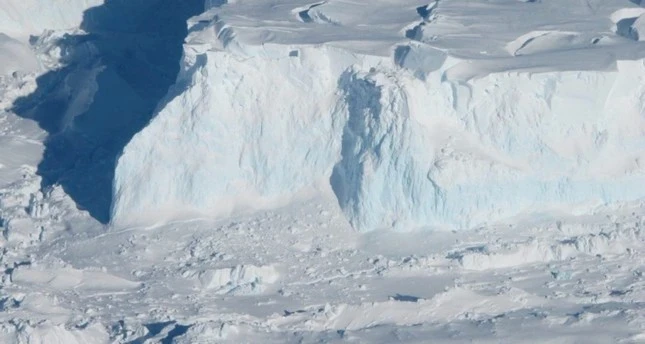
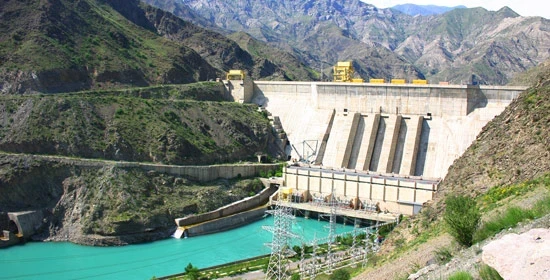
The alarming rate of glacier melting and the decrease in water levels in the Toktogul reservoir are forcing government institutions to conserve electricity, while farmers are turning to prayer.
Agronomy and glaciology specialists told 24.kg about why the spring period in Kyrgyzstan now lasts only a week and how 0.7 millimeters of precipitation in October affected the need for a zero rate on drip irrigation.
Frequency of Drought
For a long time, changes in Kyrgyzstan's hydrological cycle have been discussed. As stated by Deputy Prime Minister Edil Baisalov, it was expected that this year we would exit the low-water period, but it has only intensified.According to Almazbek Sokeiev, former head of the State Agency for Water Resources, the low-water period used to last about 12 years, then it was reduced to six years.
After the low-water conditions of 2020, experts assumed that a repeat would occur only in 2026. “However, 2021 turned out to be extremely difficult, and in 2023 the situation worsened even further. Changes are occurring not only from year to year but also from month to month. As a result, we observe that cycles of low and high water manifest every other year,” he explained.
Alinur Niyazov, an agricultural specialist, confirmed that low-water conditions have been observed annually in Kyrgyzstan over the past five years—in 2021, 2023, and 2025—and predicting the future situation is becoming increasingly difficult.
Global Warming and Its Consequences
To analyze the cyclicality of the low-water period, glaciologist Gulbara Omorova stated that extensive monitoring data is necessary.“Unfortunately, we are facing a lack of data, instruments, and funding. For example, in the Chui region, we only observe three glaciers when at least ten are needed. The Central Asian Institute for Applied Research of the Earth studies the Golubina and Abramova glaciers. The Tian Shan High Mountain Scientific Center monitors the Kara-Batka glacier in the Issyk-Kul region, but in the southern part of the country, in Talas and Batken, observations are almost non-existent,” she noted in a conversation with 24.kg.
Gulbara Omorova also highlighted the issue of glacier melting.
Glaciers have significantly reduced in volume and now provide a sharp but short peak of runoff in the summer.
According to her observations, precipitation from January to March was 30-40 percent below normal, especially in the Chui and Naryn regions, and drought was observed in April and May, leading to a moisture deficit of nearly 50 percent.
“In the spring of 2025, there were virtually no floods—snow accumulated in small amounts and melted two to three weeks earlier than usual. Farmers essentially missed the spring snowmelt,” she noted. “In the summer, when we visited the glaciers in the Chui region, we noticed their intense melting and the lack of significant snow accumulation in the accumulation zone.
Now, with 4-5 large streams of meltwater observed on the Adygen glacier, the question arises: why is there so little water during maximum melting? The ice melts quickly, but the water also quickly flows down the riverbed into neighboring countries. Additionally, evaporation and water consumption increase in the heat. The autumn of 2025 turned out to be one of the driest in recent years, which caused low water levels and low river flows, as well as minimal filling of the Toktogul reservoir,” she added.
Gulbara Omorova emphasized that global warming and climate change exacerbate the problem of low water in Kyrgyzstan. Rising temperatures accelerate glacier melting, reduce snow accumulation in winter, and disrupt river flow regimes.
The cycle is shortening, but predicting its exact cyclicity is difficult.
When asked which glaciers in Kyrgyzstan are melting the fastest, the glaciologist noted that the most severe degradation is observed in Talas: “Precipitation in this region has decreased, and glaciers are retreating rapidly. This is noticeable even without deep monitoring. In May, when we were in Talas, many farmers were waiting for water and could not plant beans because the snow melted back in April.”
Gulbara added that glaciers also feed groundwater, which is another key problem. In her opinion, it is necessary to enhance glacier monitoring and focus on scientific research.
Lack of Snow—Lack of Bread
The dry climate particularly negatively impacts agriculture: crops suffer, yields drop, and prices rise.According to expert Alinur Niyazov, there are 1 million 287 thousand hectares of arable land in the country, of which 492 thousand hectares are rainfed (without artificial irrigation), where mainly grains and perennial grasses are grown.
These lands are the foundation of food security for grains, especially wheat.
“Currently, Kyrgyzstan needs about 850-900 thousand tons of food wheat for flour production. We produce only 550-600 thousand tons, and most of this grain is unsuitable for flour due to low gluten content. Therefore, it is mainly used for animal feed, and the country is forced to import grain from Kazakhstan and Russia,” he told 24.kg.
To ensure food security in the context of climate change and unstable precipitation, specialists recommend switching to winter crops.
“We practically have no spring; we go straight into summer, which significantly shortens the growing season. Spring-sown crops experience severe climatic stress and face spring-summer drought. This leads to low yields in rainfed agriculture. Therefore, since Soviet times, agronomists have recommended sowing winter crops. This allows for the effective use of autumn, winter, and early spring moisture, and snow serves as a ‘natural blanket.’ The yield of winter crops is always higher than that of spring crops,” noted Alinur Niyazov.
This opinion is also shared by the Ministry of Water Resources and Agriculture. But why don’t farmers follow these recommendations? The problem is that deep soil cultivation is required for plowing. In conditions of insufficient precipitation, the soil dries out, forming large clumps during plowing, which complicates the harrowing and sowing process. Therefore, farmers wait for precipitation, which usually comes in November.
Read more on the topic Carrot shortage. The Ministry of Agriculture hopes for a second harvest
[/url>
“In November, everyone tries to cultivate the land, but the equipment is overloaded, and people simply do not have enough time. According to our observations, only 15 percent of farmers manage to sow winter crops, and these are mainly those who have their own equipment. This year, no one was able to sow—there is still no precipitation. According to the ‘Weather and Climate’ website, about 50 millimeters of precipitation fell in October last year, while this year it was only 0.7 millimeters, which is 70 times less,” added Alinur Niyazov.
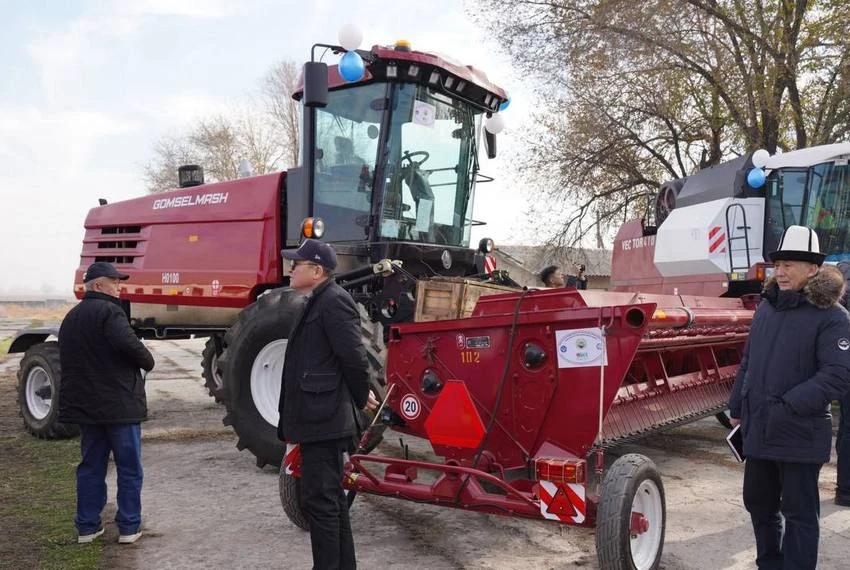
In such a situation, direct seeding technology may be a solution, where a specialized seeder places seeds in unprepared soil while simultaneously applying fertilizers. This allows for avoiding plowing and harrowing, as well as not waiting for rain.
This approach significantly increases the window for sowing and allows for the most efficient use of available moisture, especially in rainfed agriculture.
“If traditional farmers have not yet sown anything, we have already cultivated 3.2 thousand hectares. Of course, this is a small amount, but we have limited resources and a lack of equipment, only 20 such seeders,” noted Alinur Niyazov. “We focus on the quality of the products. When creating each of our machine-tractor stations, we open revolving funds that annually finance the purchase of high-quality, drought-resistant, and frost-resistant seeds of the highest category, ensuring high yield and quality.”
Water Conservation Education
Turatbek Idrisov, head of the Department of Crop Production, Horticulture, and Cooperation of the Ministry of Water Resources, Agriculture, and Processing Industry, informed 24.kg that trials of drought-resistant and heat-resistant plant seeds are being conducted as part of climate change adaptation.In 2025, for example, a roadmap was signed with the Russian Lukyanenko Grain Center.
In October, the center's website reported the establishment of the first hybridization nursery for producing new varieties of winter wheat of Russian selection in Kyrgyzstan.
Under the memorandum of cooperation, the center provides eight new varieties of winter wheat and one variety of winter triticale (a hybrid of wheat and rye), which will serve as the basis for further hybridization.
These new varieties will be resilient, high-yielding, and maximally adapted to the changing climatic conditions and soil characteristics of Kyrgyzstan.
According to Turatbek Idrisov, seeds of oilseed crops imported from the USA and Europe are also being tested in the republic.
He added that drip irrigation and sprinkler irrigation technologies are being increasingly implemented in Kyrgyzstan.
“Farmers can obtain preferential loans for the purchase of irrigation machines and drip irrigation equipment. In 2026, if the Ministry of Finance supports us, we plan to introduce a zero rate for this. Additionally, since last year, funds from the state budget have been allocated for the installation of drip irrigation in areas with limited irrigation. Farmers can sign contracts for these plots and engage in crop production, directing 20 percent of the annual profits to cover the cost of the equipment,” explained the head of the department.
Turatbek Idrisov reported that there are plans to annually implement rational irrigation technologies on 2-2.5 thousand hectares, but the documentation process for some plots is delayed.
Read more on the topic [url=http://24.kg/ekonomika/338786_kapelnoe_oroshenie_500_gektarov_zemli_zaplanirovali_vbatkenskoy_oblasti/]Drip irrigation planned for 500 hectares of land in Batken region
“In 2026, we want to launch a pilot project for drip irrigation on 2.5 thousand hectares in the Issyk-Kul region. If the project is successful, we will spread this experience throughout the region. This will help combat the shrinking of the lake. Drip irrigation increases the yield of agricultural crops. For example, with traditional irrigation, one can obtain 30-40 tons of carrots per hectare, while with drip irrigation—over 70 tons; some farmers this year even obtained 90 tons,” he concluded.
Unfortunately, not all agricultural producers in the country have access to quality seeds, loans, and new technologies. Therefore, in conditions of recurring low-water periods, the only option left is to pray, as has been decided in Uzbekistan amid prolonged drought.