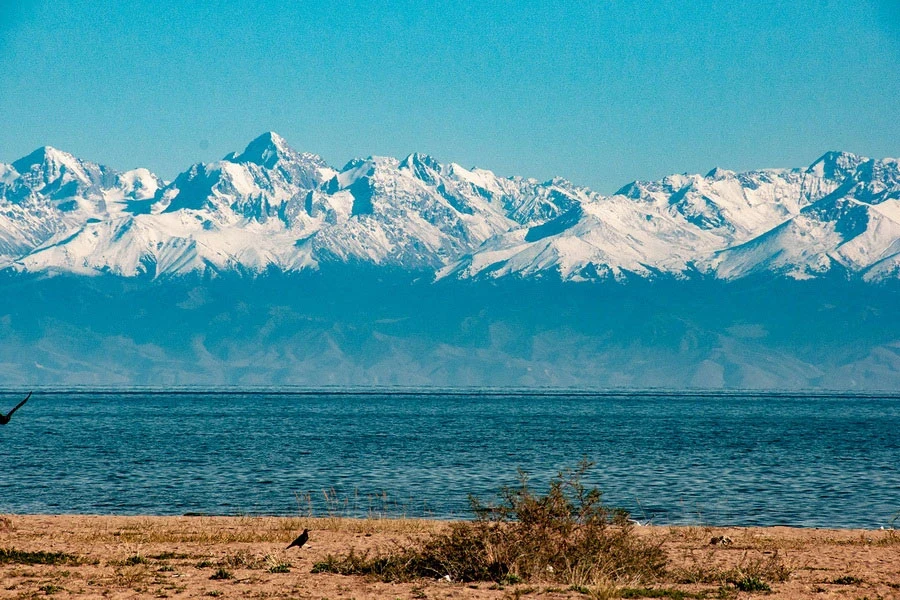
How during the Cold War, Aitmatov gathered intellectuals from the USSR and the USA on the shores of the lake
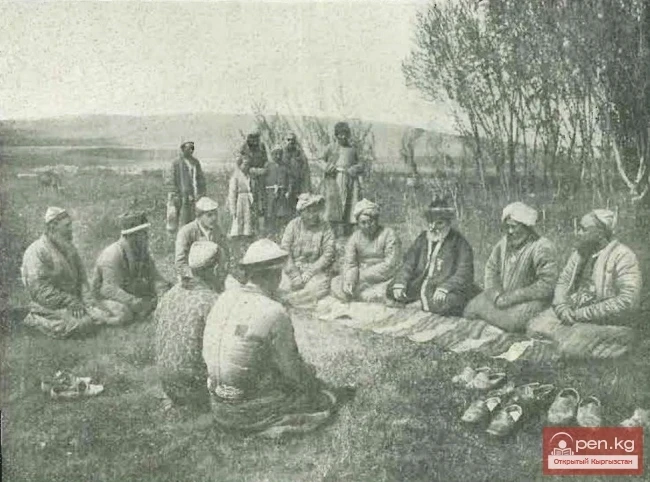
In October 1986, on the picturesque shores of Lake Issyk-Kul in Kyrgyzstan, writers, scientists, and thinkers from countries in a state of political confrontation gathered to discuss the future of humanity. This forum became an experiment in creating a global cultural dialogue in the context of the Cold War.
The international situation at that time was marked by an escalating arms race between the United States and the Soviet Union. Nuclear arsenals were increasing, and ideological rivalry significantly influenced world politics. In the USA, Ronald Reagan's presidency intensified this strategic competition, while in the USSR, the perestroika initiated by Mikhail Gorbachev in 1985 opened new horizons aimed at reducing tensions and establishing trust.
A key moment in this situation was the statement from January 15, 1986, published by all Soviet publications, proposing the complete destruction of nuclear weapons by the year 2000. In such an environment, the idea was born to gather cultural and scientific forces for joint reflection on the future of the planet.
The founder of this forum was the Kyrgyz writer Chingiz Aitmatov, who was a significant figure in Eurasian culture. As an advisor to Gorbachev during perestroika, and later as the ambassador of Kyrgyzstan to UNESCO, the European Union, NATO, and the Benelux countries, he viewed culture as an important means of dialogue between civilizations.
Critic Grigory Gachev noted: “Aitmatov is a person who is alien to the Russian literature of Russia that emerged from the Soviet Union... He remains in the world, and indeed, he accepts!”
He initiated the first Issyk-Kul forum, which brought together outstanding representatives of world culture, including Peter Ustinov, Alvin and Heidi Toffler, Arthur Miller, James Baldwin, Nobel laureate Claude Simon, Alexander King, and Federico Mayor.
Mikhail Gorbachev emphasized the importance of this meeting in his memoirs "Life and Reforms": “On October 20, I met with the participants of the forum, just a week after Reykjavik. We spent several hours in a relaxed conversation, feeling mutual goodwill. I reminded my interlocutors of Lenin's thought about the priority of social development over class interests. In the age of rockets and nuclear weapons, this becomes especially relevant. We pledge to this principle and hope that it will be understood and accepted worldwide.”
Gorbachev also highlighted the formation of new political thinking during such discussions: “I speak of the priority of universal human values. This does not mean that we abandon class, group, and national interests. However, they lose significance if we cannot prevent nuclear war.” Thus, the forum was conceived as an informal space for discussing global challenges, aimed at preparing the world for a new millennium filled with humanism and creativity, which was reflected in the motto: “Survival through creativity.”
Federico Mayor, Director-General of UNESCO from 1987 to 1999, later recalled: “In one of the first publications about the forum in APN, it was stated that the Issyk-Kul forum is the embryo of new thinking. This is absolutely true. At that time, it was still the Soviet Union. We were given the opportunity to openly share our ideas. I, as a neurobiochemist, had already been to the USSR and understood how limited freedom of speech was. Issyk-Kul opened up great opportunities for us to express ourselves.” After this forum, they met four more times, including a meeting in Spain, where Aitmatov was also present.
By the late 1980s, it seemed that historical changes were becoming a reality. The fall of the Berlin Wall, the reunification of Germany, and the collapse of the USSR occurred without direct confrontation between superpowers. Mayor called Gorbachev an “extraordinary president,” and reconciliation processes were intensifying in various regions of the world.
However, this “new beginning” did not fully materialize. The European Union became more of a monetary than a political union; the Charter of Fundamental Rights of 2000 was largely forgotten; markets in Germany began imposing their rules, leading to actual interference in the affairs of the governments of Italy and Greece.
In the United States, ambitions for dominance and market interests persisted; the influence of oligarchic groups from the wealthiest countries became increasingly noticeable in the work of the United Nations.
Production capacities were relocated to other regions, and some plutocratic structures continued to gain advantages, jeopardizing the democratic ideals stated in the first line of the UN Charter: “We, the peoples of the United Nations, determined to save succeeding generations from the scourge of war...”. The forum at Issyk-Kul continued its work, and from 1987 to 1997, meetings were held in Switzerland, Spain, Mexico, the USA, and France.
Over time, the format of the forum changed: it became an international conference, shifting the focus from new thinking to the “culture of peace,” actively promoted by UNESCO in the 1990s.
After Aitmatov's passing, new meetings in 2013 and 2018 again raised issues of intercultural dialogue, ecology, and humanistic values.
The forum also became a tribute to the memory of Chingiz Aitmatov.
Today, his legacy continues: the president of Kyrgyzstan signed a decree to prepare for the 40th International Issyk-Kul Forum, scheduled for June 2026, aimed at renewing international dialogue on pressing global challenges.
Aitmatov's words remain relevant: “If humanity does not learn to live in peace, it will perish.”
Photo www