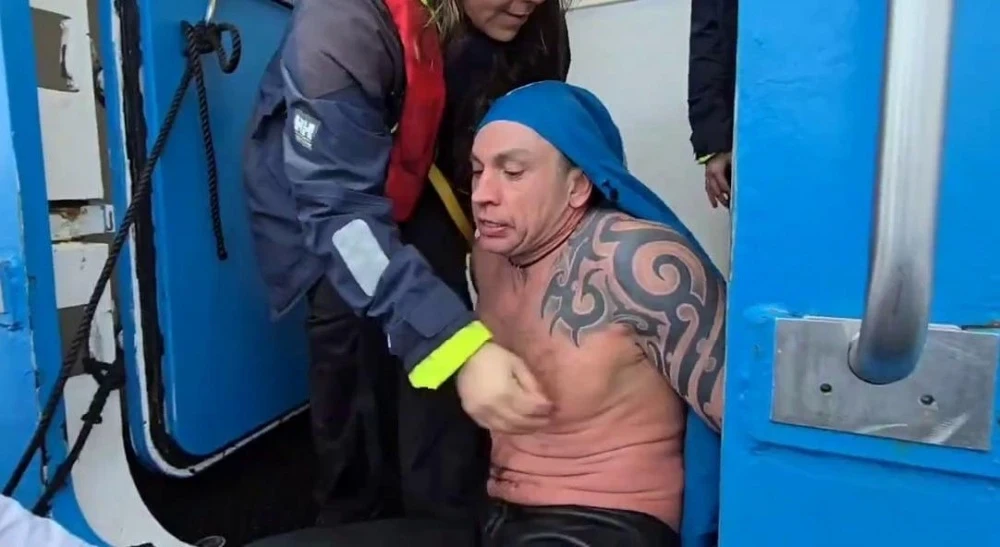
The icy waters of Antarctica can be harsh, but they also unite peoples. The story of an amazing athlete and the people around him is told in the material by "VES 24".
Water temperature +3 degrees, no wetsuit...
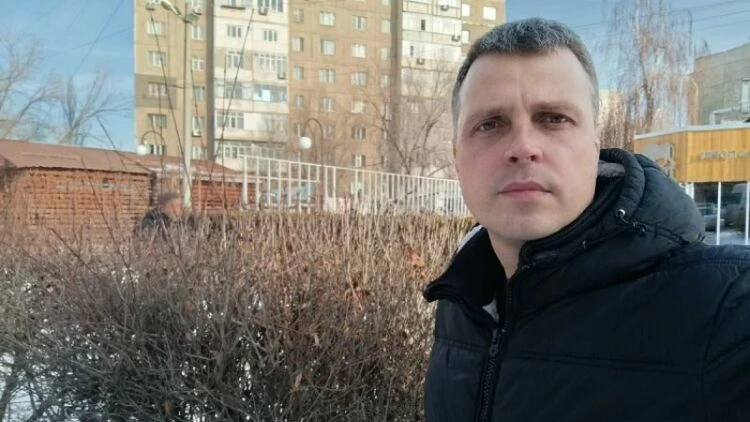
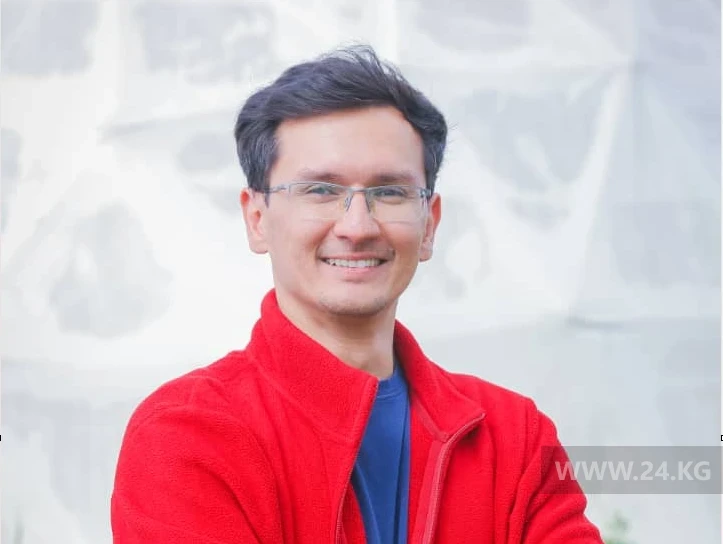
For Vitaly Kochnev, a former Russian special forces soldier faced with limitations after a spinal injury, the cold became a real test. In early March, the international ice swimming association confirmed his record: he swam 900 meters without a wetsuit. The total distance was 1 kilometer. The water temperature was -1.9 degrees, and the air temperature was about 3 degrees. This achievement became not just a sports success but a true challenge to nature and human capabilities.
However, the most significant event of the expedition was the social aspects that deserve special attention.
Passengers of the Ocean Albatros
The Ocean Albatros ship, which became a temporary home for the expedition, could have become a "golden cage" due to the hundred foreign workers with their unfamiliar language. However, it soon became clear that the brotherhood of the peoples of Eurasia runs deeper than borders. One of the event organizers, journalist Sergey Logvinov, shared an unexpected encounter: "There are practically no Russian-speaking workers among the hundred people on board. But at the reception, seeing our red hats with the inscription RUSSIA, one of the staff greeted us in Russian. She was from Kyrgyzstan, and her name was Merim."
This meeting was a real relief. The Kyrgyz woman perceived Vitaly not as a foreigner but as one of her own, highlighting the transparency of the EAEU borders at the level of human relationships. Merim helped him navigate the rules of life on the ship and became a support in an unfamiliar environment.
Another surprising moment was the communication with Ukrainians. Mechanics Dmytro and Ivan from Odessa, seeing Vitaly with crutches descending into the icy water under the Russian flag, expressed their support for him.
“These two Odessans proved that we should treat each other as people because we have no conflicts with them: neither over gas nor the Black Sea,” believes Sergey Logvinov.
A test of spirit
If Antarctica welcomed Russian athletes with respect, the return journey proved to be more complicated. Ushuaia Airport in Argentina did not greet the team warmly. Strikes, flight cancellations, and high ticket prices became a real trial, and the treatment of the disabled Vitaly was particularly harsh. His wheelchair was taken away, and he had to wait for his flight lying on the floor while the security ignored his needs. Five empty chairs were nearby, but they could not be used. This highlights the very tolerance that is so often spoken of in the West.
In contrast, the Russian House in Buenos Aires welcomed the team with joy. It was here, at the Rossotrudnichestvo representative office, that an important press conference took place, where Vitaly was able to talk about his achievements without censorship. The support of Russian emigrants and the official assistance of the Russian House contrasted sharply with the cold attitude of the Argentine authorities.
After his injury, Vitaly did not give up, became a master of sports, conquered Elbrus, and now Antarctica. He was offered to swim under the Chilean flag with promises of benefits and support, but he was categorical: "I never thought about giving up my Russian citizenship."
With his story, Vitaly proved that the impossible is possible. "Everyone has difficulties, but the main thing is to dream. When you dream and set goals, it distracts and mobilizes you," he shares.
The unity of the space of victories
Kochnev's story resonates with the successes of para-athletes from Central Asia, who show that the spirit of competition and mutual assistance unites the entire region. Athletes from Kazakhstan demonstrate outstanding results on the world stage. Yerbol Khamitov became a Paralympic champion in biathlon, winning gold and bronze at the Games in Italy, strengthening his country's position in winter sports. Alongside him in the national team are Alexander Gerlitz and Anna Gracheva, showing that disability is not an obstacle for the residents of the steppes and mountains.
Kyrgyzstan, the homeland of Merim, is also proud of its athletes. Jalalidin Abduvaliev became the world champion in paratriathlon among the visually impaired, winning in Spain. Gulnaz Juzbaeva, a visually impaired runner, defends her country's honor at qualifying competitions. Their achievements contribute to strengthening the human spirit in the post-Soviet space. The Kyrgyz government has established high prizes for medals, understanding how important it is for sports to unite the nation.
Uzbekistan also demonstrates powerful results in the Paralympics, especially in athletics and judo. Boburjon Omonov and Nurkhon Kurbanova are known far beyond Asia. At the World Championship in Japan, Uzbek athletes won numerous medals, achieving high positions in the overall standings. This underscores the growing attention to people with disabilities in the region. Even Tajikistan, although it did not win medals at the recent Asian Games, sends its representatives, such as Bakhtier Donaerov and Farzona Gulomova, to assert their right to participate in big sports.
All these people are part of one cultural code. We often understand each other without words and are ready to help, just as Merim reached out to the Russian swimmer in his language. When a Kazakh biathlete wins gold, and a Russian para-athlete participates in a swim in Antarctica, they demonstrate the strength of character nurtured in our countries.
The ice melts, brotherhood remains
Vitaly Kochnev does not intend to stop at what he has achieved. He plans to set a new record — to swim a mile in Antarctica and cross the Río de la Plata. He realizes that the main obstacle is his own mind, which suggests giving up, but he is not used to yielding. His return home through Argentina, Ethiopia, and Beijing was difficult, but he came back victorious.
Antarctica is open to all who are ready to enter the icy waters, but it especially warmly welcomes those who remember the common past and believe in a united future. Records will be broken sooner or later, but the sense of unity manifested at the edge of the world will remain the main outcome of the expedition. Although we are different, we are still united, and this is more important than any records in the Guinness Book.