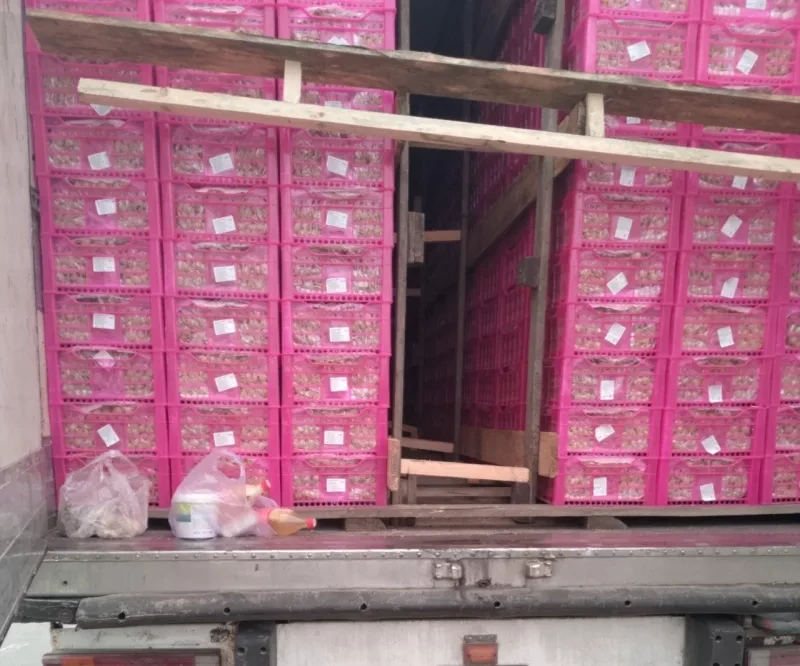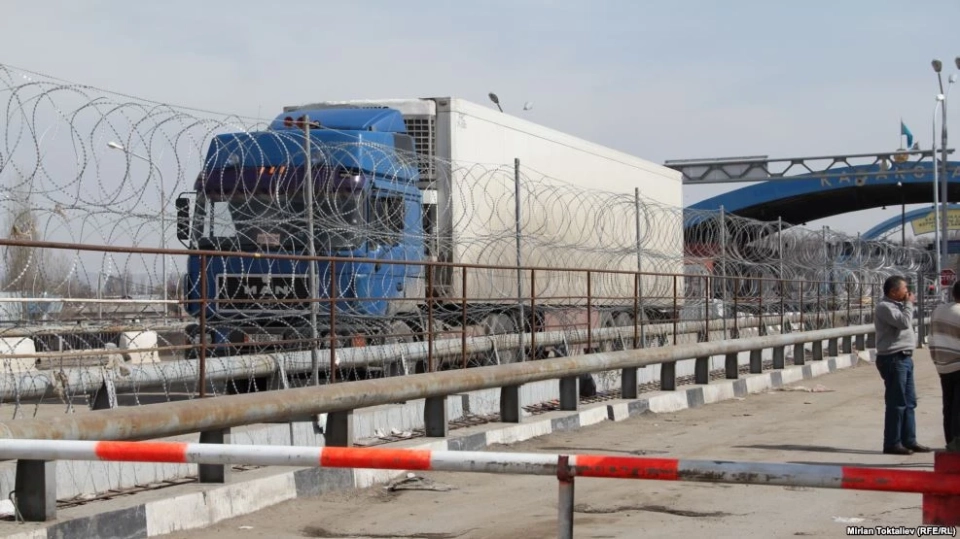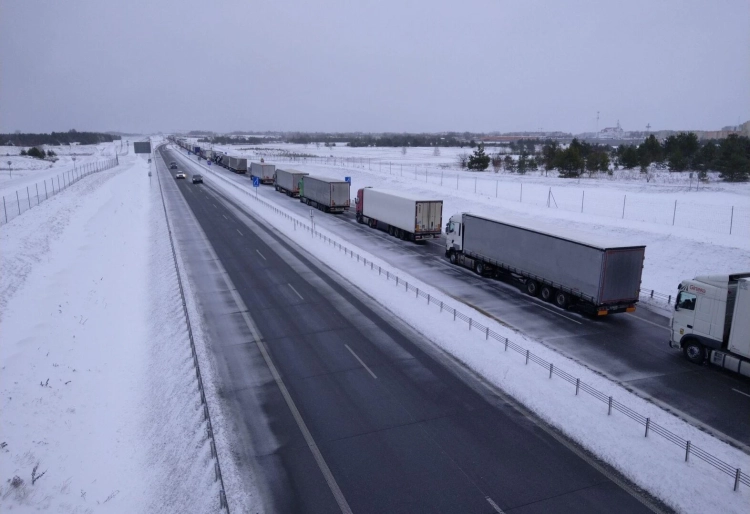
She noted that the delays were caused by intensified checks on "gray" schemes and control over the labeling and origin of goods. According to her, this concerns thousands of trucks, the majority of which transport clothing from Kyrgyzstan.
— What do the new requirements of the Russian Federation entail?
It is necessary to distinguish between the regular and temporary procedures introduced by Russia at the end of October.
1. Regular procedure (requirements that have been in effect for a long time):
— correct labeling of clothing using the "Honest Sign" system (for categories subject to mandatory digital labeling) and compliance of labels with declared characteristics;
— confirmation of the status of goods in the EAEU and the presence of corresponding shipping documents;
— for Russian recipients — payment of domestic VAT in the Russian Federation, which often becomes the main obstacle. During intensified checks, these aspects are specifically monitored.
2. Temporary procedure (presidential decree of the Russian Federation dated October 24, 2025)
From October 24, 2025, to December 10, 2025, the import of goods from Kazakhstan and Kyrgyzstan is allowed without the necessary documents confirming the status of goods in the EAEU and without labeling, provided the following conditions are met:
— the cargo must be addressed to a Russian legal entity;
— the carrier is obliged to notify the customs authorities of the Russian Federation about the need to declare and label the goods;
— the recipient must deliver the goods to a temporary storage warehouse (TSW), notify the Ministry of Industry and Trade of the Russian Federation about plans for labeling, and carry out labeling/declaration;
— declaration must be completed by December 27, 2025;
Thus, formally, no new barriers have been introduced for tailors; on the contrary, the conditions have been temporarily softened. However, intensified checks and selective inspections continue to be in effect, and if discrepancies in labeling are found in a batch or if the documents are insufficient, the truck may be delayed at the TSW for weeks. This leads to downtime and disruptions in supplies.
Financial payments from the Russian Federation
"Currently, there is no single official assessment of the sewing industry. However, according to information from April 2025, the total overdue debt of Russian companies to Kyrgyz partners (across all sectors) amounted to about 210 million rubles. These are aggregated data and do not pertain to one specific industry. In practice, many sewing contracts remain in limbo due to delays at the border and the halt of acceptance at Russian marketplace warehouses," reports Atabekova.
— Are there contradictions with agreements within the EAEU?
From the perspective of EAEU principles, the free movement of goods and mutual recognition of requirements should minimize such problems. However, in practice, intensified control and subsequent measures from Russia (including the temporary procedure) create effectively non-tariff barriers and uncertainty for exports. Despite the fact that the temporary decree is essentially a softening, there is a risk that after December 10, the situation may worsen if the relaxations are not extended and clear corridors for honest suppliers are not established.
The problem lies not in new barriers, but in strict control of gray imports and weak discipline regarding labeling and VAT from some Russian recipients. The temporary decree facilitates import but does not eliminate the risks of downtime at the TSW. A "green corridor" is needed for honest tailors, a standardized package of documents, and payment mechanisms related to the fact of labeling and acceptance of goods. This will help to ease the border and restore predictability in payments.
In addition to logistical problems at the border, the sewing industry of Kyrgyzstan faces serious financial risks exacerbated by sanctions against Russia and its banking system.
Firstly, Western and international measures against Russia affect transit payments and correspondent relationships of banks from third countries, including Kyrgyzstan. For example, several Kyrgyz banks have been added to the EU sanctions list as they serviced schemes to circumvent restrictions.
Secondly, manufacturers in the sewing sector report delays in payments for exports to Russia (or through Russia) — partly due to complications with payment channels, and partly because Russian partners cannot or do not want to conduct transactions due to sanction risks. This leads to a chain of problems: if the goods are delayed at the border or are sitting at the TSW, payment does not arrive, and the manufacturer incurs costs for storage, logistics, and personnel.
Thirdly, the sanctions regime increases uncertainty: even if payments are technically possible, banks become more selective, fees rise, and timelines extend. For exporters, this means the need for additional risk insurance and stricter payment terms (e.g., prepayment or letter of credit) compared to previously existing conditions.
Although the EAEU provides for the freedom of movement of goods, in practice, financial and sanction realities create "hidden barriers." That is, logistics and customs may operate, but if there is no reliable payment — the chain is disrupted.
In this regard, I recommend that exporters of sewing products consider the following measures:
- agree in advance on payment terms with the Russian partner, taking into account banking risks;
- use currency channels verified for compliance with sanction requirements;
- consider possible delays in payment and additional costs;
- conduct legal and banking due diligence on the recipient in Russia to verify their solvency and ability to conduct transactions.
Only in this way can damage be minimized and the competitiveness of Kyrgyz sewing products in the Russian market be maintained.