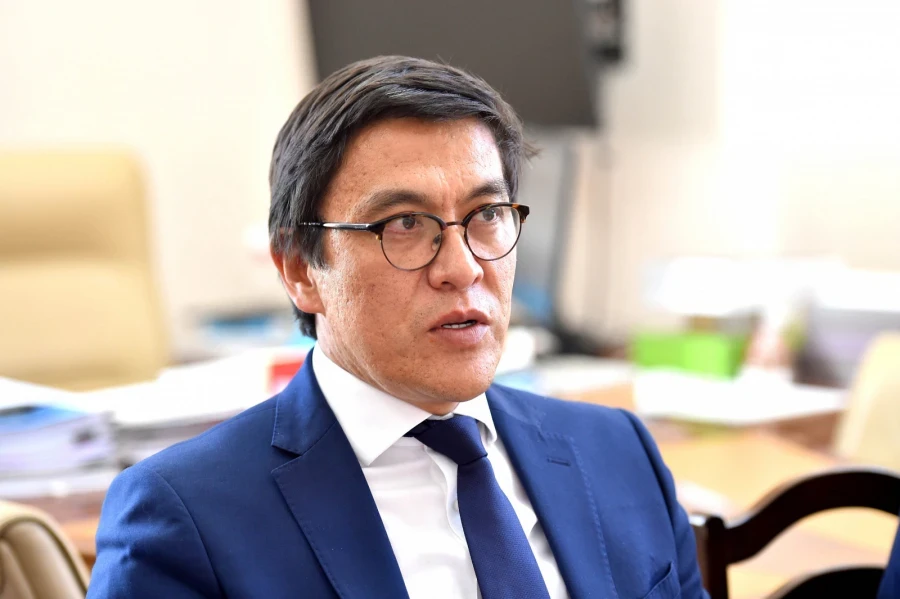
He noted that this debate is familiar to many and is understandable.
“In fact, this is nothing more than a false dilemma. Responsibility is not divided; it is shared. First and foremost, the responsibility lies with the family. It is within the parental circle that a child first learns values such as trust, honesty, respect, hard work, and caring for others. The habits formed in the family can either help or complicate the school’s work,” he explained.
However, Baysalov continued, one should not forget the other side of the issue. “Often, the school becomes an important moral compass for the child. The words of a teacher are perceived as sacred, and the phrase ‘We were told this at school’ can overshadow any arguments from parents. In this sense, teachers shape not only children but also parents, as well as social norms and perceptions of what is acceptable and what is not. The school becomes the center of public life, and the conversation about education is always a discussion about what kind of society we want to see,” added the Deputy Head of the Cabinet.
He also noted that modern children live in a much more complex world compared to the one their parents grew up in.
“They have more opportunities, access to information and material goods, but at the same time, they face greater pressure and anxiety. Social networks create a false impression of constant success and set standards that form incorrect benchmarks. This leads to children increasingly experiencing insecurity and fear of not meeting expectations, which also negatively affects their concentration. We rarely discuss these issues openly and responsibly. Often, the conversation about children's mental health boils down to extremes or silence. Every teenager goes through a complex internal journey, and during this period, the support of adults is especially important—not as judges, but as a support system. The school and family must be allies so that the child feels that adults on both sides of the school door speak the same language, share common values, and are ready to support them,” emphasized Baysalov.
In conclusion, he addressed the parents: “You are not required to be perfect or all-knowing. The main thing is your involvement in the child's life, in their experiences and questions. Participation should be sincere and active. There is one important thing we must emphasize: reading. It is not just a skill, but the foundation of thinking, imagination, and a person's inner world. Reading together strengthens emotional bonds, develops attention, and teaches the child to understand the text, and thus the world around them. We will expand access to children's books, libraries, and electronic resources, and support school and rural libraries. However, no government program can replace the tradition of reading to a child from an early age, every day before bed. A love for books is born not in school, but at home,” concluded the Deputy Head of the Cabinet.