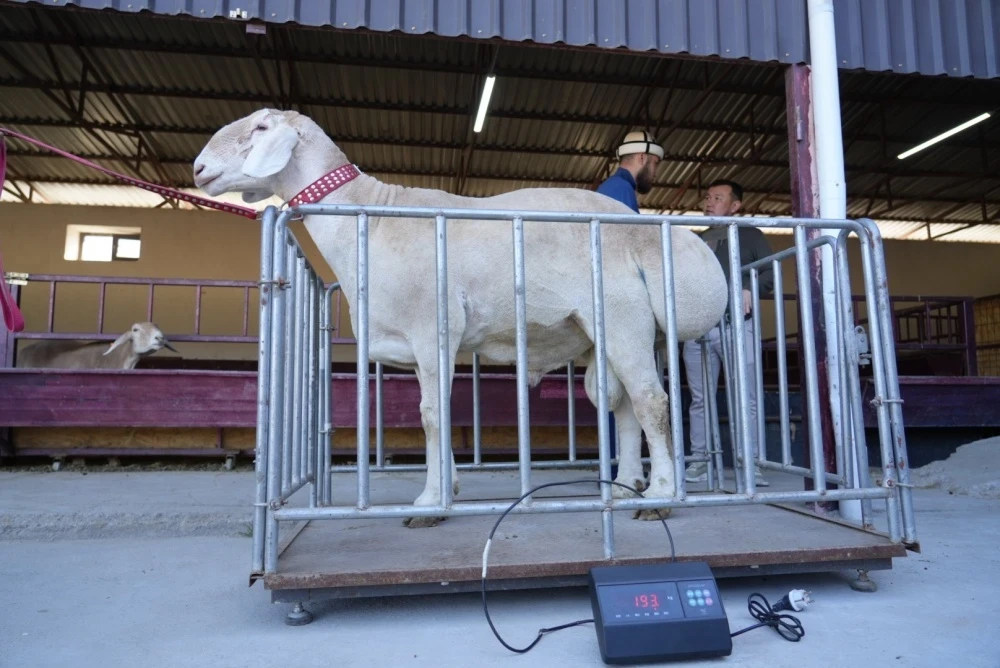
The establishment of a laboratory for freezing embryos of breeding sheep in Kyrgyzstan could play a crucial role in the development of animal husbandry and the agricultural economy. This conclusion was reached by participants in a survey conducted by VB.KG among sheep breeders, breeders, marketers, and economists.
Currently, sheep farming is one of the key sectors of agriculture in the country. According to various estimates, the total number of sheep in Kyrgyzstan exceeds 6 million. However, their productivity and quality often do not meet global standards. The main reason for this is limited access to quality breeding material and slow breeding rates.
The implementation of embryo cryopreservation technologies can significantly accelerate breeding work, increasing meat and wool yields by 15–30% in the medium term. This will also reduce the import of breeding livestock and increase farmers' incomes by improving product quality. Furthermore, it could pave the way for the creation of a new market for exporting high-quality breeding material.
The industry today faces numerous challenges, including climate change, animal diseases, and competition from imported livestock. In such conditions, traditional breeding methods become less effective. Cryopreservation allows for the "storage" of the best genetic lines and their use regardless of the season and geographical location. This is particularly relevant for Kyrgyzstan with its remote pastures and complex logistics.
Experts emphasize that this is not just a new technology, but a strategic tool for development. If Kyrgyzstan wishes to compete on the international stage in meat and wool production, the implementation of biotechnologies becomes essential. Embryo transfer allows for achieving results in a few years that previously required decades. Specialists are confident that having one modern laboratory could serve as a foundation for the entire country and even become a launchpad for exporting technologies to neighboring regions.
Global experience confirms the effectiveness of this approach. In Australia and New Zealand, such technologies have already become standard, facilitating rapid breed improvement and increasing export potential. In Canada and European Union countries, the breeding material market generates significant income, and cryopreservation laboratories are an important part of agricultural infrastructure.
The launch of such a project would provide Kyrgyzstan with the opportunity to enhance the competitiveness of its meat products, enter new export markets, and reduce technological lag in the agricultural sector. Without the implementation of modern solutions, the industry will develop too slowly, while the creation of a laboratory could become a growth point for the entire agriculture of the country.