Recently, the International Business Council prepared an expert opinion and proposed its adjustments to the draft law of the Kyrgyz Republic "On Amendments to Certain Legislative Acts of the Kyrgyz Republic on Ensuring Road Traffic Safety".
On March 11, 2026, the Jogorku Kenesh of the Kyrgyz Republic approved the draft law in the second reading, which proposes the mandatory registration of mopeds and obtaining driver's licenses of the corresponding category.
Earlier, the International Business Council had already addressed the deputies of the Jogorku Kenesh of the VII and VIII convocations, requesting them to consider this draft law, emphasizing its importance for businesses and citizens of the republic.
The purpose of the expert opinion is to assess the potential socio-economic risks associated with the employment of citizens if the law is adopted without implementing mechanisms for the legalization of already imported mopeds and without expanding the network of driving schools for training drivers of the corresponding category.
Members of the MDS support the goals of the draft law aimed at improving road safety, regulating the use of motor transport, and establishing uniform rules for all road users. However, they believe that the proposed norms may lead to serious socio-economic consequences for a significant number of citizens and cause practical difficulties in implementing the law.
1. The Role of Mopeds and Motor Transport in the Economy
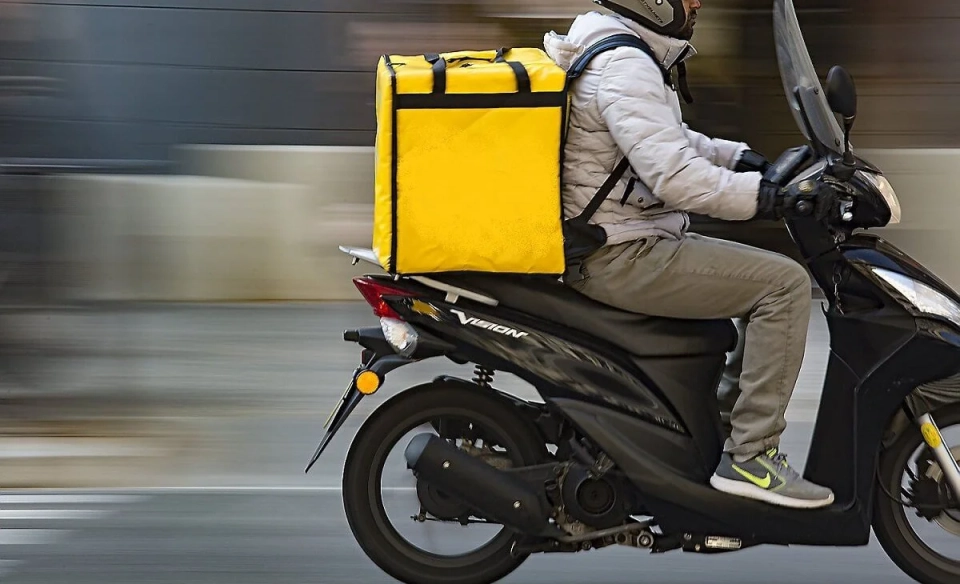
According to data from courier service participants, there are over 7,000 couriers in Kyrgyzstan using mopeds and low-powered motor transport for their work. Delivery services play a key role in urban logistics for restaurants, shops, marketplaces, and pharmacies.
For most of these users, mopeds serve not as personal transport but as a means of earning money. The main users include: students, citizens with part-time employment, representatives of socially vulnerable groups, and delivery workers.
Mopeds help these people earn income and provide mobility in the context of high traffic congestion in large cities. Courier work has become one of the few accessible forms of employment for youth and labor migrants. Additionally, mopeds are an economical and environmentally friendly option for urban transport, reducing the burden on road infrastructure.
2. Consequences of Changes in the Law
A sharp change in the requirements for operating mopeds may negatively affect the employment and income of many citizens, leading to the following consequences:
• loss of income for thousands of people;
• increased logistics costs for small and medium-sized businesses;
• rising prices for goods and services due to increased delivery costs;
• reduction of jobs in the service economy;
• decrease in tax revenues.
The volume of courier employment directly affects the consumer economy, and the adoption of the law in its current form could trigger a chain reaction affecting related industries and tax revenues.
3. Training Issues (Category A1)
According to the proposed changes, a driver's license of category A1 is required to operate mopeds. However, currently, there are not enough driving schools in the country that train for this category, creating obstacles for the rapid acquisition of licenses.
If the law comes into force soon, many current moped users will not be able to quickly obtain the necessary licenses due to the lack of driving schools. This may lead to a significant number of citizens using mopeds for work being left without employment opportunities for an extended period, resulting in income losses for thousands of households.
4. The Problem of Moped Registration
The majority of mopeds were imported into the country at a time when registration was not required, and owners do not have technical passports or documents confirming the origin of the vehicles.
If the law is adopted without a legalization mechanism, many owners will not be able to register their vehicles, even if they want to comply with the law. This could lead to an increase in the shadow use of mopeds and conflicts between drivers and regulatory authorities.
5. Experience of Other Countries
For a successful transition to mandatory registration of mopeds and similar vehicles, clear and simple rules should be established. An example can be drawn from the practice of the Republic of Kazakhstan, where the introduction of mandatory registration was accompanied by a minimal set of requirements, including identification and documents for the vehicle, or in their absence – technical specifications confirmed from open sources. This allowed for the legalization of vehicles and the preservation of jobs, avoiding negative social consequences.
Recommendations for Addressing the Problem
Ensuring road traffic safety is a priority; however, regulation must take into account the real conditions of the labor market and business environment. The development of courier services and urban logistics has become an important part of the economy, generating significant turnover in public catering, e-commerce, and retail. Limiting courier activities could negatively impact small and medium-sized businesses, employment levels, and tax revenues.
Therefore, it is necessary to ensure a smooth transition to the new rules that will improve road safety, preserve jobs, and minimize the administrative burden on citizens and businesses.
In this regard, members of the International Business Council propose the following measures to ensure a smooth transition:
Transition Period
Establish a transition period of at least 12 months from the date the law comes into force, during which the requirements for obtaining a driver's license of category A1 and registering mopeds will be applied without penalties.
Simplified Registration Procedure for Mopeds
For mopeds imported before the law comes into force, provide a simplified registration process allowing registration without a technical passport based on:
• the identification number of the frame (VIN) or engine number;
• a written statement from the owner about actual ownership of the vehicle.
Adaptation Period for Obtaining Category A1
During the transition period, provide the opportunity to operate mopeds on the condition that the driver is registered in the training system to obtain a driver's license of category A1.
Gradual regulation will allow for an increase in road traffic safety while not disrupting the existing economic ecosystem.
The International Business Council is ready to continue dialogue with government authorities on improving regulation in this area and is open to discussing the practical implementation of the proposed measures.