As part of the implementation of the decrees of the President of the Kyrgyz Republic aimed at protecting the rights of entrepreneurs and improving the investment climate, the International Business Council (IBC) has prepared an analytical report that highlights the main institutional factors affecting business operations in the country and preventing illegal interference in its activities.
The analysis that forms the basis of the document includes official statistical data from government agencies, information from international organizations, and a summary of the practice of interaction between business and the state.
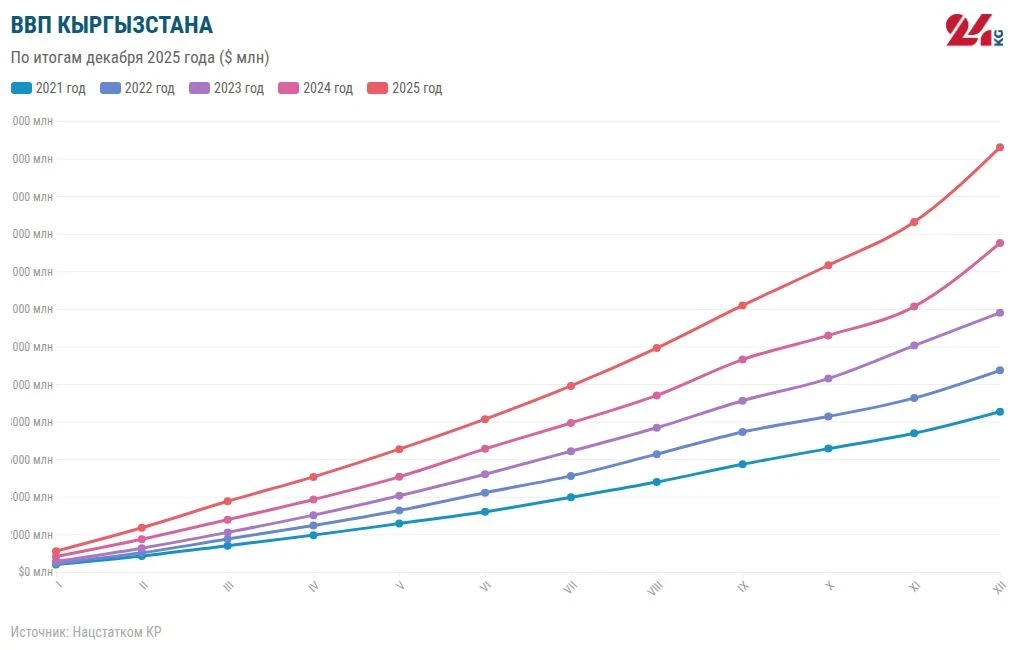
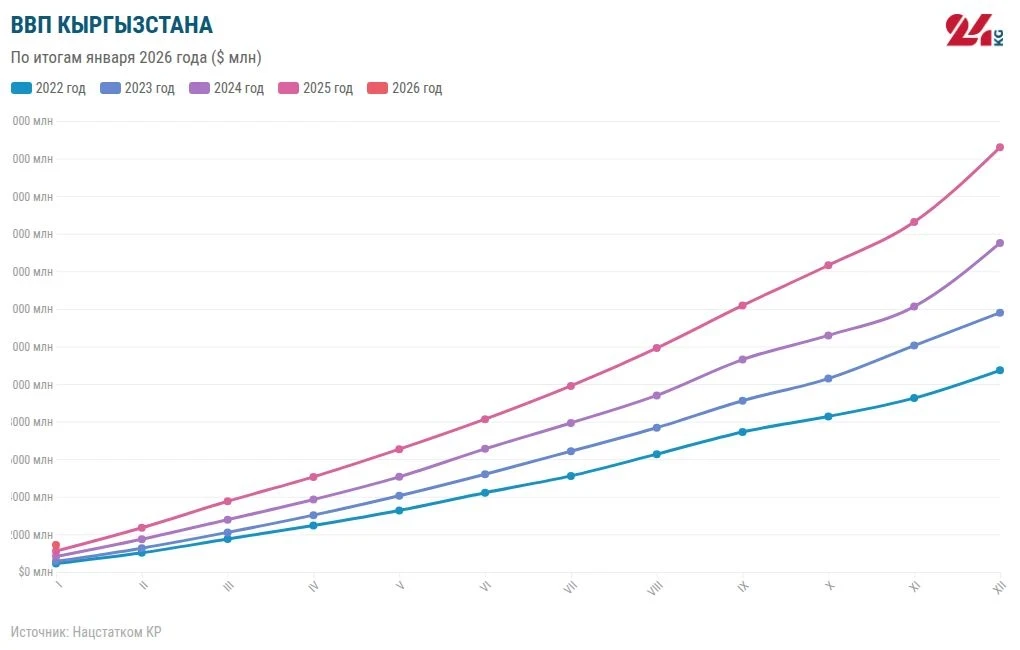
According to data from the National Statistical Committee, in 2025, the gross domestic product (GDP) of Kyrgyzstan amounted to 1,976.4 billion soms, which is an increase of 11.1% compared to the previous year.
However, international financial institutions emphasize that the stability of economic growth is largely determined by the quality of the institutional environment. This includes the level of protection of property rights, the predictability of regulation, and the stability of law enforcement practices.
Despite the positive dynamics in the investment sphere, the volume of investments still remains relatively low compared to other countries in the region: the share of foreign direct investment is only about 4-5% of GDP, indicating the need to improve the investment climate.
The study of law enforcement practices revealed that one of the factors contributing to investment uncertainty is the criminal prosecution of entrepreneurs. According to the IBC, such a situation creates an atmosphere of legal uncertainty and negatively affects investment decisions.
The increase in tax administration also impacts business activity. In recent years, there has been a significant rise in the amounts of additional taxes, penalties, and fines. For example, the amount of accrued penalties increased from 2.49 billion soms in 2020 to 33.84 billion soms in the first eight months of 2025, while the amount of fines rose from 0.46 billion to 9.10 billion soms during the same period. Insufficient predictability in law enforcement can create tension in the relationship between business and the state.
The report also emphasizes the importance of reliable protection of property rights and regulatory predictability, as these aspects directly influence investment decisions and strategic business planning.
The issue of balancing state participation in the economy and the development of a competitive environment requires special attention. In recent years, measures have been taken to increase the role of the state in certain sectors, which, according to international organizations, requires adherence to the principle of competitive neutrality and equal conditions for state and private market participants.
The state of the institutional environment is reflected in international rankings. For example, according to the Corruption Perceptions Index from Transparency International, Kyrgyzstan received 25 points out of 100 and ranked 146th out of 180 countries, indicating ongoing challenges for investment development.
According to the IBC, despite high rates of economic growth, the quality of the institutional environment remains a key factor for the long-term development of the economy. Strengthening the rule of law, increasing the predictability of state regulation, developing a competitive environment, and minimizing unjustified interference in entrepreneurial activities are necessary conditions for a sustainable influx of investments.
The IBC will continue to promote constructive dialogue between the state and business, as well as make proposals to improve the business climate and investment attractiveness of the Kyrgyz Republic.