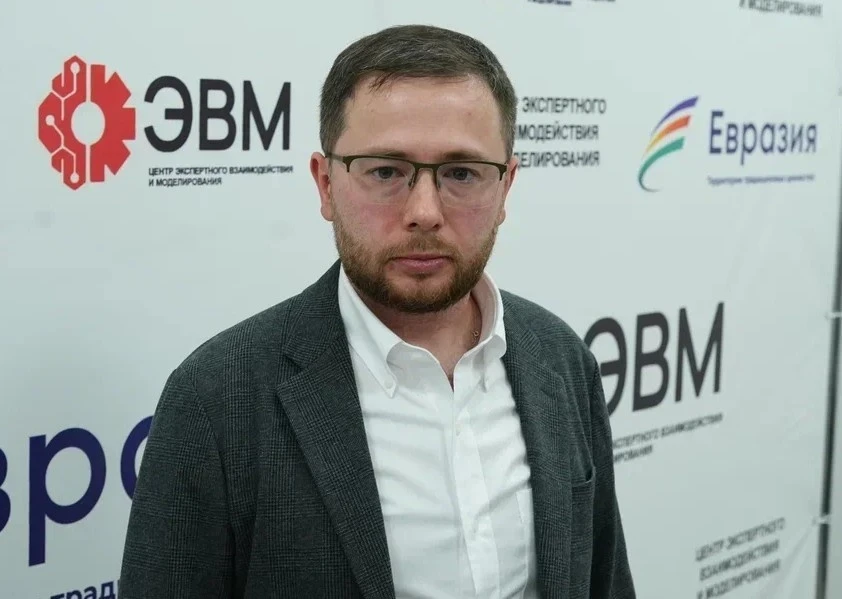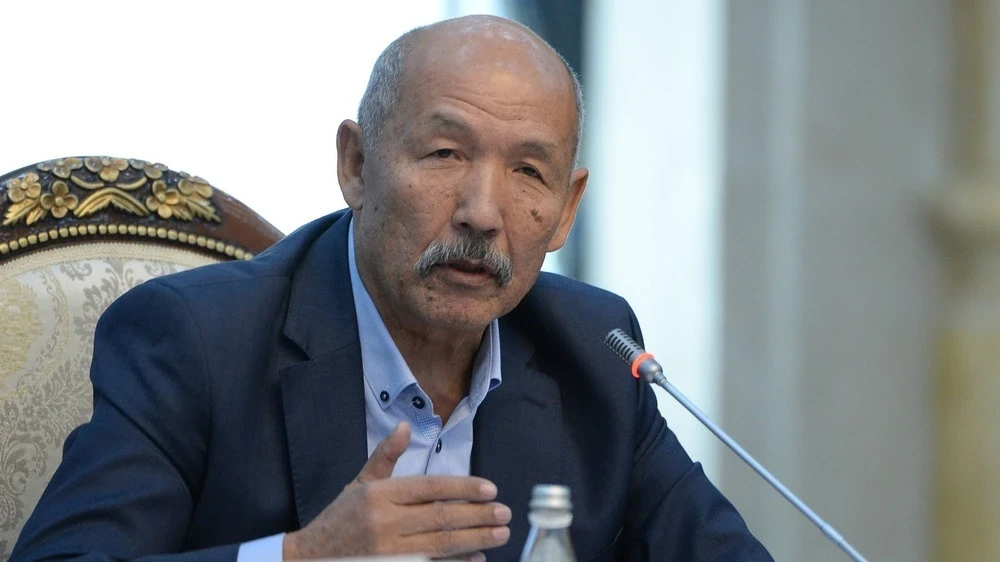
The Honored Architect of the Kyrgyz SSR and Candidate of Architecture Ishenbai Kadyrbekov expressed concern in a recent interview about the critical situation surrounding the historical and architectural heritage of Bishkek. He also discussed the legality of excluding several iconic sites from the list of cultural monuments.
- The developers of Bishkek's general plan are worried about the loss of historical monuments. Many sites have been removed from the list of cultural monuments, and this raises concerns among St. Petersburg residents, while the capital's residents remain silent. What is happening?
- It's difficult to comment on the situation; emotions are overwhelming. I partially touched on this topic in a previous interview. Cultural heritage is the foundation of a nation's spirituality. The loss of cultural identity leads to the loss of sovereignty. I don't want to believe that the demolition of monuments is a deliberate policy. We cannot be mankurts.
Architecture is the materialized culture of a nation, reflecting its values. When tourists or we ourselves travel, we learn about the culture of countries through their architecture. It's like a journey through time, allowing us to touch the past and experience aesthetic pleasure.
The history of Kyrgyz architecture goes back to a distant past. Examples of such monuments as the Burana Tower, the 15th-century Tash-Rabat caravanserai, the minaret and three mausoleums in Uzgen, as well as the Gumbaz of Manas, testify to a rich heritage spanning the 11th to 15th centuries. However, from the 16th century to the 20th century, there was a decline.
The architectural revival began in the 30s and 50s when buildings were erected that can be considered works of art. Although there are not many of them, they hold value for Kyrgyzstanis, being the heritage of our ancestors who created an independent country and left us architectural masterpieces. Unfortunately, in the modern world, to serve the interests of investors, some of these sites are excluded from the list of monuments. This is extremely sad.
- How can you comment on the statements from the Ministry of Culture that the demolition of objects excluded from the list is not planned?
- If that is the case, then why were they excluded? All of this looks like a game with the truth.
- But the Supreme Court building on Abdymomunov Street was not demolished; on the contrary, it was restored. Perhaps they changed their minds?
- What has been done to this object is hard to call restoration. It's more like a "cover" for a building that has not retained its original appearance. Perhaps this is a temporary solution so that in the future, when the building loses its status as a cultural heritage site, it can be demolished. It's simple and quite "ingenious." No one had thought of such "rationalization" in the field of world heritage protection before.
Considering that the architectural context of the surrounding buildings no longer matches the new appearance of the Supreme Court, there may come a time when they too will be threatened with demolition. For example, this concerns the fountain created by the famous sculptor Olga Manuilova in 1953. And if it is demolished, then the park, which is a unique dendrological park and a favorite place for city dwellers to relax, will likely also be destroyed. This area will become attractive for the construction of profitable high-rises.
- I understand your sarcastic position, but your words could be used against you by those who fight against historical and cultural heritage.
- They can, and that is upsetting. It is upsetting that such events are happening to us while the rest of the world protects its heritage like the apple of its eye. I fear that excluded objects may be destroyed, which would be an irreparable loss. I hope I am wrong.
The Supreme Court building in question (the former building of the Supreme Soviet of the Kyrgyz SSR) was built in 1936 according to the design of architect Yu. V. Dubov. It is a unique example of architecture in the post-constructivist style and holds significant historical importance. It was in this building that the V Extraordinary Congress of the Councils of the Kyrgyz SSR took place, and in 1937, the first Constitution was adopted, granting the country the status of a sovereign state.
- In your previous interview, you expressed concern about the draft law from the Cabinet of Ministers "On Amendments to Certain Legislative Acts (the laws "On the Protection and Use of Historical and Cultural Heritage" and "On Investments"). According to this draft, it was planned to alienate heritage objects into private ownership within the framework of investment agreements. What stage is this project at?
- This draft law has been withdrawn by its initiator. Common sense has prevailed.
- Why do you think the draft law was withdrawn, and who could have initiated this step?
- I believe there could be two reasons. The first is the serious contradictions that arose during the discussion of the project in the Jogorku Kenesh, which would undoubtedly resonate with the public. Public opinion is a powerful force. It is dangerous when the people's opinion is "gathered" in kitchens, and in this case, the discussion of the demolition of monuments became a subject of unflattering conversations.
The second reason may be related to the will of the president. As the head of state, he considers the issue with an eye on the future. The question at stake is: what is more important — the interests of investors or the historical heritage of the nation.
When a leader demonstrates prudence and political will, it is a blessing for the country. The return of Kumtor, the construction of the China-Kyrgyzstan-Uzbekistan railway, and the resolution of complex border issues all testify to the presence of will. I do not idealize the leadership, but if in matters of cultural heritage the president chose to protect the spiritual foundation of the nation and stopped this madness, it confirms his understanding of the value of history for the people.
- We hope that the status of the preserved objects will be restored.
- I, like many citizens, hope for the president. The exclusion of objects from the list occurred in violation of the law. The president can overturn the Cabinet of Ministers' decision with his decree.
According to the KR Law "On the Protection and Use of Historical and Cultural Heritage," the process of inclusion in the list is very complex. Each object undergoes scientific expertise, and the state body creates a commission that includes scientists, cultural figures, and representatives of the public. Each monument has its own personal passport.
As for the procedure for changing the list, the legal norm is clear and does not allow for other interpretations. Article 27 states: "The list of objects of historical and cultural heritage is supplemented... The exclusion of objects of all accounting categories from the lists is prohibited." In the case of their loss or destruction, a mark "lost" is made. Thus, supplementation is allowed, but exclusion is not. This is in line with world practices and the norms of the Convention on World Heritage.
Nevertheless, the Cabinet of Ministers, referring to Articles 27 and 36, began to make marks of "lost" for several objects, thereby removing them from the list. But these monuments were not lost or destroyed! It would look ridiculous if it weren't so sad.
The reference to Article 36 is also inappropriate. It allows for the demolition or alteration of objects only in the case of sudden destruction due to natural disasters. The objects excluded from the list have not undergone sudden destruction. A threat of loss is not a loss. In the case of a threat, according to Article 24, the state body is obliged to take measures to save the monument, not to demolish it.
Understanding the fragility of its references to the law, the Cabinet created an interdepartmental commission for the inventory of buildings. However, Article 36 of the law is titled "Prohibition of Demolition, Relocation, Alteration of Objects..." and this has nothing to do with the creation of such commissions. As a result, a legal collision arose. According to legislation, in the event of a collision, it is necessary to act in accordance with the act that has a higher legal force — that is, with the law. Consequently, the resolutions on the exclusion of monuments from the list are illegal.
In conclusion, I would like to address the members of the interdepartmental commission. Dear experts, have you had time to familiarize yourselves with the documents of your predecessors? Do you have evidence confirming the erroneousness of their scientific justifications? If so, they should be made public, as heritage is the property of the people. If there is no evidence, is it ethical to ignore the opinion of the expert community and the law? I especially appeal to my colleagues — members of the Union of Architects who signed this conclusion.