The Misconception of All-Wheel Drive Power
Many drivers, when purchasing all-wheel drive vehicles, are convinced that this gives them additional capabilities. For example, if the car easily starts on an icy slope, it is perceived as a sign of the vehicle's high abilities. However, this is a misconception, as all-wheel drive really only helps during starting and acceleration.
When it comes to braking, nothing actually changes. Cars, regardless of the type of drive, brake with the same effectiveness. Research conducted by the American Insurance Institute IIHS has shown that all-wheel drive vehicles are involved in accidents no less frequently than front-wheel drive ones. Often, they find themselves in situations where a more cautious driver in a front-wheel drive car simply would not have proceeded.
Consumer Reports magazine also conducted ice tests, which showed that the braking distances of all-wheel drive vehicles and regular cars are nearly identical — the difference is only a few meters, which is insignificant from a statistical perspective.
The Psychological Aspect
The main problem lies not in the vehicle itself, but in the driver's perception. Sitting behind the wheel of a crossover, a person feels confident, which can lead to unnecessary risks. The high seating position, robust construction, and all-wheel drive create an illusion of control, which can lead to increased speed and reduced braking distance.
Research conducted by the Georgia Institute of Technology demonstrated that drivers of all-wheel drive vehicles are more likely to exceed the speed limit by 8-12% in adverse weather conditions compared to other drivers.
Contrast on the Road
When a driver in an old front-wheel drive Almera with good tires passes by, it becomes clear that he is handling the road better than his more modern counterpart, as he drives the vehicle more cautiously.
A Crossover is Not an SUV
There is also a common belief that crossovers possess outstanding off-road capabilities. In reality, they are just passenger cars with slightly increased ground clearance and plastic cladding. Their off-road capability is limited, and they are not capable of serious off-road challenges.
The Importance of Tires
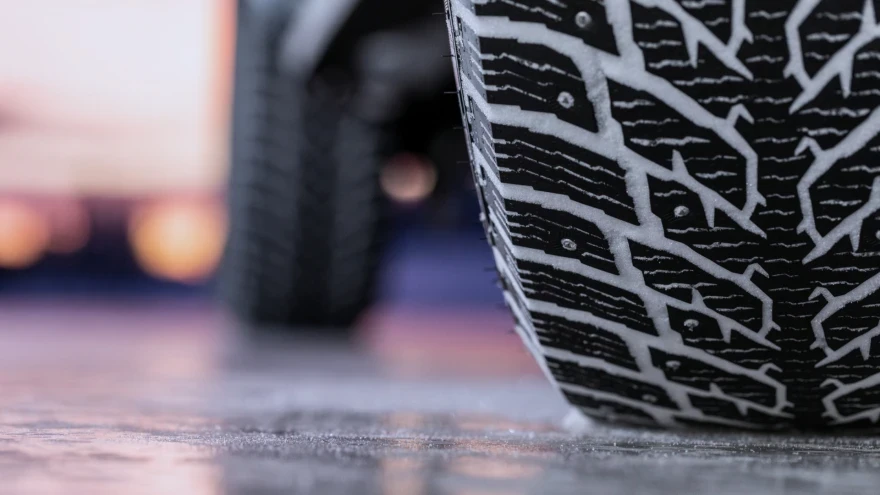
Many crossovers are also equipped with low-profile tires that look good but perform poorly in winter conditions. Such tires often get stuck in snow due to their small contact patch.
Results from recent tests conducted by ADAC and other organizations show that tire quality plays a more significant role than the type of drive. A front-wheel drive vehicle on quality winter tires can outperform an all-wheel drive vehicle on poor tires.
Switching from summer to winter tires can reduce braking distance on ice by 1.5 to 2 times, whereas the advantages of all-wheel drive are not comparable to this improvement.
All-wheel drive is indeed useful for starting on icy slopes and when exiting unplowed yards; however, when drivers begin to believe that its capabilities negate the laws of physics, it becomes dangerous. Ice remains slippery for everyone, and in emergency braking situations, all-wheel drive will not provide the necessary stop.
Experienced drivers understand this perfectly.