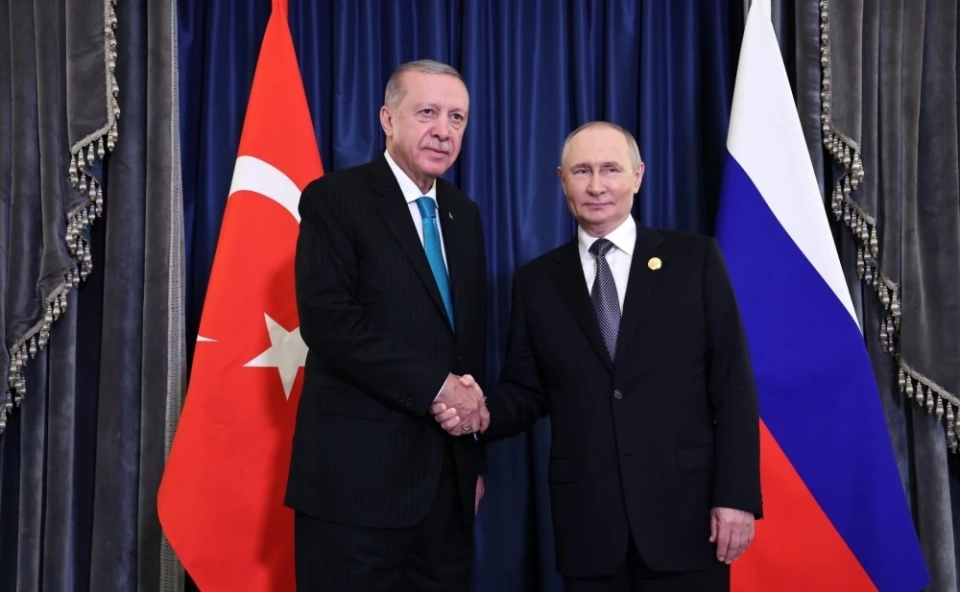
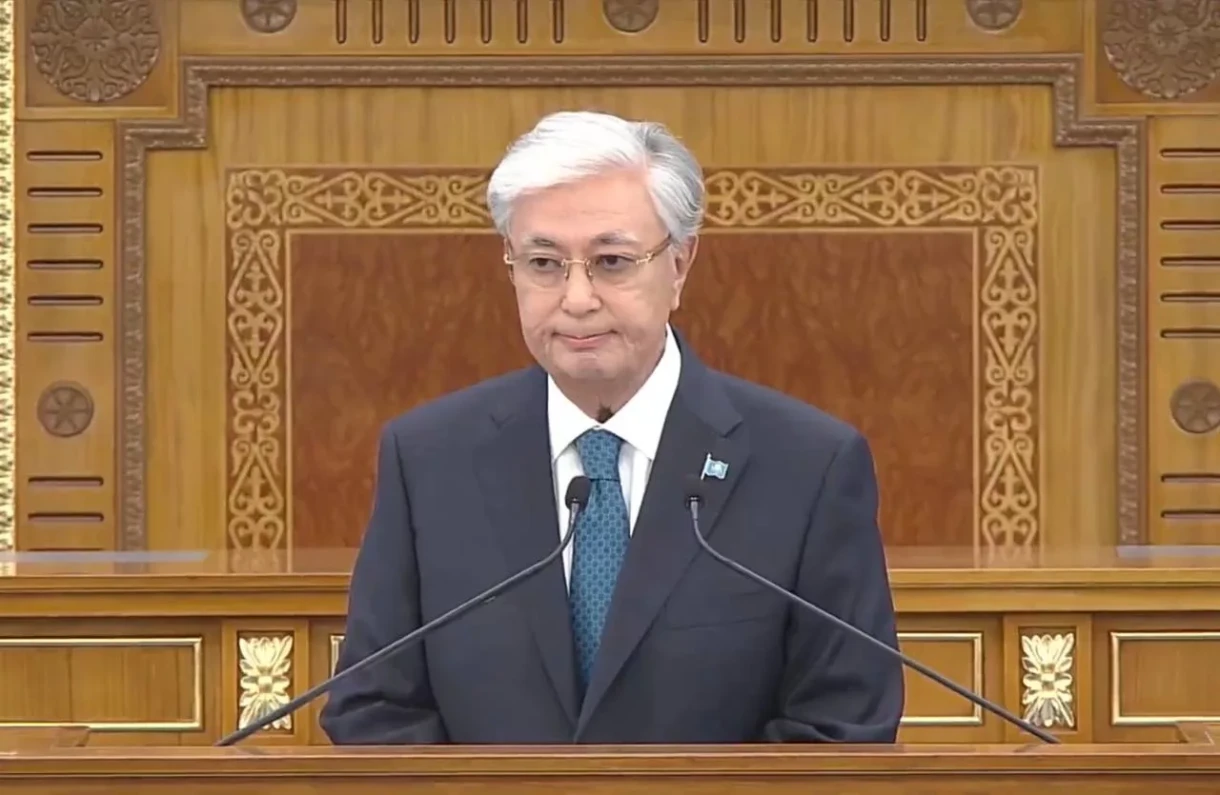
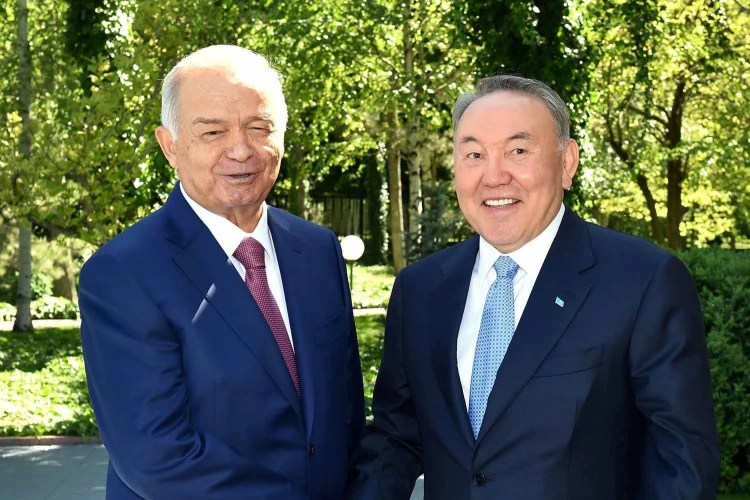
In a letter sent by Slovak Prime Minister Robert Fico to other EU countries, Erdogan emphasizes that Usmanov has been conducting his business openly since the 1990s and has not utilized the economic measures promoted by the Russian government. “He has not financed any initiatives in this area,” notes the President of Turkey.
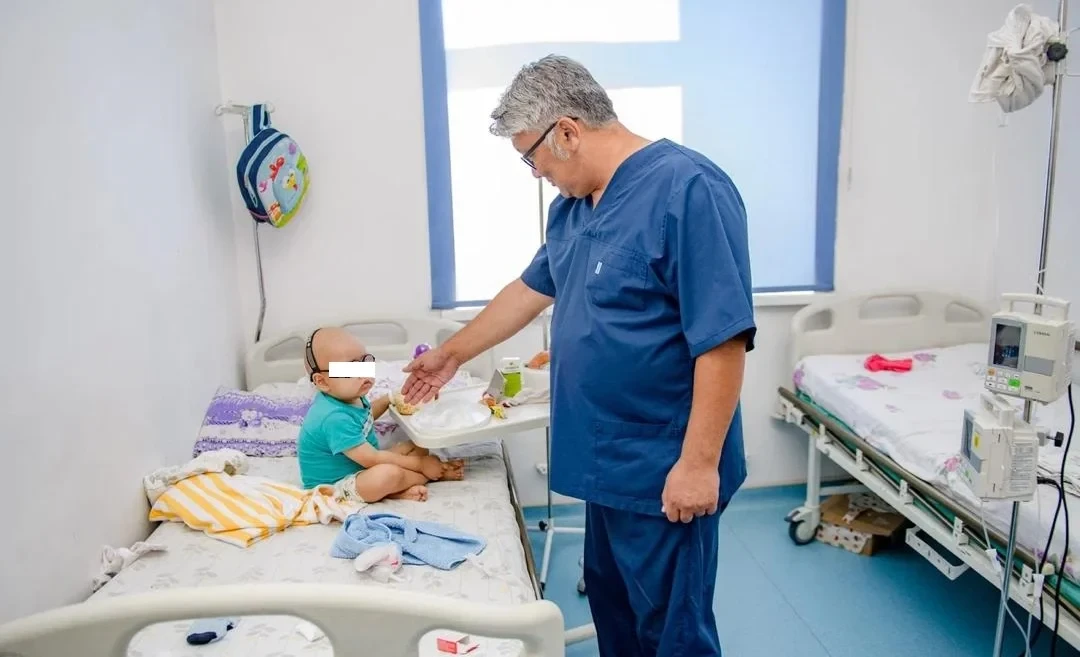
Erdogan also mentioned that Usmanov, having left active business about ten years ago, focused on charity and supported cultural, humanitarian, and sports projects that foster rapprochement between Central Asia and the West.
RECOGNITION OF TIES TO PUTIN
The President of Turkey also recalled a letter he sent five years ago to the heads of the Turkic States Organization, including Azerbaijan, Kazakhstan, Kyrgyzstan, and Uzbekistan, asking for support for Usmanov.
In his address, Erdogan emphasizes that considering Usmanov's efforts to cooperate with EU institutions and humanitarian considerations, supporting his exclusion from the sanctions list would be very valuable.
When sanctions were imposed in 2022, the EU indicated that Usmanov has “particularly close ties with Russian President Vladimir Putin” and plays an important role in servicing financial flows. The document also mentions his connection with Dmitry Medvedev, who allegedly benefited from using residences controlled by Usmanov.
Moreover, one of the reasons for including Usmanov in the sanctions list was his ownership of the Russian newspaper “Kommersant,” where after his control, editorial freedom was restricted, and the publication took a pro-Kremlin stance.
On March 10, the American publication Forbes published a ranking of the world's richest people, in which Usmanov ranked 199th with a fortune of $14.5 billion.
LEGAL ATTEMPTS
Usmanov attempted to challenge his sanctions in the EU court, which concluded in September last year that there were no grounds for exclusion.
Analysts note that now the key question is who will win in this standoff: Hungary and Slovakia or the other 25 EU states.
EU ambassadors will meet in Brussels on March 13 to reach an agreement before the sanctions expire on March 15.
Some European diplomats stated that they do not plan to exclude any oligarchs, and one of them noted that Erdogan's letter was received negatively: “Should countries that do not even impose sanctions against Russia tell us whom to exclude?”
Currently, the EU presidency held by Cyprus, supported by the other 25 countries in the bloc, insists on not making political exceptions, as in the case of Usmanov and Friedman, and extending the sanctions for 12 months. Later, it was proposed to extend them for six months.
Slovakia rejected both proposals, receiving support from Hungary, which insists on the “critical importance” of excluding Usmanov and Friedman.
Under tight deadlines, Cyprus may follow Poland's path, where in 2025 oligarchs were excluded from the sanctions list if no agreement was reached on extending the sanctions.
This standoff occurs against the backdrop of dissatisfaction from Hungary and Slovakia regarding the lack of Russian oil supplies through the Druzhba pipeline. Both countries claim that Ukraine refuses to restore the pipeline, leading to the blockage of the EU's €90 billion loan for Ukraine and the sanctions package proposed by the European Commission against Russia.
Although EU representatives assert that the issue of “Druzhba” was not discussed in the context of sanctions, Hungary has indicated that it does not intend to support measures in Ukraine's interests until this issue is resolved.
Hungary has also asked the EU to lift other energy sanctions against Russia, citing rising global energy prices due to the conflict with Iran. However, these sanctions are set to expire only in July.
Statement from the press service of Alisher Usmanov regarding this publication:
To the editorial office of KNews:
We are reaching out to you regarding the article and publication on X, which mentions Alisher Usmanov and contains inaccuracies that require correction for the sake of accurate information.
1) “How Turkey and Central Asian countries lobby for the lifting of sanctions on oligarch Usmanov” dated March 13, 2026
- Headline: “How Turkey and Central Asian countries lobby for the lifting of sanctions on oligarch Usmanov”
- “Turkish President Recep Tayyip Erdogan, Azerbaijan, and three Central Asian countries are seeking through Slovakia the exclusion of Russian oligarch of Uzbek origin Alisher Usmanov from the EU sanctions list.”
- “When sanctions were imposed against Usmanov in 2022, the EU in its official legal act noted that the oligarch maintains ‘particularly close ties with Russian President Vladimir Putin and is considered one of the few trusted with servicing financial flows.’”
- “The document also states that Usmanov is ‘closely connected’ with Dmitry Medvedev, Deputy Chairman of the Security Council and former President and Prime Minister, ‘who personally benefited from using luxurious residences controlled by Usmanov.’”
- “Another reason for Usmanov's inclusion in the sanctions list was his ownership of the Russian newspaper ‘Kommersant.’ Brussels notes that after the oligarch took control of this media outlet, ‘the editorial team's freedom was restricted, and the newspaper took a clearly pro-Kremlin position.’”
2) Publication on the account on X dated March 13, 2026
Firstly, we want to emphasize that any claims that Mr. Usmanov has “particularly close ties with Russian President Vladimir Putin and is considered one of the few trusted with servicing financial flows” are false and unfounded. We point out that the EU Council has never classified him as one of “Putin's oligarchs,” but only indicated that he was “referred to” as such, which is not the same. Mr. Usmanov has achieved several court rulings prohibiting the dissemination of such incorrect interpretations. The EU Council copied this description from a tweet by Swedish economist Anders Åslund, who subsequently deleted the tweet in which he referred to Mr. Usmanov as one of “Putin's favorite oligarchs.” This tweet was unfounded and should not have been used by the EU Council to justify sanctions. We also ask you not to repeat this incorrect description regarding Mr. Usmanov.
Furthermore, we refute the information that Dmitry Medvedev was ever provided with Usmanov's residences. The statements of Alexei Navalny, which apparently became the source of these rumors, were recognized by a Russian court as untrue and defamatory towards Usmanov. The Frankfurt District Court also criticized Navalny's “investigation” and canceled search warrants issued in a money laundering case in Germany. The court indicated that this investigation cannot even be considered circumstantial evidence and characterized it as “unfounded assumptions.”
For many years, “Kommersant” has remained a platform for diverse opinions, and we categorically reject claims of pressure on journalists. The freedom and independence of the newspaper have been recognized by many international organizations. In 2007, the Bureau of Democracy, Human Rights, and Labor of the U.S. State Department reported that after Usmanov acquired the newspaper in 2006, “by the end of [2006], there were no noticeable changes in editorial policy.” In March 2022, The Wall Street Journal reported that U.S. Treasury representatives called “Kommersant” “one of the most independent” publications in Russia. In November 2022, The Economist noted that “Kommersant” is one of the few remaining publications in Russia that “does not serve propaganda.”
It is also worth noting that the term “oligarch” is not applicable to Mr. Usmanov. This term refers to individuals who acquired wealth through connections with the state in the 1990s. This does not apply to Usmanov, who built his fortune through successful entrepreneurial activity. The EU Council has ceased to use this term in its documents regarding Usmanov and replaced it with “businessman.” We ask you to refrain from using the term “oligarch” in relation to him.
Please note that since 2022, more than 200 media outlets have been forced to correct their materials as a result of legal proceedings, including: GQ, Forbes, Business Insider, OCCRP, The Times, The Sun, Luxembourg Times, Euronews, EU Today, L’Independant, Libero, L’Écho, BFM Business, La Stampa, La Nuova Sardegna, Corriere della Sera, Il Sole 24 Ore, Il Messaggero, Il Post, DPA, Stern, Deutsche Welle, ZDF, RTL, Blick, Die Welt, Tagesspiegel, and many others.
The post How Turkey and Central Asian countries lobby for the lifting of sanctions on Alisher Usmanov first appeared on the K-News website.