According to Tasnim, the IRGC's press service stated: "We strongly urge you to leave the areas where American troops are stationed to avoid putting yourselves in danger."
Iranian officials told Fars news agency that any facilities, including hotels and civilian buildings, where American military personnel are present are considered legitimate targets for Tehran:
Iranian security services reported that hotels and civilian facilities used by American forces are not limited to Bahrain and the UAE. Alternative bases and locations of foreign forces have also been identified in other regions, including Lebanon, Syria, and Djibouti.
The IRGC issued a warning to hotel owners in the region, stating that any establishment hosting foreign military personnel will become a legitimate target if this activity is not immediately ceased.
The Islamic Revolutionary Guard Corps also called on countries in the region to evacuate the civilian population from areas where, according to them, American troops are located, claiming that American soldiers use civilian facilities as "human shields" due to their inability to protect their bases.
Iranian military officials warned that hotels housing American soldiers could become targets in a conflict with the United States and Israel.
Military spokesman Abolfazl Shekarchi stated: "If all American [soldiers] are in a hotel, from our perspective, that hotel becomes American."
"We cannot simply remain inactive while the Americans attack. If we respond, we must strike where they are."
Iran's Foreign Minister Abbas Araghchi accused American soldiers on Thursday of using the local population of Gulf Cooperation Council countries as "human shields."
"Since the beginning of the war, American soldiers have been leaving their bases in the Persian Gulf and hiding in hotels and offices," he wrote in a post on X, urging hotels not to provide them with services.
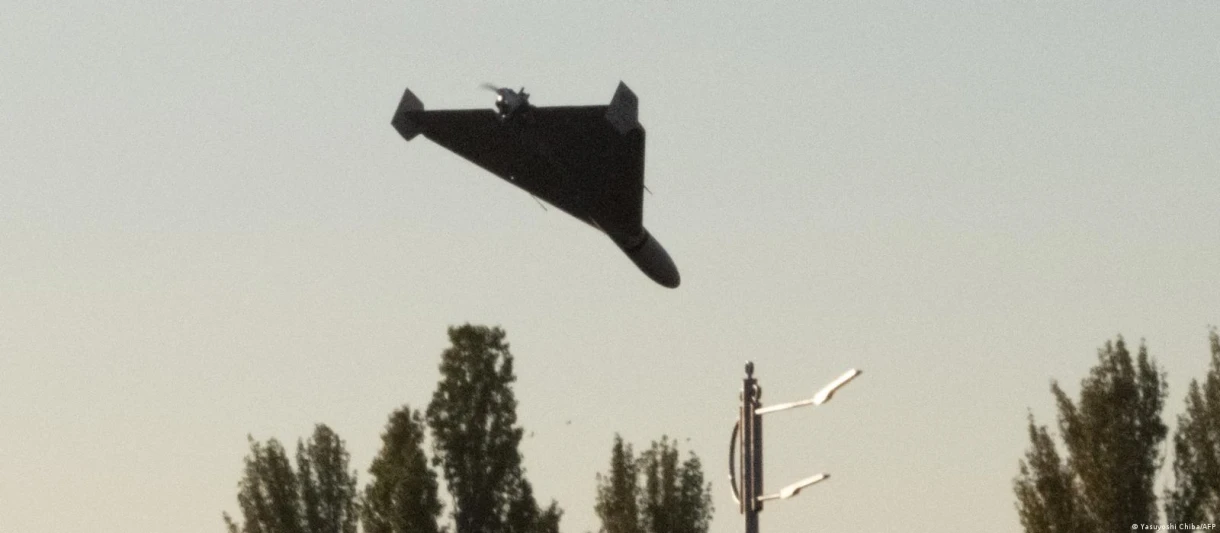
Attack on Mubarak Al-Kabeer Port in Kuwait using drones and cruise missiles.
Kuwait confirmed another incident involving an attack on its infrastructure, this time the Mubarak Al-Kabeer Port on Bubiyan Island was targeted.
The Kuwaiti Ministry of Public Works reported that the port infrastructure was attacked by "hostile drones and cruise missiles." Material damage was reported, but there were no casualties.
Additionally, a separate attack occurred in the morning at the Shuwaikh port, resulting in material losses.
Iran reports 250 students and teachers killed as a result of conflict with the US and Israel.
According to the head of the press service of Iran's Ministry of Education, 250 teachers and students have died in the country due to the actions of the US and Israel.
It was also reported that 723 educational and cultural institutions were damaged, according to the Iranian news agency IRNA, citing Hossein Sadeghi.
Iran's Deputy Minister of Health Ali Jafariyan stated that the total number of fatalities in Iran since the conflict began on February 28 is at least 1,937 people.
Israel reports striking Iranian missile and naval mine factory.
Israeli military in their latest report on the conflict stated that they conducted airstrikes on a major Iranian factory producing missiles and naval mines located in Yazd.
According to the Israeli military, this facility is key for "planning, developing, assembling, and storing modern Iranian missiles intended for launch from various platforms, including submarines and helicopters."
Israel intensifies military operations in Lebanon, leading to mass migration of the population northward.
By: Tony Cheng
Reporting from Beirut, Lebanon.
In recent hours, Israeli military has again ordered forced evacuations, demanding that the population move north of the Zahrani River, a situation that has been observed in recent days.
Since the beginning of this conflict, we have seen evacuation orders mandating movement north of the Litani River.
The situation has changed: Israeli forces have advanced further north, capturing vast territories. Their apparent goal is to seize a significant part of southern Lebanon.
At this stage, this has forced nearly a million people to leave southern Lebanon, creating incredible pressure on the country.
Prime Minister Nawaf Salam stated on Thursday that he has instructed the Lebanese Foreign Minister to immediately file a complaint with the UN Security Council regarding the illegal seizure of territories.
Germany reports possibility of direct negotiations between the US and Iran.
German Foreign Minister Johann Wadephul stated that indirect contacts have already taken place between the United States and Iran, and both sides are preparing for direct negotiations.
In an interview with Deutschlandfunk, the minister mentioned that a meeting of representatives from both sides is expected to take place soon in Pakistan.
"According to my information, indirect contacts have been established and preparations are underway for a direct meeting. It seems that this will happen very soon in Pakistan," he noted.
Finland warns of global recession due to war between Israel and the US.
Finnish President Alexander Stubb warned that the conflict between Israel and the US against Iran could lead to a "global recession," the consequences of which would be more severe than during the COVID-19 pandemic.
In an interview with Politico, Stubb criticized the Trump administration's "America First" approach, arguing that it reduces diplomacy to short-term deals.
"Diplomacy is rarely a transaction," he noted. "Interests may be tied to transactions, but even then, mutual interests must be found."
He also added that Europe is not interested in supporting Washington in this conflict.
"This may sound harsh, but Iran is not my war," Stubb emphasized. "My war is Ukraine."
The US and Iran employ new methods of pressure, including threats in the energy sector.
Zeydon Alkinali, director of the Arab Perspectives Institute, noted that the US and Iran have gained new leverage during the conflict, particularly in the energy and global economy sectors.
"New and diverse pressure factors have emerged during this conflict," Alkinali stated in an interview with Al Jazeera.
According to him, for Iran, it is control over the Strait of Hormuz, while for the US, it is threats of attacks on energy infrastructure.
US warnings of potential attacks on Iranian power plants underscore Washington's readiness to "further dismantle and destroy" the Iranian government's energy infrastructure.
This could severely damage Tehran's economy and weaken the government for a long time, even if the conflict ends soon, Alkinali added. He noted that this issue raises "significant concern" both in the region and beyond due to long-term economic consequences.
The post The Islamic Revolutionary Guard Corps calls on civilians to leave areas where American troops are stationed. What happened in Iran? first appeared on K-News.