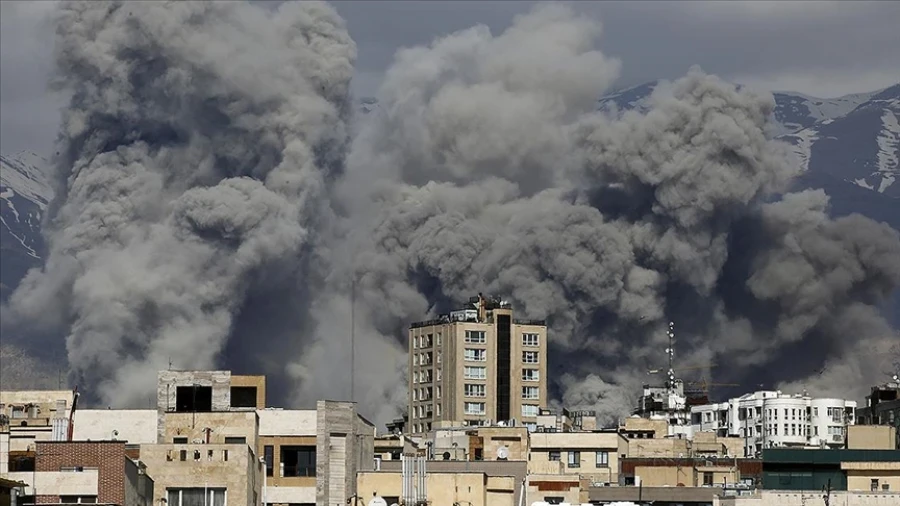
- Iran threatens to close the Strait of Hormuz and begin retaliatory strikes on the region's energy and water infrastructure if the U.S. attacks its power plants.
- Israeli forces attacked the Qasimiya Bridge in southern Lebanon, which President Joseph Aoun called "the beginning of a ground invasion."
The Islamic Revolutionary Guard Corps claims that the threat of attacks on power plants is aimed at deterring U.S. actions.
The IRGC rejected U.S. accusations of intending to destroy desalination facilities in the Persian Gulf.
“In the event of an attack on our power plants, we will respond with strikes on Israeli power plants and facilities supplying energy to American bases,” IRGC representatives stated.
“You have attacked our medical facilities, schools, and if you cut off the electricity, we will respond in kind,” the statement said.
The IRGC emphasizes its readiness to respond to any threats at a similar level to prevent attacks.
“We are ready to respond to any threat and demonstrate our capabilities on the battlefield,” they added.
Amid threats from Trump and Iranian leaders, investors began to panic, causing stock markets in Asia to crash, as potential clashes could lead to a prolonged conflict and the closure of the Strait of Hormuz, through which a significant portion of the world's oil supplies passes.
The Hang Seng Index in Hong Kong fell by 3.3%, while the Shanghai Index dropped by 2.3%. The Straits Times Index in Singapore also decreased by 2.1%.
Earlier, the Nikkei Index in Tokyo fell by 3.4–3.5% to 51,582.23 points.
According to CBS News, NATO is studying the possibility of Iranian attacks on European cities.
NATO Secretary General Mark Rutte stated that the alliance is investigating whether Iran has missiles capable of striking cities such as Berlin, Rome, and Paris.
“We know they are close to acquiring such capabilities,” Rutte noted in an interview with CBS News.
He also added that European countries are working to ensure the security of the Strait of Hormuz.
Donald Trump previously told the Financial Times that NATO's future would be "very bleak" if U.S. allies do not help secure this important maritime route.
Rutte noted that the U.S. failed to share its military operation plans with European allies in advance, which required time for coordination.
Concerns are growing in Israel following Iran's missile strike on Arad and Dimona.
Author: Rob McBride
Reporting from Amman, Jordan.
Israeli authorities have launched an investigation into recent missile strikes.
Although their defense systems are advanced, some missiles managed to get through. Israel has a multi-layered missile defense system; however, authorities acknowledge that the missiles that hit Dimona raised particular alarm due to the nuclear infrastructure located there.
Authorities claim they are able to intercept over 90% of missiles, but incidents involving strikes on nuclear facilities raise serious concerns.
Iranians, in turn, perceived the attacks as a success and are using them in their propaganda, claiming this is a harbinger of change and a way to bypass the Israeli missile defense system.
Nevertheless, this is viewed skeptically in Israel.
Iran is changing its tactics, using cluster munitions that are difficult to intercept. Instead of large missile attacks, they are launching more frequent small strikes, creating panic among the civilian population.
Senator Tim Kaine of Virginia accused Trump of "sending our sons and daughters to war," not accepting defeat in the 2020 elections.
Kaine referenced an article from Just The News stating that Iran is trying to interfere in the elections to hinder Trump.
“Are Republicans in Congress okay with this?” he asked.
Kaine also warned against deploying ground troops in Iran, claiming it could lead to an even more serious conflict.
Kaine is a member of the U.S. Senate Foreign Relations Committee and was the Democratic Party's vice-presidential candidate in the 2016 election.
U.S. Ambassador to the UN Mike Waltz defended Trump's threats against Iran — NYT.
In interviews with Fox News and CBS News, he noted that Iranian power plants could be legitimate targets, as much of the energy infrastructure is controlled by the IRGC.
“The president is not joking,” Waltz said on Fox. “He has clearly outlined his red lines and will not allow this regime, which is committing genocide, to hold the world economy hostage.”
Swedish Prime Minister Ulf Kristersson spoke about rising energy prices and gas dependencies at the EU summit:
Other European countries have long used gas for electricity generation, and rising prices are affecting electricity costs.
In gas-dependent countries like Italy, electricity prices are skyrocketing. We, in turn, use less gas, generating electricity from hydro and nuclear energy.
However, when it is cold in southern Sweden, we have to import electricity from Germany, which makes it expensive.
We must achieve complete energy independence from gas prices and transition to renewable energy sources.
In gas-dependent countries like Italy, electricity prices are skyrocketing. We, in turn, use less gas, generating electricity from hydro and nuclear energy.
However, when it is cold in southern Sweden, we have to import electricity from Germany, which makes it expensive.
We must achieve complete energy independence from gas prices and transition to renewable energy sources.
The head of the IEA stated there is a serious threat to the global economy.
The Director of the International Energy Agency (IEA), Fatih Birol, compared the current energy crisis to those of the 1970s and the consequences of the war in Ukraine.
“Today, the global economy faces a serious threat. If the crisis continues, no country will be spared its consequences,” he stated.
Birol also noted that over 40 energy facilities in the region have been severely affected, and the IEA is consulting with governments about releasing additional oil reserves.
Earlier, IEA member countries agreed to release a record 400 million barrels of oil from strategic reserves to combat rising prices.
Gulf countries warned the U.S. about risks in case of an attack on Iranian power plants — WSJ.
According to sources, U.S. allies in the Middle East believe that Iran's retaliatory actions could threaten their energy and water infrastructure, as well as the global economy.
Representatives of several Gulf countries expressed dissatisfaction with their lack of influence over U.S. administration actions.
Negotiations with Iran and the U.S. have also yielded no results.
Saudi Arabia intercepted a ballistic missile heading for Riyadh.
The Saudi Ministry of Defense reported the interception of a missile and a drone in the eastern part of the country.
Tehran intends to monetize control over the Strait of Hormuz — CNN.
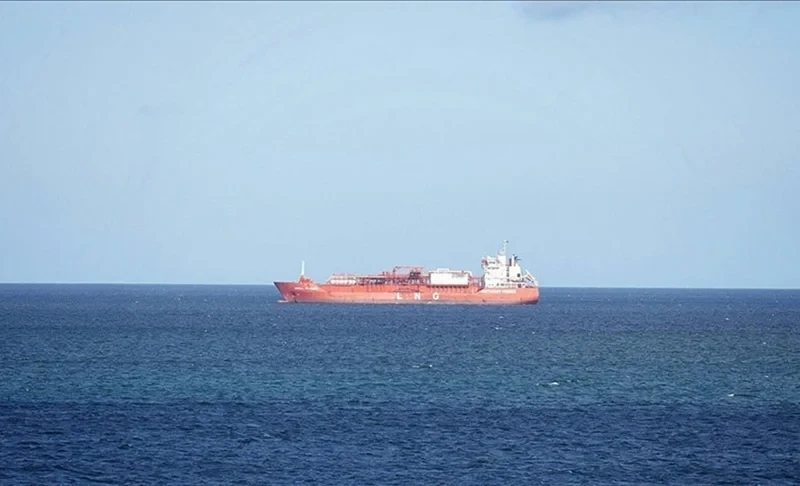
Iran is actively working to establish a new legal regime in the Strait of Hormuz to control the passage of ships through this strategically important waterway.
Chairman of the Iranian Parliament Ghalibaf threatens strikes on U.S. financial centers:
He stated that legitimate targets for attacks are not limited to military bases but also include financial structures supporting the U.S. military budget.
Ghalibaf also addressed Trump, uttering the words about the "firing" of the U.S. president in English.
A leading Democrat calls for an end to the conflict with Iran.
Chuck Schumer, the Senate Minority Leader, called for an end to the war against Iran.
“Enough! Stop the war!” Schumer stated in his message on X.
He also noted that many Republican senators do not understand the administration's goals in the Middle East.
In his opinion, billions of dollars are being wasted on a war with Iran, leading to rising gasoline prices.
An Iranian director criticized the "silence" of Islamic scholars.
Majid Majidi, an Iranian filmmaker, criticized Islamic scholars, especially from Al-Azhar University, for their inaction amid the conflict.
He expressed disappointment that scholars do not speak out against the persecution of Muslims in various countries.
Majidi, director of the Oscar-nominated film "Children of Heaven," condemned the silence of authorities in light of the aggression from the usurping Israeli regime.
The Iranian missile strike raises alarm in Israel.
Author: Rob McBride
Reporting from Amman, Jordan.
Reports of an intense missile bombardment of Israel, allegedly from Iran, are coming in from across the country.
Alerts are sounding in Jerusalem, central Israel, and the south, with calls to take shelter in safe places.
Missile fire, some of which may contain cluster munitions, has been recorded in several settlements.
Authorities report destruction and casualties in various regions, including the central part of the country.
Initially, the alert was sounded in northern Israel, but it was later canceled, urging people to return to their homes.
We remind you that U.S. President Donald Trump and Defense Secretary Pete Hegseth announced U.S. plans for war with Iran.
Trump mentioned possible war targets in the Middle East and the "winding down" of military efforts.
He also stated that the U.S. aims to completely destroy Iran's missile capabilities.
According to the Defense Secretary, the goals remain the same: to destroy Iranian missile installations and prevent the acquisition of nuclear weapons.
Meanwhile, the Israeli army confirmed that Iran has missiles capable of reaching London, Paris, and Berlin.
However, experts note that such missiles have low accuracy at long distances and must pass through well-defended airspace.
Iran also threatens to close the Strait of Hormuz in response to Trump's threats to destroy its power plants.
- Trump gave Iran 48 hours to restore the operation of the Strait of Hormuz, threatening to destroy power plants.
- An Iranian official stated that the strait is open to all vessels except those associated with "Iran's enemies."
- The IRGC stated that if the U.S. strikes, the strait will not be opened until the power plants are restored.
- As a result of recent strikes, over 175 people were injured in Israel.
- The Israeli ambulance service reported new injuries from the morning attacks.
The post NATO Study: Possible Iranian Strikes on European Cities. What else has happened? first appeared on K-News.