Along with him, his son Mortaza and his head of security were killed, as reported by Tasnim.
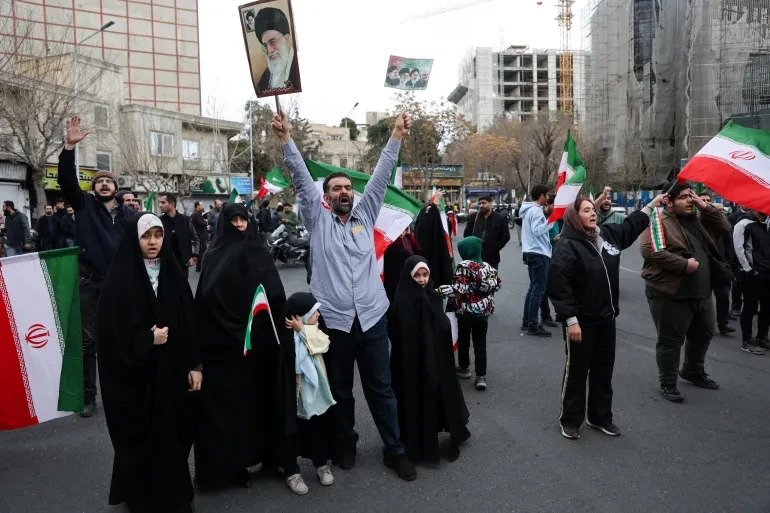
The President of Iran, Pezeshkian, stated the intention to "take harsh revenge" on those responsible for Larijani's death, according to information from the Mehr agency.
Following the killings of Larijani and the commander of the Basij forces, Gholamreza Soleimani, Iran announced its intention to retaliate, as Israel took responsibility for these actions.
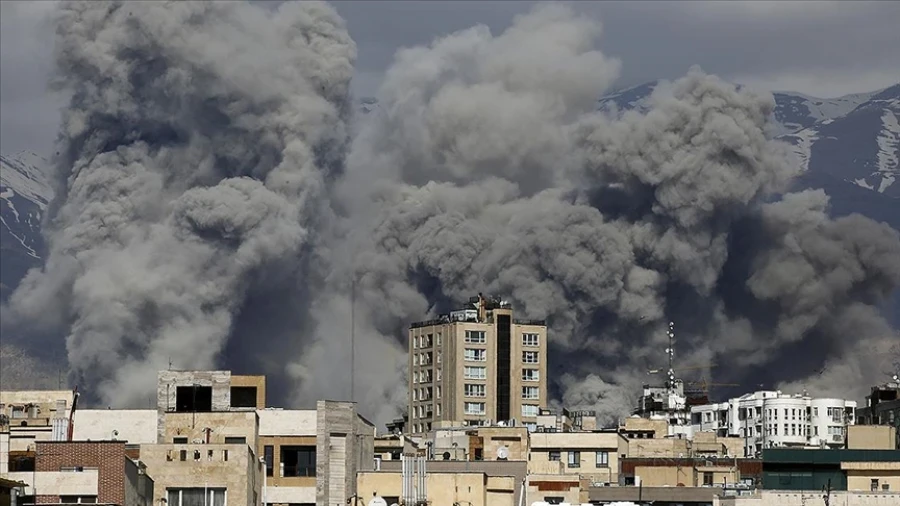
In response to these events, Iran carried out new attacks on central Israel, resulting in at least two deaths and significant property damage.
Missile Strikes on Israel: Iran Intensifies Its Actions
Channel 12 reported sounds of explosions in the Gush Dan area of central Israel, following warnings from Israeli military about missile strikes from Iran.
The report mentioned the interception of at least one missile, as well as debris hitting a target.
Damaged vehicles were recorded in the city of Holon, some of which caught fire.
Sultan al-Hulaifi, a senior researcher at the Center for Conflict and Humanitarian Studies, noted that the Israeli strategy of "decapitation" of Iranian leadership continues, but the power structure in Iran remains stable.
“This is an institutional system, different from Iraq and Afghanistan,” he emphasized in an interview with Al Jazeera. “The loss of one person does not mean that they cannot be replaced,” al-Hulaifi added, commenting on reports of the elimination of Ali Larijani.
In an interview with Al Jazeera, Iran's Foreign Minister Abbas Araghchi stated that the killings of high-ranking officials will not weaken the Iranian government.
“I do not understand why the Americans and Israelis have not realized this yet: Iran has a strong political structure with established institutions,” Araghchi said.
“The presence or absence of an individual does not affect this structure,” he added.
“Although individual personalities play their roles, the main point is that Iran's political system is very robust,” the minister concluded.
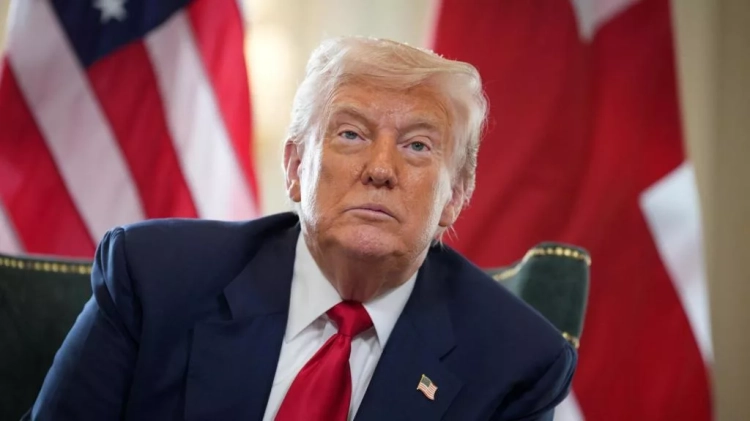
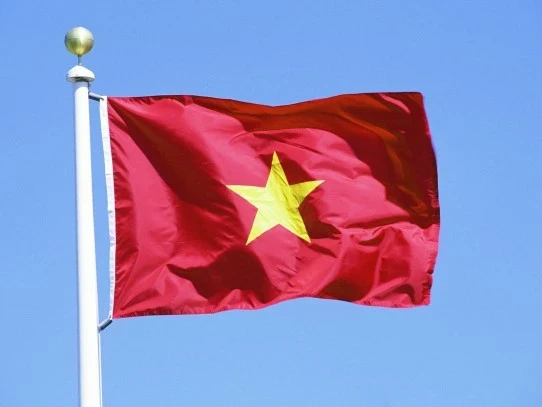
U.S. President Donald Trump expressed confidence that he does not fear a "second Vietnam" in the event of ground intervention in Iran.
Trump dismissed Iran's warning that a potential U.S. ground operation could lead to a protracted war. This came after a journalist's question about statements from the Iranian side made in an interview with Sky News.
In response to a reminder that Tehran warned, “If the U.S. starts a ground operation in Iran, it will be a second Vietnam,” the U.S. President confidently replied, “No, I am not afraid. In fact, I am not afraid of anything.”
Trump also noted that the U.S. no longer needs NATO's assistance.
“The United States has been informed by most NATO allies that they do not want to participate in our operation against the terrorist regime in Iran, although all countries agree that Iran should not have nuclear weapons,” he noted.
“I have always considered NATO a one-sided system: we spend hundreds of billions of dollars to protect allies, but in return, they do nothing for us,” Trump added.
“Fortunately, we have already dealt a crushing blow to Iran's military potential: their air force and navy have been destroyed, air defense and radar systems have been incapacitated, and leadership has been eliminated,” he emphasized.
“Given our successes, NATO's assistance is no longer required, nor is the help of Japan, Australia, and South Korea. We do not need anyone's help,” Trump added.
However, even among Trump's supporters, there is disagreement with his optimism.
According to the WSJ, a senior U.S. counterterrorism official resigned over the war with Iran.
Joe Kent, director of the National Counterterrorism Center, stated that he cannot support the ongoing war, believing that Iran does not pose an immediate threat. He noted that the conflict began under pressure from Israel and its lobby.
Kent was an ally of National Intelligence Director Tulsi Gabbard and had previously supported Trump's foreign policy, but believes the president has strayed from his goals of preventing "endless wars."
After Kent's resignation, Trump commented: “I always thought he was a nice guy, but he was weak on security issues. He said that Iran does not pose a threat, but that is not true. Every country knows what threat it poses, and many experts have said that we need to deal with Iran so that it does not acquire nuclear weapons.”
Netanyahu Tries to Position Himself as the "Liberator" of Iran
Author: Rory Chelland
Reporting from Amman, Jordan.
Israel is actively working to eliminate Iranian leadership in the security sphere.
Israelis believe that their actions, including the killings of Larijani and Soleimani, are significant blows to Iranian leadership, and they are likely correct in this.
Larijani and Soleimani are described differently: Larijani is perceived as the chief managing Iran, while Soleimani is portrayed as a tyrant suppressing Iranian dissent. The killing of Soleimani is essentially seen as a blow to a repressive regime.
Although Larijani is likely more important, Israel has focused on Soleimani, as it aligns with the narrative promoted by Netanyahu. He is trying to convince Iranians that he is on their side and is creating conditions for their uprising against the "Ayatollahs."
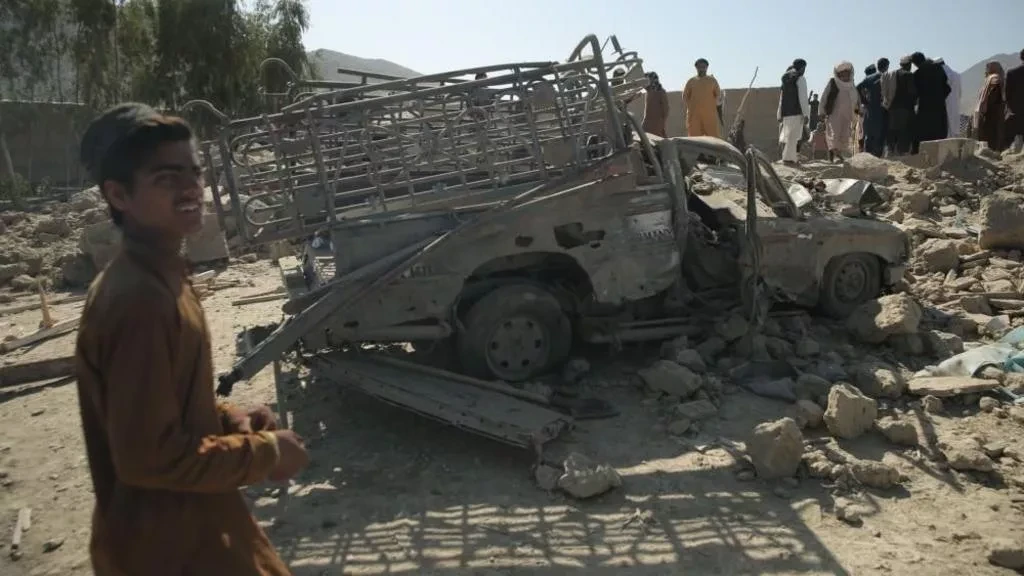
It is too early to talk about the consequences, but it is worth noting that in recent weeks, Israeli airstrikes have resulted in the deaths of many civilians in Iran.
Summary of Recent Events
- Iran confirmed the killings of its high-ranking official Ali Larijani and the commander of the Basij forces Gholamreza Soleimani following claims from Israel that they carried out both assassinations.
- Iran conducted new attacks on central Israel, resulting in at least two deaths from shrapnel wounds.
- Bahrain, Qatar, Saudi Arabia, and the UAE reported intercepting Iranian missiles and drones amid ongoing attacks in the Persian Gulf.
- Several explosions occurred in Baghdad amid missile attacks on the U.S. embassy.
- Director of the U.S. National Counterterrorism Center Joe Kent resigned over the conflict with Iran, stating that Tehran does not pose an immediate threat.
- President Trump criticized NATO countries for refusing to send their naval forces to the Strait of Hormuz and noted that Kent's resignation is a "good thing."
- Israel warned residents of the Lebanese city of Tyre to evacuate due to new airstrikes across the country, a day after expanding the ground offensive.
The post Iranian authorities promised revenge after the death of Ali Larijani, Secretary of the National Security Council. What else became known? first appeared on K-News.