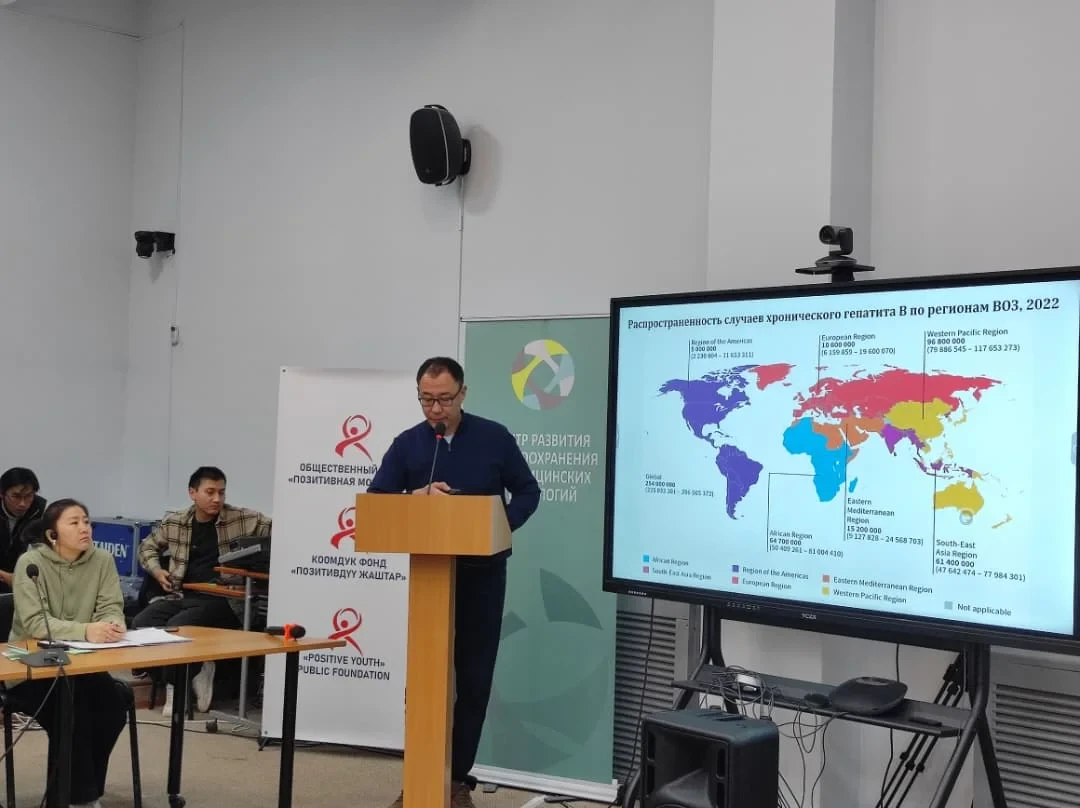
He encounters the phrase "my heart is skipping a beat" on a daily basis.
“Some say it with a smile, while others are in a panic. However, behind these words can lie either a minor issue or a serious condition that increases the risk of stroke or sudden death,” he added.
According to Osmonov, as a specialist in arrhythmia, ignoring such symptoms is extremely unwise, even if they resolve on their own.
He then shares examples from his practice:
Case One: “I’m 38, how can this be a stroke?”
A 38-year-old man came to the appointment complaining of "irregular heartbeat," although he felt no pain and appeared healthy, engaging in sports.
After examination, atrial fibrillation was detected, the most common form of arrhythmia that can lead to ischemic stroke.
Patients often ask:
“Doctor, I’m still young. Is this dangerous?”
The danger does not lie in the sensation of palpitations itself, but in the fact that blood clots can form in the heart during atrial fibrillation. These clots can "move" to the brain, causing a stroke suddenly and without warning. Therefore, modern treatment begins with an assessment of stroke risk before moving on to medication therapy.
What are the most common arrhythmias?
Atrial fibrillation — an irregular rhythm, often without pain, but with a high risk of stroke.
Supraventricular tachycardias — sudden episodes of rapid heartbeat, often seen in young people.
Ventricular arrhythmias — the most dangerous form, capable of leading to loss of consciousness and sudden cardiac arrest.
Rare pulse (bradycardia) and blocks — when the heart beats too slowly.
It is important to understand that the same symptoms in different people can indicate completely different risks.
Case Two: “Attacks that were attributed to stress”
A 26-year-old woman suffered from episodes of sharp heartbeat for several years. She was advised: “It’s due to stress,” “It’s vegetative,” “Take a sedative.”
One day, one of the episodes was recorded on an ECG — the diagnosis turned out to be supraventricular tachycardia.
After catheter ablation (EP/RFA), the episodes completely ceased. Sometimes it is important for patients to know that not all cases are treated with pills and that not all problems are caused by nerves.
When should you seek medical help immediately?
Always call an ambulance if palpitations or rapid heartbeat are accompanied by:
- fainting or sudden weakness,
- pain or pressure in the chest,
- severe shortness of breath,
- speech disturbances or weakness in the limbs.
- In such situations, time is of the essence.
Modern methods of treating rhythm disturbances
Today, arrhythmology is focused not on "normalizing the ECG," but on minimizing risks to life and quality of life for patients.
The main goals of treatment:
1) reducing the risk of stroke (especially in atrial fibrillation);
2) controlling the pulse or restoring rhythm if necessary;
3) using procedures such as ablation at the most appropriate times.
Recent international studies have shown that early rhythm control in some patients with atrial fibrillation can improve prognosis, not just overall condition. Therefore, the approach to each patient is always individual — there are no universal solutions.
Pacemaker and defibrillator: this is not the end of the road
Sometimes the problem lies not in a frequent pulse, but in a pulse that is too rare. In such cases, the installation of a pacemaker is not a last resort, but an opportunity to restore a person’s full life.
In cases of high risk for serious arrhythmias, such as ventricular tachycardias, an implanted defibrillator can save lives, as confirmed by many large international studies.
What I want to convey to you
Cardiac rhythm disturbances do not always pose a danger, but they always require attention and analysis.
If your "heart skips a beat" regularly, if you experience episodes, dizziness, or weakness — it’s better to get an accurate diagnosis than to live in ignorance.
Sometimes observation is sufficient. In other cases, pills or procedures will be needed. But almost always, the right decision starts with one step: do not ignore the signals your heart is sending.