- What is the current situation regarding the health of the population? Why are oncological diseases becoming increasingly relevant?
- In recent years, there has been a noticeable shift in the structure of causes of mortality: while successes in the prevention and treatment of cardiovascular diseases are becoming more evident, the share of mortality from oncological diseases continues to grow. This is not a sudden deterioration of the situation but reflects changes in demographics and medicine: people are living longer, and oncology is becoming one of the key challenges for the healthcare system. Therefore, the oncological service must develop as a cohesive system, not just as a collection of separate institutions, ensuring accessibility and effectiveness for every citizen.
Statistics show that the number of new cases of cancer is increasing in Russia, the structure of tumors is changing, and new alarming trends are emerging, such as the "younger age" of certain forms of cancer, including colorectal cancer, breast cancer, and prostate cancer. At the same time, there is a decrease in mortality from a number of diseases, indicating that more and more people with a diagnosis are living for a long time and require monitoring, rehabilitation, and support. Oncological care is no longer just "chemotherapy treatment" but is transforming into long-term support for the patient throughout their journey.
- How is modern oncological care organized in Russia and abroad?
- Modern oncology is based on three key factors:
- individual characteristics of the patient,
- distribution of the tumor process,
- biological features of the tumor.
These three aspects determine the tactics and sequence of treatment, which requires the system to ensure rapid access for doctors to diagnostics and available options for antitumor treatment, and for patients to necessary pathways without delays.
The first aspect is the patient. Age, presence of comorbidities, previous therapies (including non-oncological), family plans, and social context—all of these influence the choice of treatment. The number of primary multiple tumors is increasing, which requires constant interdisciplinary interaction and readiness for atypical situations.
The second aspect is the prevalence of the tumor process. Here, the quality of staging and dynamic assessment is important: understanding exactly what we are treating (primary process, recurrence, etc.) and how reliable the examination data is. Ideally, the clinician should have access to an electronic image database for critical assessment of studies. This is not a luxury but a necessity for ensuring safety and quality.
The third aspect is tumor biology. The heterogeneity of tumors and the need for precise morphological verification require a strong oncopathological service and a modern laboratory base for the correct choice of therapy and rational expenditure of resources. The participation of an oncopathologist in consultations significantly improves the accuracy of diagnoses and accelerates expert discussions.
- How can the system of oncological care be properly organized to increase its accessibility?
- I believe that the foundation should be large oncological centers that combine outpatient and inpatient care, serving large populations to accumulate experience in rare and complex cases, but at the same time do not turn into unmanageable structures. The optimal scale is a center for several million people.
At the same time, the focus should be on outpatient examination and treatment, while inpatient care is intended for surgical interventions, complex therapy, and patients with significant comorbidity. This approach reduces the burden on hospitals and speeds up access to necessary care.
- What are the key elements of a high-tech oncological center?
- Within the center, there should be a structure based on "units" or specialized areas (head and neck oncology, thoracic oncology, etc.), as well as mandatory specialized consultations. Doctors from the outpatient and inpatient sectors should work as a single team, making decisions together and supporting the patient throughout the treatment process. The system should be results-oriented rather than volume-oriented.
- What additional measures can improve the oncological center?
- Modern global trends require that the model of the "oncological center of the future" includes several mandatory components:
A unified digital framework that allows for data registration, patient routing, and access to diagnostic materials. This reduces variability, time loss, and error risks.
Patient navigation and service logic: oncological care should be organized in such a way that patients do not have to independently seek consultations and studies. Navigators are underappreciated tools for increasing efficiency.
Quality as a manageable variable: measurable indicators, analysis of complications, audits of adherence to clinical guidelines, and continuous improvement of processes are needed.
Developed palliative care and symptom control with early involvement, which affects the quality of life and tolerability of treatment.
Prevention and early detection as part of a unified system with treatment: screening programs, vaccination, and work with risk factors. Without this, the treatment part will always be "catching up" with morbidity.
- What are the most important aspects to consider when forming an oncological service?
- In conclusion, no structure will work without qualified medical personnel and adequate funding. Systematic training of doctors, mentorship, and clear career paths for specialists are necessary. It is important to ensure funding not only for education but also for the internship period; otherwise, good personnel will be lost. Oncological care must be genuinely accessible to citizens; otherwise, the entire system loses its meaning.
Modern oncological care should be integrated, specialized, digital, and patient-oriented, where decisions are made based on the stage and biology of the tumor, individual patient characteristics, and scientific data. Access to diagnostics and treatment should be quick, and quality should be continuously improving. Education of personnel and accessibility of care are not just words but the foundation of a system capable of curbing the rise in morbidity, reducing mortality, and ensuring a decent life for people who will live with a diagnosis for many years.
- What are your impressions after your visit to Manas regarding the region's issues?
- In November 2025, at the invitation of Jalal-Abad State University, I visited Manas, where NOPK ZHAGU and the Regional Clinical Hospital organized a conference on oncology, at which I gave a lecture. I also participated in a meeting with the regional administration, where issues of oncological care were discussed.
I am pleased to see that local authorities recognize the importance of addressing oncology issues in the region. This is extremely important, as effective solutions to medical issues can significantly change the social situation by providing people with timely and quality assistance.
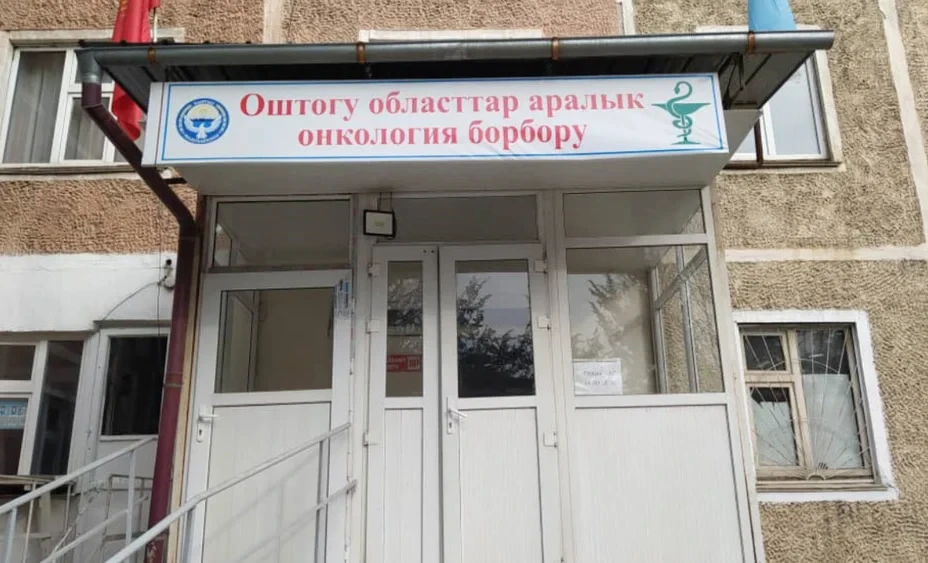
Unfortunately, at the moment, there is no full-fledged oncological service in Manas and the Jalal-Abad region. Residents have to go to Osh or Bishkek for specialized help, which creates significant difficulties and delays in the process of diagnosis and treatment.
Manas needs a modern oncological center that could serve as a practical institution for helping patients and a scientific-educational center for training new specialists. This would allow for the harmonious development of oncology within the healthcare and education systems of the country.
I am confident that such a center, established on the basis of a university clinic, will become an important resource for residents, doctors, and students, providing high-quality assistance and education in their region.