Talantbek Batyraliev is a Doctor of Medical Sciences, Professor, Academician of the Russian Academy of Natural Sciences, and a full member of the American College of Cardiology (MD, PhD, DSc, FACC, FSCAI, FAHA, FESC).
Here is the text:
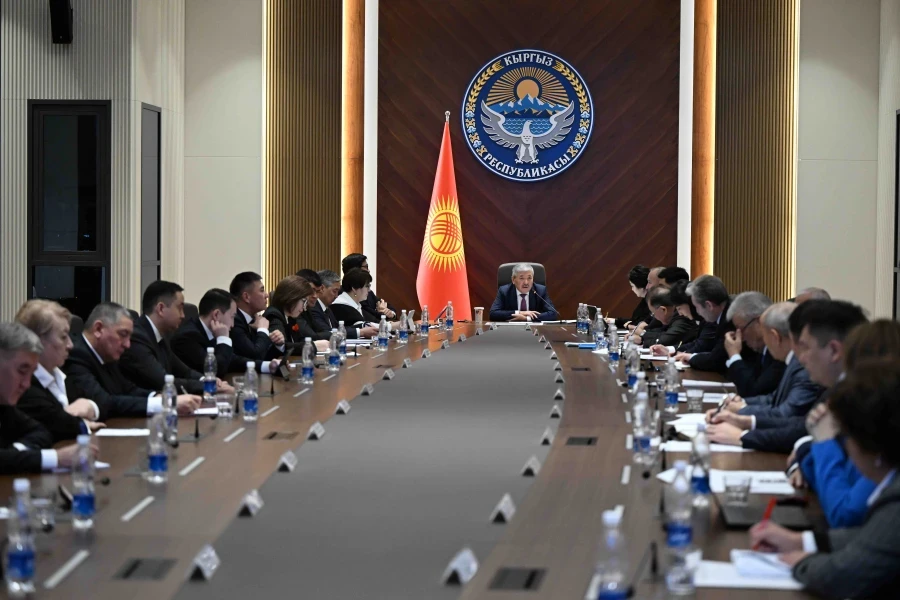
“At the meeting of the Council on Science, Innovations, and New Technologies, held on December 31, 2025, chaired by the head of the Cabinet of Ministers, Adylbek Kasymaliev, the importance of science and innovation for the sustainable socio-economic development of the country, technological sovereignty, and ensuring national security was emphasized. The Council's decision noted the priority of science and geological research as a key direction of state policy in the Kyrgyz Republic. The Cabinet of Ministers was recommended to take systemic measures to enhance the effectiveness of scientific activities, including the development of state procurement mechanisms, gradual increases in funding for the scientific sector, and rational use of resources, as well as modernization of geological science and strengthening the human resources potential of scientific institutions. State support for science is increasing, and it should be utilized as effectively as possible in the scientific field.
In this regard, the question arises about the role of scientific medical centers in Kyrgyzstan and their differences from leading medical research institutions in the world.
Scientific medical centers and research institutes perform critically important functions in the modern world, conducting both fundamental and applied research to create new knowledge, develop innovative methods of diagnosis and treatment (artificial intelligence, genomic editing, robotics), train highly qualified specialists, and implement advanced technologies. This contributes to the progress of medicine, improves the quality of life, and addresses global health issues such as combating pandemics and developing personalized medicine. Despite the common patterns in the development of medical science, I would like to emphasize cardiology.
The first scientific centers appeared in the mid-20th century.
In the Soviet Union, on August 11, 1936, by the decree of the Council of People's Commissars of the USSR No. 1462, the hospital named after the first People's Commissar of Health N.A. Semashko was transferred to the All-Union Institute of Experimental and Clinical Medicine named after A.M. Gorky. A unified complex of experimental and clinical medicine was created based on several medical institutions, which provided diverse medical assistance and became the largest scientific institute.
Also, on June 30, 1944, the initiative to create the Academy of Medical Sciences was supported by the Council of People's Commissars of the USSR, which included the first clinical institutes, including the Institute of Experimental and Clinical Surgery. The first clinical center in the field of therapy became the Institute of Therapy, later renamed the Research Institute of Cardiology, which bears the name of Academician Alexander Leonidovich Myasnikov. He is credited with the idea of creating research institutes of cardiology in the union republics, which led to the establishment of cardiology institutes in each of them starting in the 1970s.
In 1956, at the initiative of Academician Alexander Nikolaevich Bakulev, the Institute of Thoracic Surgery of the USSR Academy of Medical Sciences was established on the basis of the 1st City Hospital. Under his leadership and later, from 1959 to 1966, under the leadership of Professor Sergey Alexeyevich Kolesnikov, the development of "open" heart surgery and treatment of heart defects began. Despite Bakulev leaving the position of director, he remained an active scientific leader until the end of his life.
This is how scientific clinical centers developed in the unified Soviet Union.
With the collapse of the Union and the formation of independent states, the question of the development of national science arose. It is important to note that medical science has become international since the end of the 20th century. Centers that focused on uniqueness began to lag behind, while international integration helps the medical community. Modern political contradictions also affect medicine, and it should be recognized that restrictions negatively impact its development.
American medical institutions, especially private ones, have served as an example of integrating global achievements into one country over the past 50 years. The first coronary angiography was performed at the Cleveland Clinic in 1958, which later became the basis for the Nobel Prize in Medicine. Similarly, the spread of aorto-coronary bypass surgery is also associated with the Cleveland Clinic and its founder, Rene Favaloro, an Argentine doctor who worked in the USA. Effective mammary-coronary bypass surgery received recognition later, as the Soviet Union was isolated from the global community.
American associations in the field of cardiology, initially created for national interests, have long become world leaders, setting the agenda in medicine. The American College of Cardiology (ACC) accepts the best doctors and scientists from around the world. Two honorary members of this organization also work in Kyrgyzstan. It provides extensive educational resources and recommendations, gathering thousands of doctors and scientists at scientific sessions. At the same time, the American Heart Association (AHA) actively engages in the prevention of cardiovascular diseases among the population. The collaboration between AHA and ACC allows cardiologists to exchange new knowledge and improve diagnosis and treatment.
The scientific resources used in Kyrgyzstan were previously insufficiently effective, considering the weak integration with American medicine.
The international movement "Physicians for Peace" (PMP) founded in 1980 became an important step toward preventing nuclear war. In 1985, the organization was awarded the Nobel Peace Prize for its efforts to inform the public. In the 1980s, the movement had about 145,000 members, and by the 1990s — about 200,000 from more than 60 countries.
However, the exchange of information in the scientific community remained limited, and only a few leading scientists had the opportunity to communicate abroad. After 1991, the integration of CIS countries into the global medical context was difficult. For example, the Russian National Society of Cardiology began cooperation with ACC only in 2012, while previous contacts were established back in the Soviet period.
Today, TCT (The Transcatheter Cardiovascular Therapeutic) in the USA has become one of the leading congresses in invasive cardiology, uniting a group of doctors based at Columbia University. This scientific foundation creates a platform for innovation, research, and education aimed at improving medical outcomes.
Implement innovations, urges CRF:
The CRF Skirball Innovation Center focuses on developing new clinical treatment methods for patients.
Research, continues CRF:
The CRF Clinical Research Center conducts studies and provides analyses of clinical data.
Educate, concludes CRF:
The CRF Educational Center trains doctors in advanced methods and innovations at more than 50 events a year, including the annual symposium on transcatheter cardiovascular therapy (TCT).
This model, successfully implemented at Columbia University, helps gather and refine the latest ideas and technologies in invasive cardiology for their widespread application.
Many examples can be cited, but the global trend is that most medical centers are formed based on private universities in America, Europe, and Asia, which define the development of medicine.
Scientific activity, particularly in medicine, cannot be tied to a specific country; it must be international. Narrow and inadequately formulated goals can lead to the degradation of science.
The main functions and tasks of scientific clinical centers:
Key functions and significance:
Knowledge generation: Conduct fundamental research, deepening the understanding of diseases and aging mechanisms.
Innovation development: Create new technologies such as artificial intelligence and medical robotics.
Personnel training: Serve as centers for postgraduate education for doctors.
Clinical trials and implementation: Conduct checks of new drugs and treatment methods in accordance with international standards.
- State orders (from the budget);
- International agreements (for example, Kyrgyz-Indian cooperation);
- Orders from well-known medical companies;
- Scientific and applied orders.
Strategic development: Form the scientific and technological base for state policy in healthcare.
Information support: Collect and disseminate scientific data for informed decision-making.
Thus, research institutes and scientific medical centers are driving forces of progress, contributing to the continuous development of medicine and improving the quality of life for people.
In the following sections, we will discuss the criteria for evaluating research centers/institutes, personnel selection, and funding sources.