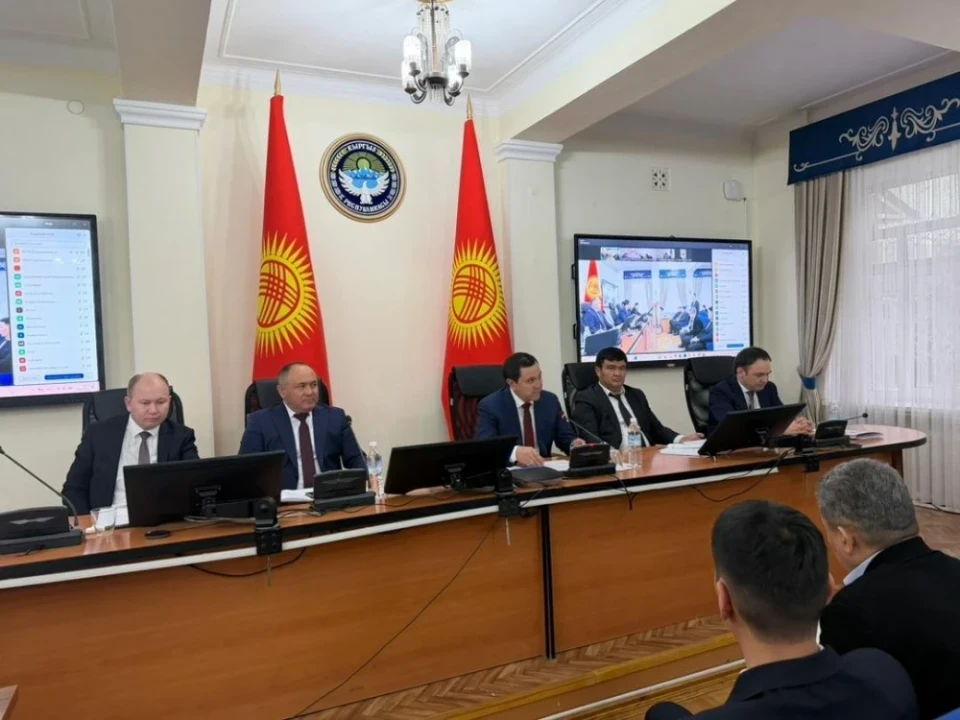
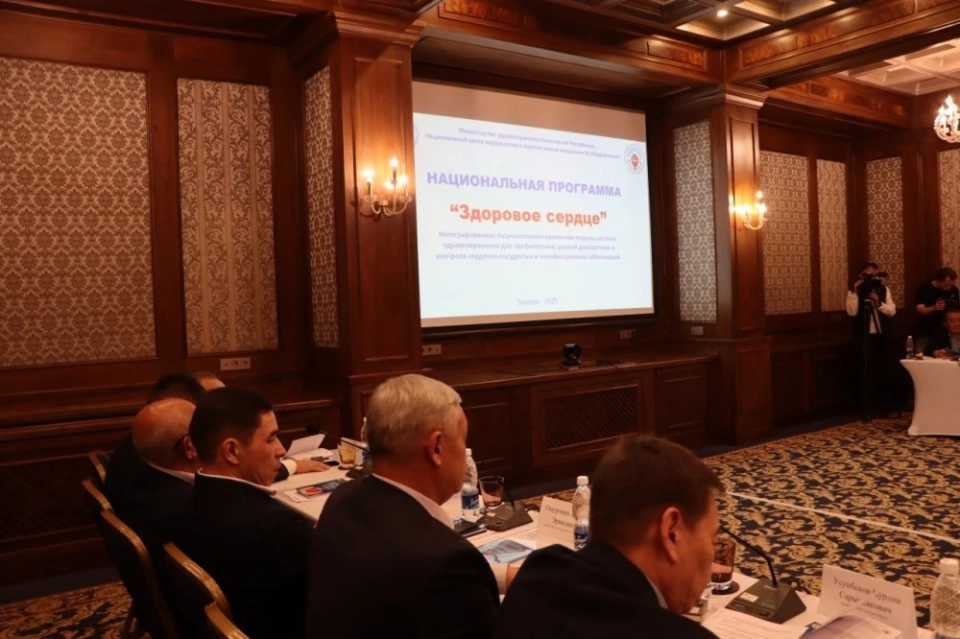
On January 12, it became known about the dismissal of the director of the National Center for Cardiology and Therapy Talantbek Sooronbaev and the director of the Research Institute of Heart Surgery and Organ Transplantation Samidin Shabyraliev due to violations identified during the inspection.
Kadyraliev noted that inspections were conducted not only in these two institutions but also in other hospitals across the country.
He emphasized that consumables, tools, and new equipment are sometimes stored alongside construction materials, which is unacceptable. In Kyrgyzstan, cardiovascular diseases rank first in terms of morbidity and mortality rates, so cardiology patients must be under constant supervision.
“In the intensive care unit, it is necessary to monitor hemodynamic indicators such as blood pressure, heart rate, and saturation. These indicators should be monitored around the clock, but established protocols are not always followed. If there are 18 patients in the intensive care unit, ultrasound machines should be constantly available, but this is not always the case. In a critical situation, a doctor must make a decision within 5-10 minutes to save a patient,” he explained.
Kadyraliev noted that many factors influence the increase in mortality from cardiovascular diseases, primarily related to treatment.
Additionally, he pointed out the improper storage of consumables, as on May 8, President Sadyr Japarov instructed to install an ultrasound machine in the intensive care unit, which was not done and is a serious violation. Even without inspections, there are protocols and international standards according to which equipment should be available in the intensive care unit. Currently, treatment standards are changing; for example, minimally invasive methods without opening the chest are being introduced, which have not been used for adult patients in the last 2-3 years,” he said.
According to Kadyraliev, issues related to the organization of treatment and optimization of budget expenditures are not always addressed properly. This issue was handled by a special commission, and now, by the order of the Minister of Health, a new commission has been created for additional verification. “We have an accreditation commission that conducted inspections two years ago. Serious violations were identified then, and since then, no measures have been taken to eliminate them. Currently, the accreditation of each organization is being checked,” he reported.
Kadyraliev also noted that the state is actively working to improve healthcare: funds are allocated for financing, and new equipment is being purchased.
“However, as you may have noticed, new equipment often just sits in offices and is not used for treating patients. It should be utilized to reduce mortality from cardiovascular diseases. We insist that the directors of medical institutions should bear direct responsibility for their work. This applies not only to treatment but also to organization and staffing, as there is a staffing collapse in the system,” he emphasized.
Kadyraliev also noted that over the past 10 years, no Doctor of Medical Sciences has defended a dissertation in the country, and the number of publications is extremely low. This is evidence of the lack of implementation of new approaches and technologies in medicine. Over the past 15 years, new qualified personnel have virtually not worked in the system.
Old treatment methods that have been used for over 30 years continue to be applied without proper succession, and a school with modern methods and technologies has not been created. Science, training of personnel, and modern treatment methods should be considered in a comprehensive manner to achieve the desired results,” said the deputy minister.
He also recounted a case where one patient had been in the hospital for nine days, while according to international standards, diagnosis and consultation should occur the next day. The patient came several times from the regions, and available machines could have been used, which was recognized as incorrect by the commission.
Regarding the dismissal of the two directors — Talantbek Sooronbaev and Samidin Shabyraliev, the deputy minister noted that no one forced them to leave medicine.
“Their task is to pass on their experience and knowledge to young specialists, to be advisors and share practices — this is a common global practice. We believe that specialists in pulmonology [Talantbek Sooronbaev] should be experts in working with the lungs. As for cardiac surgery [Samidin Shabyraliev], no one has deprived him of the opportunity to work — he can continue performing surgeries at the institute,” he added.
Nevertheless, Kadyraliev emphasizes the importance of effective organization of a doctor's work. During the inspection of the building under repair, numerous violations were identified, including improper storage of consumables and expensive incubators for premature infants. Even if there is no space, equipment should be stored in a separate room so that it can be used after the repair is completed, or so that funds can be directed to other needs. The directors have not been removed from medicine; they can work in the institution but do not hold managerial positions, as the inspection revealed extremely unfavorable results.
Kadyraliev noted that expensive equipment worth 28 million soms, purchased at significant expense, was not used.
He added that equipment was often simply removed and returned, while it should be working for the benefit of patients.
Regarding thrombolytic drugs, their use is necessary if an angiograph is absent, when installing a stent through a catheter. There is such a machine in Bishkek, which allows thrombolysis to be applied through percutaneous intervention. When a patient with a heart attack arrives, thrombolytic medication must be administered before the procedure for stent placement. This is not just our recommendation but an international protocol (guidelines). Even in regions where an angiograph is absent, thrombolysis should be applied. Thus, this third-level hospital has not always used thrombolysis in the last one and a half to two years. Our team created a working commission and halted this process, as the drug had not been used in the last two months. After a heart attack, administering thrombolysis no longer makes sense,” he added.
Furthermore, Kadyraliev emphasized that recommendations should be updated every two to three years, and work should be conducted in accordance with them. In Kyrgyzstan, vascular diseases are always the leading cause of mortality. Can it be argued that this is related to untimely primary assistance and the conduct of surgeries? Yes, such a correlation exists, and this is what creates queues that cause confusion.
This is just one of the reasons. The problem is complex — from primary to tertiary levels. We have not yet fully restructured the system to avoid queues. In our opinion, the organization within institutions was improperly organized.
According to available data, about 700 children undergo surgeries in other countries,” he added.
Kadyraliev emphasized that any new team sets goals and objectives aimed at change.
“Currently, many reforms are underway, and we must work effectively and around the clock. It is necessary to establish order and discipline, and doctors on the ground must be held accountable,” he concluded.
When it comes to reform, we have our own system and protocols. Much has already been documented, and our task is to put it on the right track. For example, the same cataract in the right and left eye is treated differently by different specialists — this needs to be corrected. The same goes for heart surgeries: one surgeon performs the operation according to one protocol, another according to another. Therefore, our top priority is to establish order.
Secondly, we do not exclude anyone from the system but invite modern specialists who have worked both abroad and here. You can see for yourself, professors who have not given up their positions for 30 years, some specialists have moved to private centers or abroad. We invite those who are successfully working abroad to contribute to the country's healthcare and share their experience. We strive to implement new technologies and modern approaches,” he concluded.