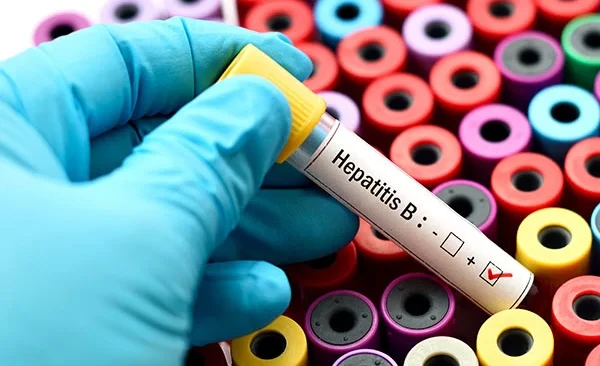
Despite the efforts being made, the problem remains relevant, and work to combat the infection continues. Specialists strongly urge citizens to get tested for viral hepatitis. There are also positive data — many patients are successfully recovering.
Hepatitis is an inflammation of the liver that can be caused by various factors: viruses, alcohol, medications, autoimmune processes, or toxins.
The Situation in the Country
According to Aibek Bekbolotov, a specialist at the Republican Center for Viral Hepatitis and HIV Control, more than 18,000 patients with hepatitis B and over 10,000 with hepatitis C have been registered in Kyrgyzstan.
He noted that all necessary medications for treatment are available in the country, and only those drugs that have passed quality checks and have prequalification from the World Health Organization (WHO) are imported.
As of November 1, 2025, 270,953 people have been tested for hepatitis B, of which 8,256 showed positive results. A similar process for hepatitis C covered 289,094 people, among whom 5,466 also received positive results.
Vaccination against hepatitis B among the adult population has been administered to 283,468 people — the first dose, 234,245 — the second, and 190,230 — the third.
Treatment of Viral Hepatitis
The government finances the diagnosis and treatment of viral hepatitis, as well as vaccination against hepatitis B.
For the treatment of hepatitis B, Tenofovir, Entecavir, and TAF are used, while Velpatasvir and Sofosbuvir are used for hepatitis C. “These modern medicines are known worldwide. New treatments are regularly emerging, and we update treatment protocols according to WHO recommendations to provide patients with effective therapy,” Aibek Bekbolotov said.
Currently, about 7,000 patients are undergoing treatment for hepatitis C, of which more than 5,000 have already completed their course and recovered. About 95% of them achieve complete suppression of viral load, which is called a deep response. Unfortunately, at this time, there is no effective treatment for hepatitis D. “In the last two years, more than 600 cases of hepatitis D have been identified. In total, more than 2,000 people know their diagnosis, many of whom may become candidates for transplantation. We hope for the emergence of effective treatments in the coming years,” the specialist added.
Existing Problems
Nigina, the founder of the organization "Stop Hepatitis," suffers from liver cirrhosis and is preparing for a transplant. She developed complications after the flu.
“I am preparing for a transplant, as there is no more treatment for my situation. There is interferon therapy, similar to chemotherapy, with serious side effects. However, for people with cirrhosis or severe fibrosis, interferons are contraindicated as they can cause harm,” she explained.
The main problem remains the lack of a specialized institution where one could obtain complete information. “We went around ‘like blind kittens.’ If your heart hurts, you go to a cardiology center; if your kidneys hurt, you go to a hemodialysis center. But for patients with liver diseases, there is no such place. There is an infectious hospital, but it only has a small department for acute forms of hepatitis,” she shared.
She emphasizes the need for enhanced informational work. The disease often proceeds asymptomatically in its early stages, and even with a diagnosed condition, a person may delay treatment for a long time.
“At one moment, there may be bleeding or another serious complication, and then panic begins,” she added.
The government is actively working on vaccination, which is very important. The younger generation has likely already been vaccinated at birth, reducing the risk of hepatitis B and D. However, it is still better to get tested — it is free.
The government is taking steps in the area of information dissemination and offers free initial tests. “I would recommend paying attention to your health. For example, girls often get permanent makeup, which is related to blood. But have you been asked about the results of your hepatitis tests? Most likely not. There are also other dangerous infections, such as HIV,” she concluded.
What is Important for Kyrgyzstanis to Know?
In Kyrgyzstan:
- testing, vaccination, and treatment for hepatitis B and C are provided free of charge;
- adults aged 24 to 65 can receive a free hepatitis B vaccination;
- the number of people who have undergone examination and treatment continues to grow, although demand is still below what is necessary.
Aibek Bekbolotov urged the population to get tested.
“It is not necessary to go to large cities — all services are available in your area. You can contact a family doctor group, a medical practice center, or a family medicine center for testing for hepatitis B and C or vaccination. All of this is available locally,” he emphasized.
He also added that the vaccine formula is the same worldwide, but there are many manufacturers. “Previously, a Russian vaccine was used, and this year 750,000 doses of Indian vaccine were procured for 250,000 people — it has passed WHO prequalification. The World Health Organization confirms its quality. In the future, we will only purchase quality vaccines,” Bekbolotov concluded.