// picture alliance/AP
The new ISW report notes that in 2025, Russian troops were able to increase their rate of advance due to the implementation of a new operational model, which was supported by technological changes and the adaptation of attack tactics.
According to studies, Russian troops captured 4,831 square kilometers of Ukrainian territory and reclaimed about 473 square kilometers previously occupied by Ukrainian forces in the Kursk region. These conquests accounted for 0.8% of the entire territory of Ukraine.
In 2024, Russian forces controlled 3,604 square kilometers. Data from the General Staff of the Armed Forces of Ukraine indicates that in 2025, Russian troops suffered losses amounting to 416,570 personnel, which translates to approximately 78 soldiers per square kilometer of occupied territory in Ukraine and the Kursk region.
The average daily advance of Russian troops in 2025 was 13.24 square kilometers, significantly exceeding the figure for 2024, which was 9.87 square kilometers per day.
However, the pace of the offensive was inconsistent. The highest rate of advance was recorded in November — 20.99 square kilometers per day. However, this peak followed an October slowdown to 8.8 square kilometers per day and then decreased to 15 square kilometers in December.
Russian troops implemented a new operational model based on a prolonged air blockade, tactical maneuvers, and mass attacks by small groups, which facilitated their advance in the directions of Pokrovsk, Alexandrovka, and Hulyaipole in the fall of 2025.
Since the beginning of spring 2025, Russian troops began to achieve successes by using drones to block Ukrainian ground communications.
In April and May of the same year, Russian military began deploying elite drone operators from the Advanced Drone Technology Center "Rubikon," which significantly impacted Russia's operational successes along the entire front line.
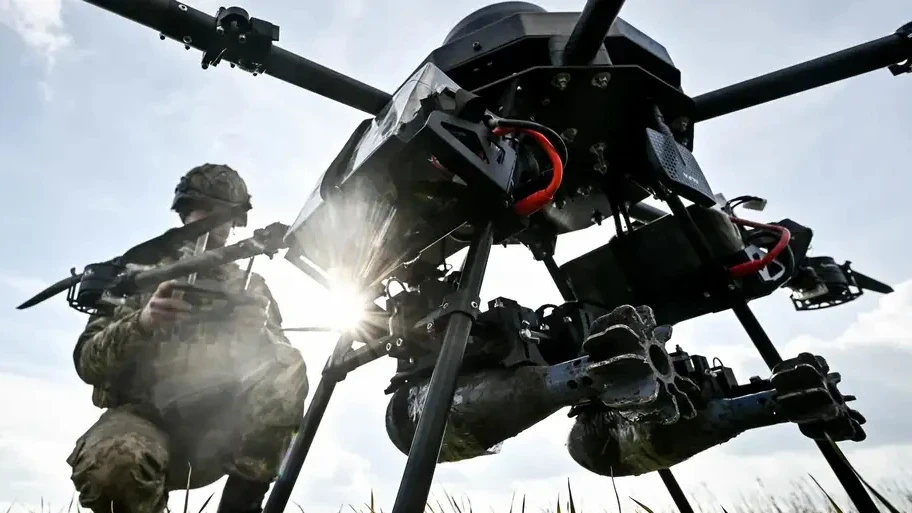
Technological advancements also contributed to the Russian campaign of using drones. The occupiers increased the production of fiber-optic drones, which proved to be more resistant to Ukrainian electronic countermeasures, and extended their range from seven kilometers in early spring to 20 kilometers in the summer of 2025.
Additionally, Russian troops introduced "mothership" drones capable of carrying FPV drones, significantly increasing the range of enemy strikes.
Recent technological changes have allowed Russian fiber-optic drones to extend their range to 50-60 kilometers.
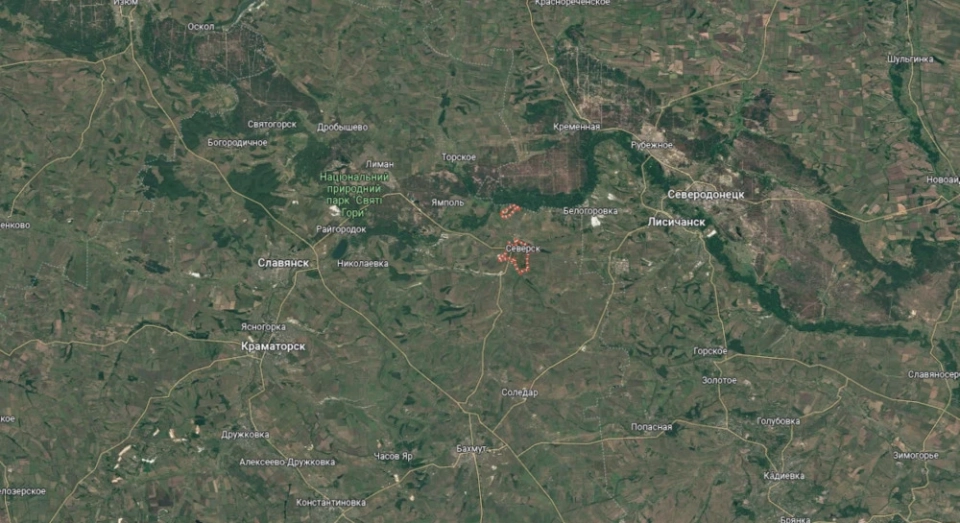
On December 30, the Chief Commander of the Armed Forces of Ukraine, Alexander Syrsky, noted that the high concentration of Russian fiber-optic drones with a range of over 20 kilometers in the direction of Siversk contributed to the capture of this city.
The use of fiber-optic drones also improved Russian capabilities to counter Ukrainian electronic warfare in forested areas, such as the Serebryansky forest massif, where remote-controlled drones face difficulties operating.
Furthermore, Russian troops changed their tactical approaches, abandoning costly infantry operations in favor of more maneuverable tactics, which allowed them to advance more quickly along the front in 2025, although they still suffered significant losses with minimal successes.