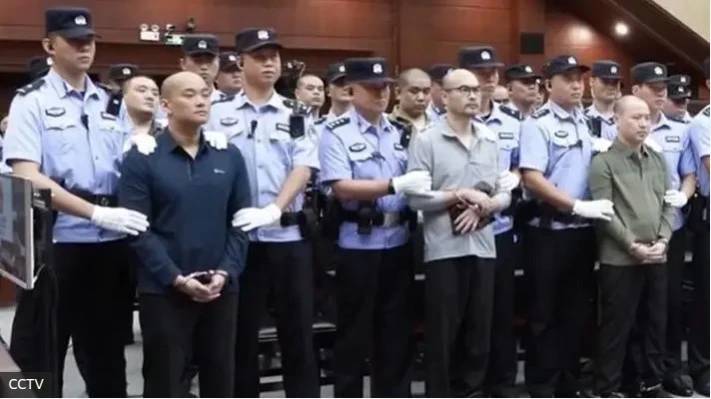
The executions were carried out following a verdict from the court in the city of Shenzhen in Guangdong province. The Supreme People's Court of China sanctioned this measure in response to a "series of crimes," including intentional murder, telecommunications fraud, and drug trafficking. The sentence was handed down back in November 2025.
An important point: on January 29, Chinese media reported the execution of 11 members of another criminal family, the Ming, also linked to fraudulent schemes in Myanmar.
The Bai family, along with the Ming clan and other groups, had controlled the border town of Laukkai in Myanmar for many years, where casinos, the sex industry, and cyber fraud operated. According to sources, the family even had its own paramilitary unit, as well as 41 closed complexes for operating fraudulent call centers and casinos. During the investigation, it was revealed that family members were also involved in the production and sale of about 11 tons of methamphetamine.
The trial established that the criminal activities of the Bai family led to the deaths of six Chinese citizens and caused serious injuries to others.
Among those executed was Bai Incan, whom Xinhua refers to as the leader of the group. However, the BBC points out that the real head of the family was Bai Suocheng, who did not live to see the execution of the sentence and died of illness.
Since the 2000s, criminal clans have controlled Laukkai, but in 2023, Beijing expressed dissatisfaction with the actions of the Myanmar military, which did not combat the fraudulent syndicates. The Chinese side supported the actions of ethnic rebels, leading to the dismantling of syndicates and the arrest of their members. The main victims of the criminal families were Chinese citizens.