The report from the U.S. Department of Defense indicates a rapid increase in China's military power, which is projected to exceed 1,000 nuclear warheads by 2030.
According to a draft Pentagon report reviewed by Reuters, China has established over 100 intercontinental ballistic missiles in three new silos near the border with Mongolia and shows no active interest in arms control negotiations.
The report emphasizes that Beijing is significantly accelerating the development of its nuclear forces, making its modernization pace faster than that of any other nuclear power. Chinese officials have often dismissed such conclusions, claiming they aim to "undermine China's reputation and mislead the international community."
The Pentagon declined to comment in response to a request from Fox News Digital regarding the Reuters report.
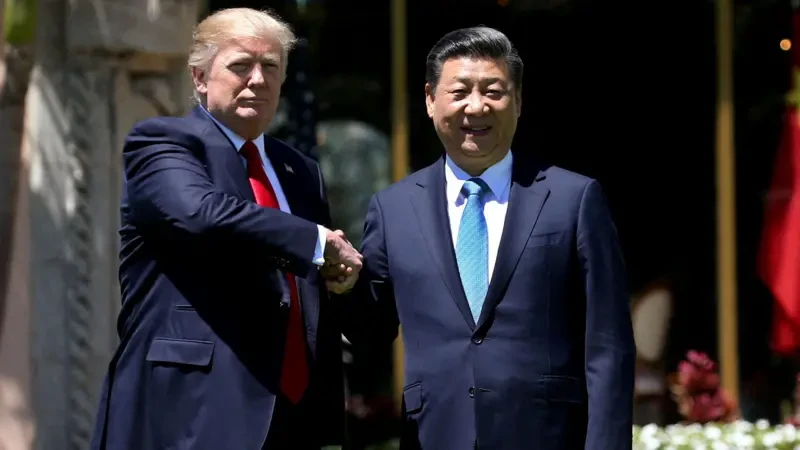
Last month, U.S. President Donald Trump expressed a willingness to continue nuclear disarmament negotiations with China and Russia. However, the report states that Beijing appears uninterested in such dialogue.
“We still do not observe a willingness from China to take such measures or engage in broader arms control discussions,” the report asserts.
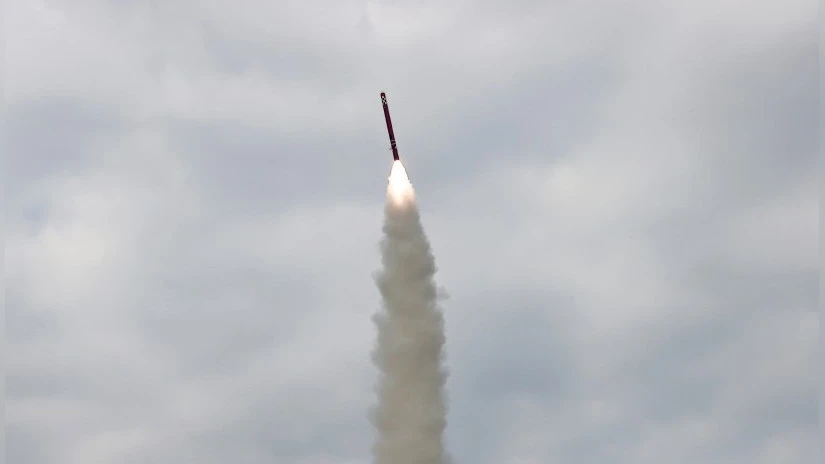
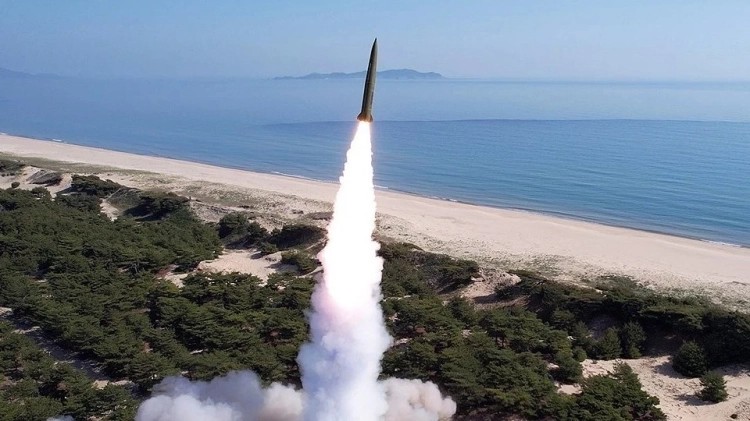
The assessment reports the deployment of over 100 solid-fueled intercontinental ballistic missiles DF-31 and DF-41 in silos located near the border with Mongolia. These missiles are capable of delivering nuclear warheads at ranges of 12,000 to 14,000 km and can carry up to 10 warheads.
Although the Pentagon had previously reported the existence of these silos, the exact number of missiles deployed in them has not yet been disclosed.
A request for comment to the Chinese embassy in Washington was not immediately fulfilled.
The document does not specify potential targets for the newly deployed missiles, and its content may be altered before the official presentation to Congress, as noted by U.S. officials.
As of 2024, China's stockpile of nuclear warheads was just over 600 units, which, according to the report, indicates a slowdown in production rates compared to previous periods. Nevertheless, by 2030, Beijing plans to reach a level of 1,000 nuclear warheads.
China claims to follow a strategy of nuclear self-defense and adheres to a no-first-use policy regarding nuclear weapons. However, analysts note that China's public statements increasingly diverge from this position.
“Despite China's advocacy for a no-first-use policy, it is increasingly showcasing its nuclear arsenal, including a joint demonstration of its nuclear triad in September,” said Jack Burnham, a senior analyst at the Foundation for Defense of Democracies.
According to Burnham, Beijing's reluctance to engage in arms control negotiations is linked to the pace of its military buildup. “China seeks to avoid long-term strategic vulnerability and is building an arsenal comparable to its perceived status in the world alongside the U.S., and possibly even surpassing it in the future,” he noted.
The report also highlights that China aims to achieve success in a potential war over Taiwan by the end of 2027, viewing the self-governing island as its territory and not ruling out the use of force.
The report also states that China is enhancing its capabilities to seize Taiwan "by brute force," including strikes from distances of up to 2,000 nautical miles from the coast, which could complicate U.S. military operations in the Asia-Pacific region.
This information comes amid the approaching expiration of the 2010 New START Treaty, the last active agreement between the U.S. and Russia on nuclear arms control, which limits the number of deployed strategic nuclear warheads for both sides to 1,550.
Chang also warned that extending the New START Treaty without China's involvement would be a mistake. “Now is not the time for the U.S. to agree to extend the New START Treaty with Russia,” he emphasized. “Russia and China have become de facto allies against America. Without considering China, no agreement can adequately address U.S. interests,” the expert added.
author: Efrat Lachter — investigative journalist and military correspondent who has worked in 40 countries, including Ukraine, Russia, Iraq, Syria, Sudan, and Afghanistan.
translation: Tatar S. Maydar
source: Fox News