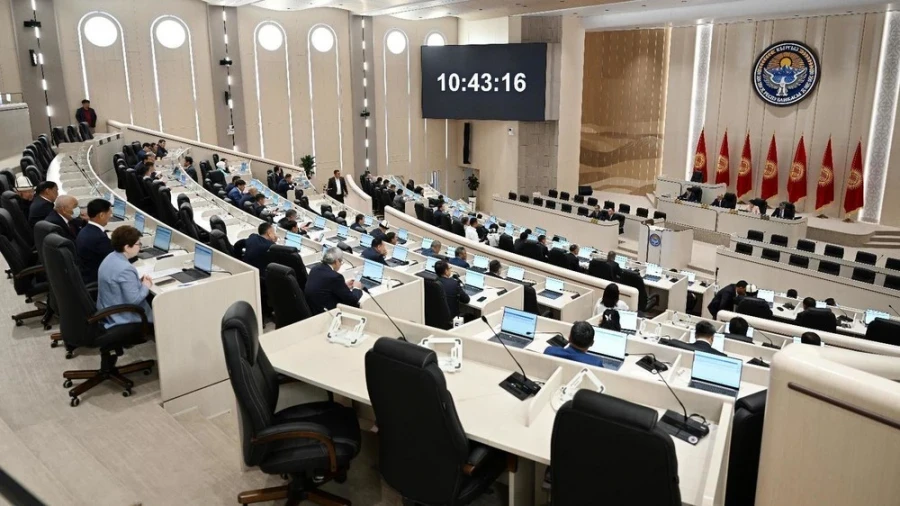
The Ministry of Justice has presented a draft law for discussion in the Jogorku Kenesh.
Currently, a draft law concerning amendments to several existing laws regulating legal practice and the system of guaranteed state legal aid (GGLA) is under consideration in the Jogorku Kenesh. The main objectives of this document are to digitalize legal aid, optimize the structure of the Legal Aid Service, and address the issue of the shortage of lawyers in the regions.
According to the explanatory note, this draft law aims to increase the accessibility of legal services for citizens, reduce bureaucratic procedures, and enhance the efficiency of the use of state resources.
Implementation of digital technologies and online access to legal aid
One of the key proposals is the creation of an electronic register of procedural documents within the GGLA system. It is proposed that lawyers will be required to submit reports and documents in the form of digitized copies through an automated information system.
The developers believe that this will:
- facilitate document flow,
- speed up the payment process for lawyers,
- increase the transparency of the system,
- reduce paperwork and decrease the influence of the human factor.
At the same time, lawyers will be responsible for the authenticity of the uploaded documents, which will require changes to the payment procedure for legal services.
Abolition of district subdivisions and optimization of coordinator numbers
The draft law proposes the elimination of district subdivisions within the Legal Aid Service and a transition to online platforms for consultations.
The developers point out that the system is already digitized: an automated information system "GGLA" operates throughout the country, which includes:
- online consultations,
- a CRM system for processing citizen requests,
- a hotline 114,
- electronic interaction of lawyers with judicial and law enforcement agencies.
Analysis of the workload has shown a serious imbalance: in the regions, staff are overloaded, while the central apparatus is mainly occupied with organizational issues. In this regard, it is proposed to:
- reduce 15 coordinator positions,
- retain 27 positions at the regional level,
- free up 18 offices that will be used to accommodate GGLA lawyers in the most problematic regions.
Introduction of localized licenses for lawyers
A separate section of the draft law concerns the introduction of localized licenses for lawyers working within the GGLA system. This will allow lawyers to provide services in specific geographical areas where there is a severe shortage of defenders.
As of the beginning of 2025:
- there are 3,591 registered lawyers in the country,
- only 464 lawyers work within the GGLA system,
- in some districts, there are no GGLA lawyers at all (for example, Toguz-Toro, Kara-Kul, Jumgal, Ak-Talaa),
- in 26 locations, there is only 1-2 lawyers.
According to the authors of the draft law, the new license will allow directing lawyers to where help is most needed, ensuring equal access to defense for all citizens.
Review of the powers of the bar self-government
The draft law also eliminates inconsistencies between the laws on GGLA and the bar, clarifying the powers of the bar in developing quality standards for legal aid.
Additionally, it is proposed to transfer the authority to set membership fees to the Bar Council, which is currently under the jurisdiction of the Congress of Lawyers. The developers explain this by the need for quick decision-making, as convening a congress requires time and significant costs.
A comparative analysis shows that the membership fee in Kyrgyzstan is only 2,400 soms per year (approximately 27 dollars), which is one of the lowest figures in the world. In comparison, the average global level is about 512 dollars per year. The developers emphasize that the amounts of fees may vary depending on the economic situation and the income of lawyers.
Flexibility in regulating the responsibility of lawyers
It is additionally proposed to clarify the grounds for temporarily suspending a lawyer from work on a specific case, without completely terminating their activity. The authors' ideas will help avoid unjustified consequences for clients in other cases and make the system fairer.
Photo www