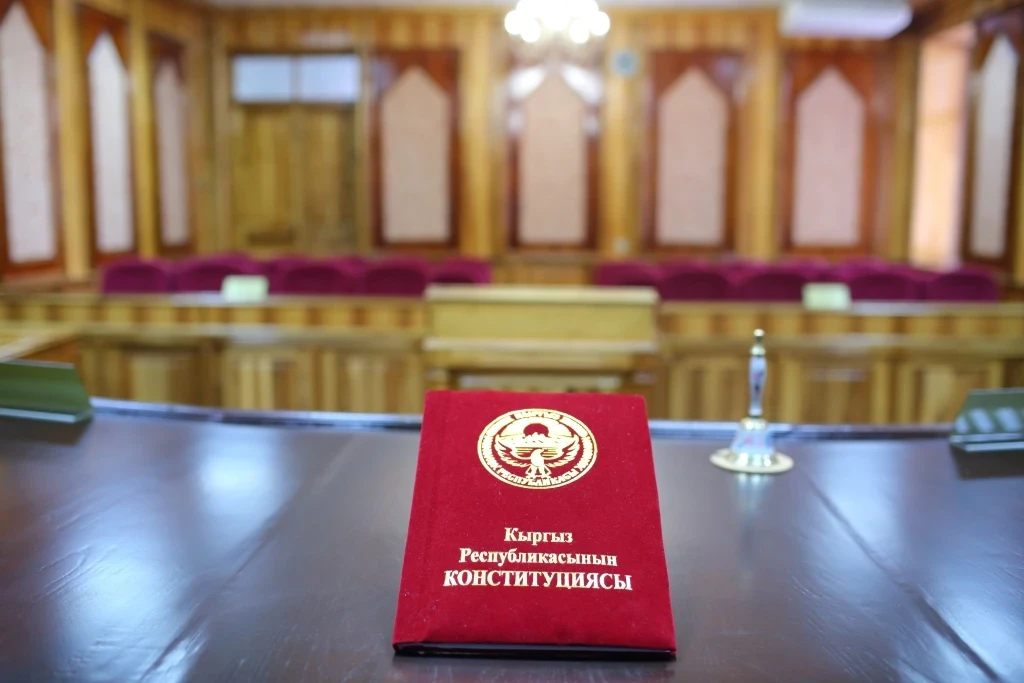
The Constitutional Court of the Kyrgyz Republic has provided a clear answer to an important question regarding the timing of presidential elections, clarifying the provisions of the Constitution.
On February 17, 2026, the highest constitutional body considered the president's request for the interpretation of Articles 67, 68, and 72 of the Constitution, adopted in the new edition of the Law on May 5, 2021, and concluded regarding the timing of elections. This interpretation also took into account the norms of the 2010 Constitution and the provisions of the Law "On the Constitution," approved in the referendum on April 11, 2021.
The Constitution serves as the foundation for the formation and functioning of state power. It must be stable to maintain law and order, while also remaining flexible enough to respond to changes in society and adjust power mechanisms in response to new challenges.
In the referendum on April 11, 2021, the people of Kyrgyzstan approved a new Constitution, granting it legitimacy and establishing a new order of power.
The transition to a new constitutional model is a natural phenomenon; however, it must occur legally correctly. It is important not only to change the text of the Constitution but also to ensure the logic and consistency of the transition to the new system.
A lack of legal certainty can undermine the legitimacy of power, creating legal conflicts and violating the principle of legal clarity. Therefore, the main task is to maintain legal continuity during the process of constitutional changes.
Particular attention should be paid to the legal formalization of the transitional period when the constitutional order is in a vulnerable position. Transitional provisions serve as a legal stabilizer, providing protection during reforms.
These guarantees help manage the transition, maintaining the functionality and continuity of power.
Transitional provisions allow for the transformation of a potential crisis into an organized process, ensuring the renewal of the Constitution without undermining trust in the institutions of power.
The constitutional model approved in the referendum on April 11, 2021, changed not only the powers of the government but also the rules for electing the president of the Kyrgyz Republic.
In the updated Constitution of 2021, Article 67 defines a new five-year term for the president and a limit of two consecutive terms.
In the previous Constitution of 2010 (Article 61), the president was elected for six years without the possibility of re-election. This created a different logic regarding presidential powers.
Thus, changes occurred not only in the time frames but also in the very approach to limiting the presidential mandate—from a single six-year term to five years with the possibility of re-election.
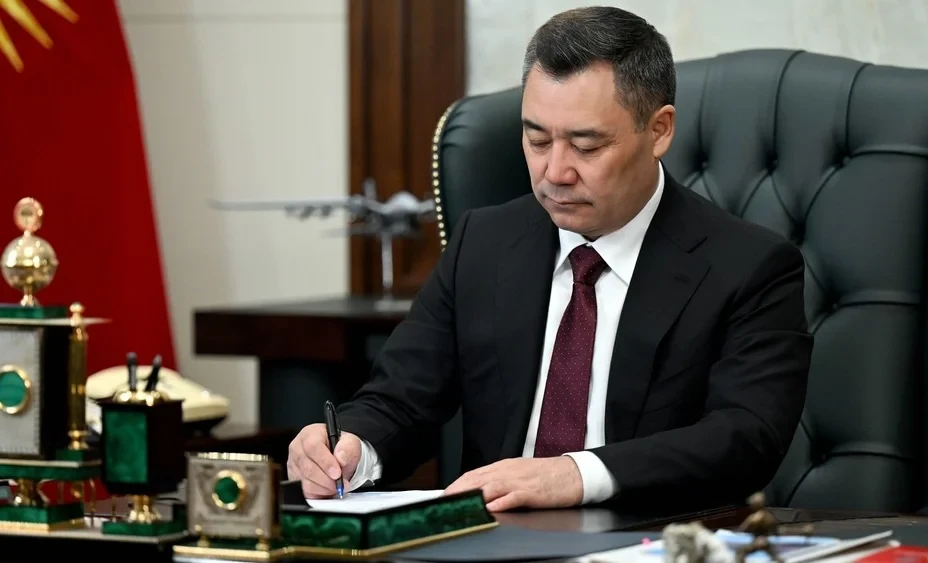
These changes became relevant in light of the fact that President S.N. Japarov was elected under the existing Constitution of 2010 and took office on January 28, 2021, for a six-year term.
Since the new Constitution came into effect, his powers continue within the framework of the new system.
However, as indicated in the president's request, shortly after his election, disputes arose regarding the duration of his powers. The main question is whether the five-year term applies to the mandate received before the adoption of the new Constitution or whether it retains its original parameters.
The Constitutional Court emphasized that the mandate of President S.N. Japarov arose as a result of the people exercising their power and represents a completed legal fact.
Voting is an act of trust from the people, delegating power for a specific term. It involves not only the choice of an individual but also the determination of the duration and procedure for the exercise of powers.
The legal form of the mandate is established upon taking an oath to the people, and from that moment, it must be observed within the parameters in which it was granted.
In the context of constitutional transformation, the intertemporal application of the norms of the Constitution becomes important, ensuring the continuity of power and the legitimacy of institutions during the transitional period. This means that the new Constitution should not interfere with already established legal relationships between the people and the government, formed under previous rules.
Thus, any interpretation that reduces the current mandate of the president is a retroactive change, incompatible with the principles of legal certainty.
This prohibition on retroactive reduction of the term is confirmed by the transitional norms established when the Constitution of 2021 came into effect. In particular, Article 3 of the Law "On the Constitution of the Kyrgyz Republic" clearly states that the president elected in 2021 for a six-year term continues his powers in accordance with the new Constitution, and this term is considered the first under the new limitation.
Thus, the norm of the Law addresses the application of the new Constitution to the ongoing powers of the president, considering the six-year term as the first under the new rule regarding two terms.
At the same time, the Constitutional Court notes that the accounting of this term does not change its original parameters, including duration and completion. This does not lead to a reduction of the term but merely allows the application of the two-term rule. Any other interpretation would be legally unjustifiable.
Thus, the five-year term established by Article 67 of the 2021 Constitution does not apply to the mandate that began under the Constitution of 2010, and the term must conclude within the originally established duration—six years. At the same time, the president continues his powers in accordance with the new Constitution, and his six-year term is considered the first under the new rule regarding two terms.
The Constitutional Court emphasizes that the transitional provisions have the same legal status as the main part of the Constitution, as they were adopted simultaneously based on the results of the referendum. These norms have equal legal force with the Constitution and cannot be interpreted as ordinary laws.
Regarding early elections, the Constitutional Court indicates that the existence of public discussions about the duration of the president's powers does not create grounds for their conduct.
Early elections are only possible in the event of early termination of powers for the reasons listed in Article 72 of the 2021 Constitution: resignation, removal from office, or inability to perform duties due to illness or death.
This list is closed, and any expansive interpretation would be unconstitutional.
In the absence of such grounds, the scenario of early presidential elections is excluded, and the regular electoral cycle applies.
Regular elections for the president of the Kyrgyz Republic are to be held on January 24, 2027, on the fourth Sunday of January, and their appointment must be carried out by the Jogorku Kenesh no later than four months before the voting day (by September 24, 2026).