Experts emphasize that sharing geolocation always comes with certain risks, especially for young people who have not yet developed digital safety skills. This lack of knowledge makes them vulnerable.
- What risks can arise when a teenager shares their geolocation with others?
- The main threat lies in the very function of geolocation sharing. Location information is considered confidential, and here are the main dangers:
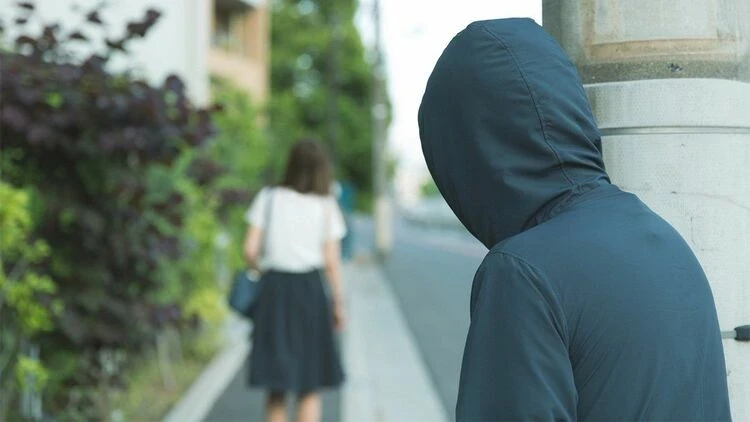
- Stalking and harassment. Even an acquaintance can use this information to monitor: tracking the teenager's location, their companions, and reasons for being away from home.
- Social engineering Location data can be exploited by fraudsters for manipulation. Additionally, there is a threat to the teenager's family. Such methods are actively used by criminals and groups similar to the "Blue Whale".
- Physical safety. If a criminal learns that a teenager frequently visits certain places or is alone, it may lead to assault or blackmail. This information could be disclosed by someone close to them who has access to their geolocation.
- Bullying. In the teenage environment, geolocation can become a tool for harassment: "we know where you are." Criminals use information about routes and vulnerable timeframes for intimidation.
- Digital profile. Regular locations create routes: home, school, clubs. This effectively creates a map of the teenager's life, opening up opportunities for stalking, harassment, blackmail, and even theft when criminals realize the teenager is not home.
- The difference is significant. Sharing geolocation with a close friend is considered relatively safer, provided the friend's account has not been hacked.
Posting geolocation on social networks poses the maximum risk, as the information becomes virtually uncontrollable and accessible to everyone.Three levels of risk can be identified:
- Sharing with a close friend - low-medium risk (but the risk exists). With a high level of trust and limited-time access, it is relatively safe, but still undesirable.
- Group chat - medium-high risk. There may be unfamiliar people in the group, and there is always a chance that someone will take a screenshot or share the data.
- Posting on social networks - maximum risk. Here, access is granted not only to friends but also to strangers, fraudsters, and criminals.
Public geolocation is the most dangerous scenario.- How reliable are geolocation features in popular messengers and social networks?
- Built-in geolocation features in messengers and social networks cannot be considered completely safe. Vulnerabilities, leaks, and human factors can be exploited by criminals. Some platforms collect location data even when the feature is turned off.
Although major platforms like WhatsApp, Telegram, Instagram, and Snapchat use encryption, they are not entirely secure. Data can be transmitted to third parties. For example, 2GIS can track your movements. Even if you accidentally accepted a request, information may be transmitted continuously. If someone sent a request pretending to be a friend, you might unintentionally grant access to your location.
- Can third parties use geolocation without the teenager's knowledge?
- Yes, geolocation can be used without a teenager's knowledge through account hacking, phone theft, or data leaks.
- What digital habits increase risks?
- Dangerous habits include public profiles, weak privacy settings, lack of two-factor authentication, password reuse, and constant active geolocation. Many teenagers do not check who can see their stories, location, and friend list, posting photos with location tags, making them easily discoverable. It is recommended to share photos and videos only after changing locations.
Using the same password across multiple platforms is dangerous: if one account is hacked, criminals gain access to all.Trusting "internet friends" does not guarantee safety. Such relationships often form quickly, and teenagers easily disclose their personal information.
Long-term geolocation sharing is the most dangerous option. It is riskier to "share always" than "for 15 minutes".Sharing geolocation can be dangerous, but if necessary, follow these rules:
- share only with close ones;
- limit access time;
- avoid posting on open social networks;
- check privacy settings;
- enable account protection (2FA).
From a cybersecurity perspective, geolocation is an element of personal attack surface. The optimal practice is to minimize data, and ideally — to avoid using the geolocation feature.
Geodata is a critical identifier that can be used in both digital and physical attacks.