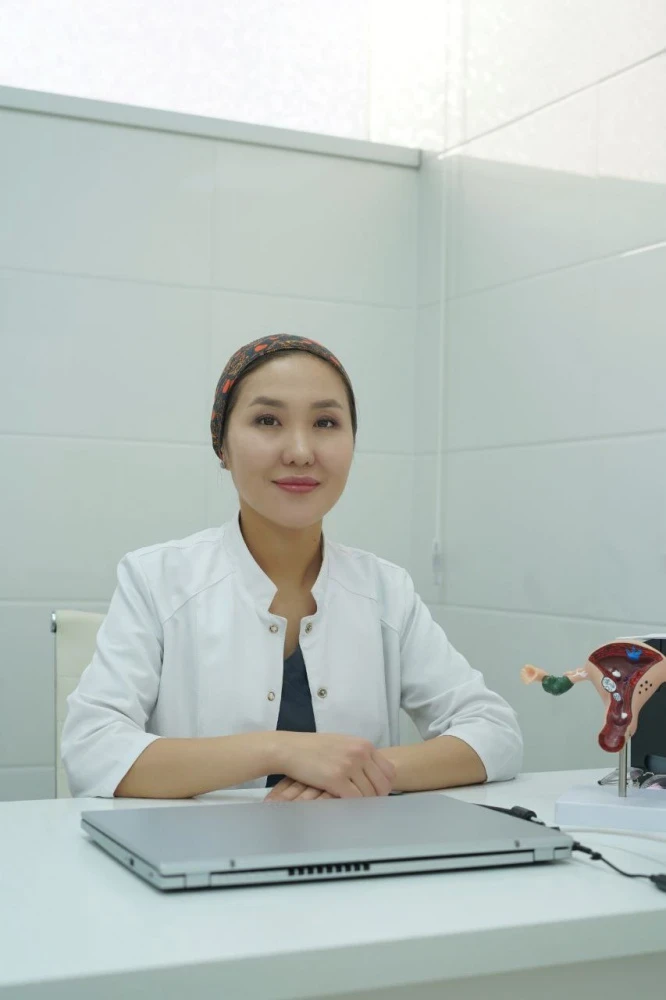
Gynecologist-surgeon and reproductive specialist Diana Tagaeva. Photo provided by her.
- Today we will discuss uterine myoma as one of the causes of infertility. What is this condition?
- Uterine myoma is a benign tumor in the muscular layer of the uterus and can indeed be a cause of infertility. Most often, there are no clear reasons for its appearance, but it can arise due to hormonal imbalances, heredity, or the use of hormonal medications. Statistics show that myoma is most commonly found in women who have never given birth.
There are three main types of myoma:
- subserosal (grows outward);
- intramural (located in the muscular layer);
- submucosal (grows into the cavity of the uterus).
It should be noted that myoma is a fairly common condition in Kyrgyzstan.- Is there a possibility of treatment?
- Yes, treatment can vary and depends on the individual characteristics of each patient.
If the myoma is small, it can be monitored with medication: it is impossible to completely get rid of it, but its growth can be stopped. In some cases, surgical intervention is required, which can be open or laparoscopic using laser technologies.
There is also the option of uterine artery embolization — a minimally invasive procedure that blocks blood flow to the nodes.
- Is the myoma or the entire uterus removed during surgery?
- It depends on the specific situation. If there are many nodes, they are large, or deeply embedded in the muscular layer of the uterus, the risk of bleeding increases, and in such cases, complete removal of the uterus may be necessary.
Sometimes patients request to preserve the organ, but if there are numerous myomas and the uterus is filled with nodes, preserving it loses meaning, as it no longer performs its function.
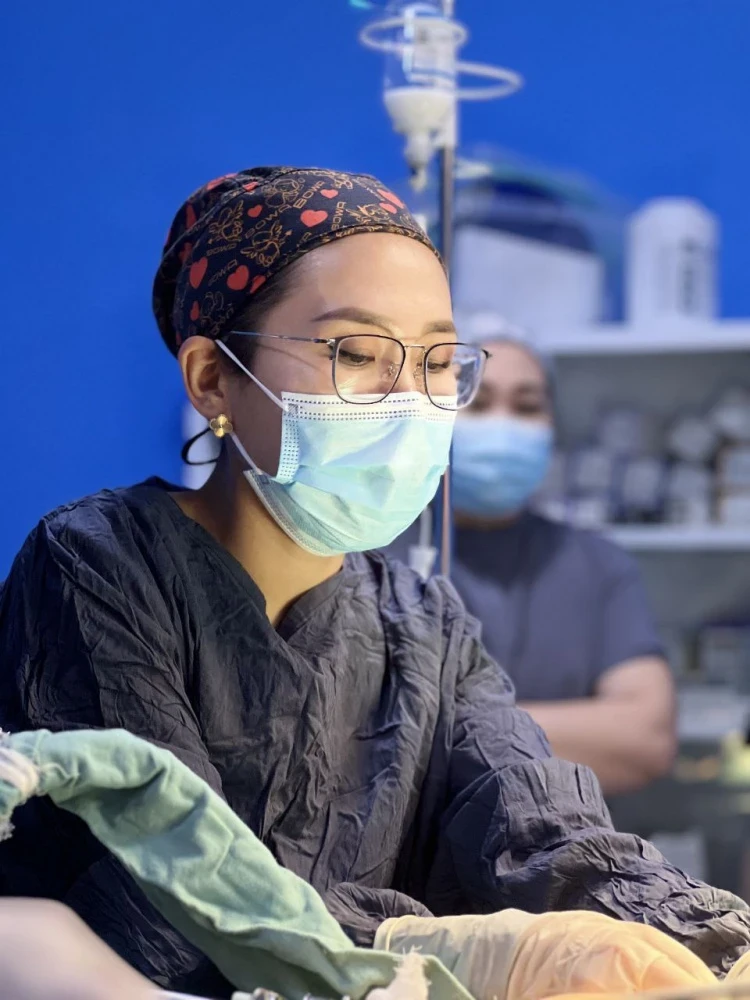
Gynecologist-surgeon and reproductive specialist Diana Tagaeva. Photo provided by her.
Each case is individual. What works for one woman may not work for another. For example, if a patient is 50 years old and does not plan to become pregnant, removing the uterus may be justified to reduce the risk of oncological diseases. However, if a woman is 25 years old, we strive to preserve the uterus, as this is important for her reproductive function and psychological state.
As the myoma increases, the risk of its growth rises. The myoma receives nourishment through blood supply, and the larger it is, the faster it grows.- What is uterine artery embolization and when is it used?
- Embolization is a method that stops the blood supply to the myoma, leading to its reduction and cessation of growth. This is an alternative to uterine removal, a kind of "option A."
We can always remove the organ later, but we need to try to preserve it.This method is used, for example, when the patient is a young woman with multiple myomas. In one case, we had a patient with 18 nodes, who was recommended to have her uterus removed as the only solution. We offered embolization as a way to preserve the organ, warning that if this method did not yield results, we would have to move to "option B" and remove the uterus.
Nine months after the procedure, she became pregnant and gave birth to a healthy child.
Moreover, embolization is performed under local anesthesia, making it suitable for patients contraindicated for general anesthesia.
When choosing therapy, age, pregnancy plans, anatomical features, and the presence of comorbidities are taken into account.
There have been cases where patients were aware of a small myoma but did not undergo a pelvic ultrasound to monitor its growth. Meanwhile, rapid growth of the formation may indicate the need for surgery and lead to complications.

Gynecologist-surgeon and reproductive specialist Diana Tagaeva. Photo provided by her.
- Is myoma really insidious in that it does not show symptoms at first?
- Yes, myoma often proceeds asymptomatically. A woman may be unaware of its existence for many years. Symptoms most often arise when the myoma becomes large: pain, pressure on the bladder, constipation, menstrual cycle disturbances, heavy menstruation, and low hemoglobin levels. Sometimes a patient learns about the myoma when facing difficulties in conception.
A significant number of women with myoma also suffer from thyroid dysfunction. In my practice, many patients with myoma have had thyroid problems since childhood. Therefore, if there are such risks, it is important to undergo regular examinations — at least once a year, have a pelvic ultrasound.
If a small myoma is detected, it should be closely monitored. If growth is observed, measures should be taken without waiting for it to become large.
Many miss the moment of growth. However, a small myoma is easier to remove than a large one.

Gynecologist-surgeon and reproductive specialist Diana Tagaeva. Photo provided by her.
- How does myoma affect the likelihood of becoming pregnant?
- Infertility with myoma is more often observed if there are many nodes or if they are located under the mucous membrane (submucosal myomas). In such cases, blood flow is concentrated around the node, and the embryo cannot attach to the wall of the uterus. Even if attachment occurs, miscarriages or missed pregnancies often happen.
With large myomas, compression of the fallopian tubes may occur, making conception impossible. It all depends on the location of the node.
With intramural myoma, pregnancy is possible, and women can give birth with it. Sometimes pregnancy stops the growth of myoma, as blood supply in this case is concentrated on the fetus, and the myoma loses its "nourishment," leading to its self-destruction. However, this is individual and does not happen to everyone.
- Is myoma dangerous for life?
- In advanced cases — yes. With large sizes, myoma can compress neighboring organs, disrupting their function and causing adhesions in the intestines.
Additionally, there are cases of severe bleeding with large myomas. A woman may be admitted with an extremely low hemoglobin level, which represents a life-threatening situation. In such cases, removal of the uterus may be necessary to save the patient.
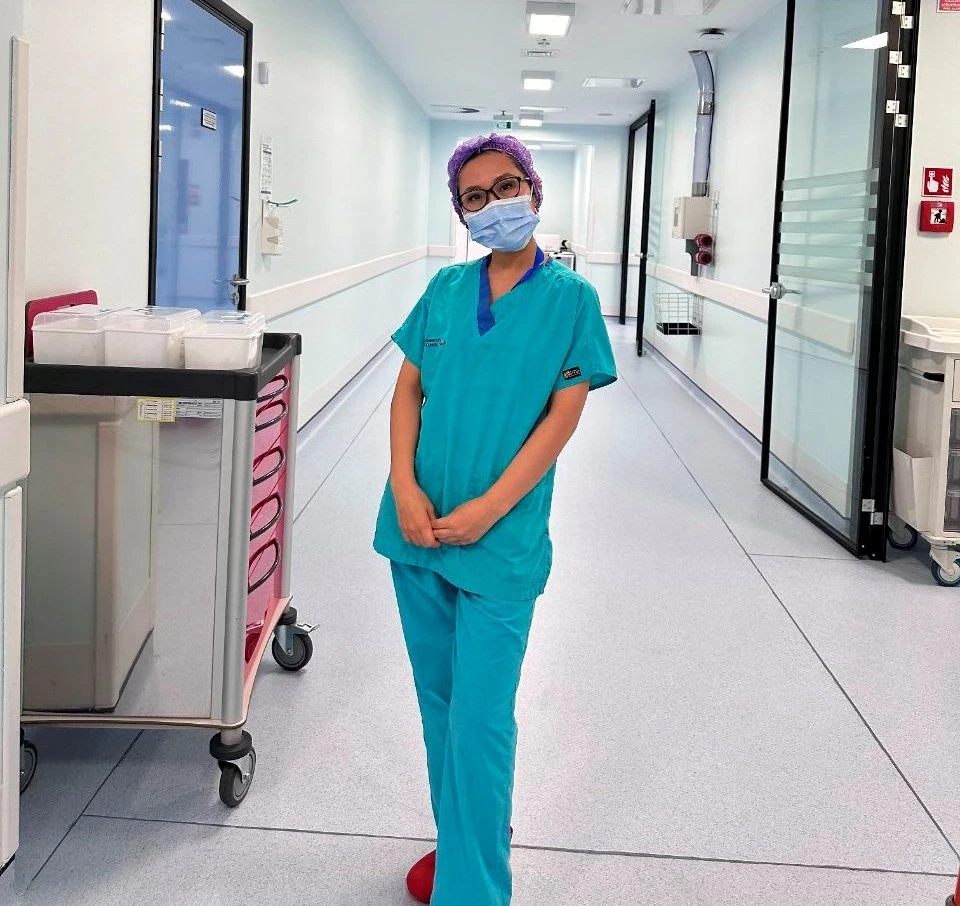
Gynecologist-surgeon and reproductive specialist Diana Tagaeva. Photo provided by her.
- What recommendations would you give to women?
- Even if there are no concerns, it is important to have a pelvic ultrasound and visit a gynecologist once a year. This is especially relevant for women with a hereditary predisposition (if relatives had myoma), hormonal imbalances, and those taking hormonal medications (including contraceptives).
If myoma has already been detected, examinations should be conducted every six months to monitor its growth. If the nodes increase, action must be taken without delaying treatment.
Many mistakenly believe that after the removal of myoma, the problem is solved. Unfortunately, this is not the case: myoma can reappear in another location in a certain percentage of cases. Therefore, annual examinations are extremely important.
Self-treatment should not be attempted. There are cases where women try to treat myoma with folk remedies, such as onion peel or potatoes, which leads to a node growing from 4 cm to 8 cm in just a few months. No folk method can remove myoma. This condition requires medical supervision.
It is important not to panic and not to delay treatment.Myoma is a benign formation, but if ignored, it can lead to serious complications.