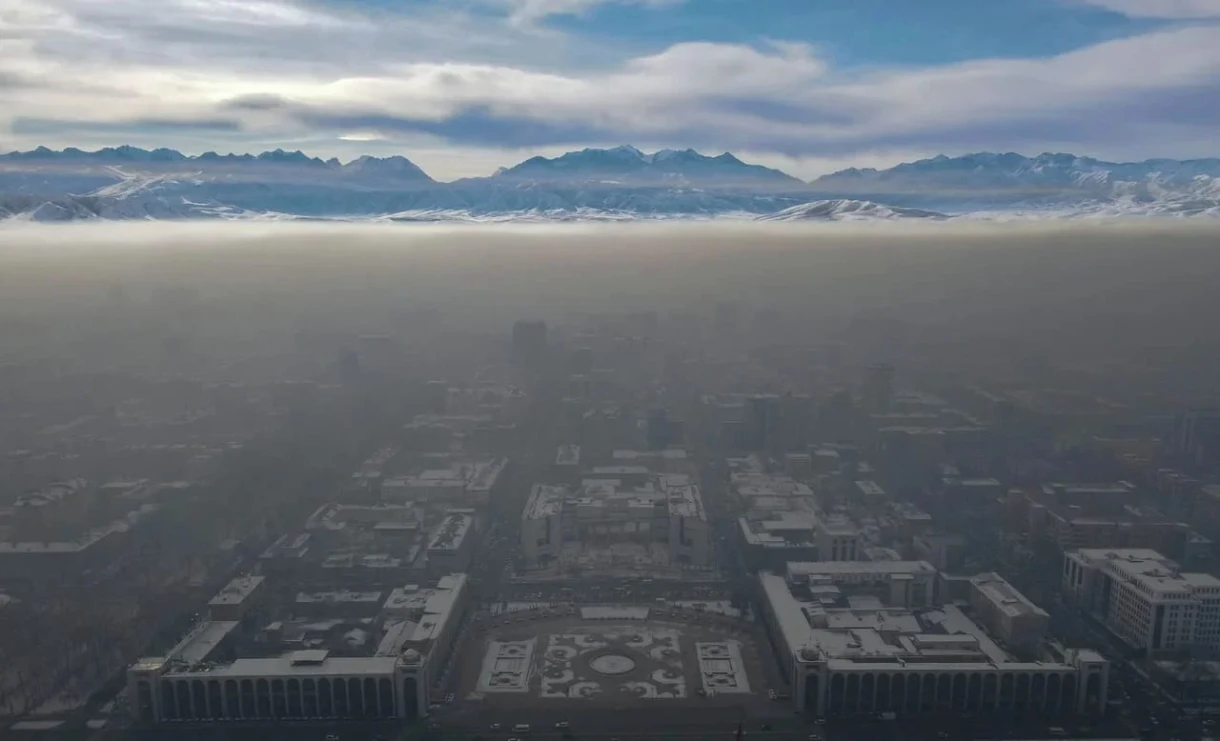
Kasymov described smog as a mixture of dust and gases, resulting from human activity, including industrial development, transportation, and construction.
He emphasized that pollution is particularly acute during the autumn-winter and partially spring periods, when residents of the capital often observe smog over the city, raising serious concerns.
According to Kasymov, small children are especially vulnerable because their immune and morphofunctional systems are not yet fully developed, making them more susceptible to the negative effects of polluted air.
He also noted that over the past 7-8 years, there has been a regular increase in smog. Air quality varies throughout the year and depends on climatic and geographical factors. For example, rain contributes to the natural cleansing of the air, making breathing easier, while windless and cold days lead to the accumulation of harmful substances and odors that penetrate apartments and create discomfort.
Kasymov provided health statistics before the COVID-19 pandemic, pointing to an increase in various diseases.
"Health deterioration was noted at 10-20% per 100,000 population. The growth rate of cardiovascular diseases was about 2%, while respiratory diseases increased by 24-34%," he reported.
Children's health, he said, also suffered: among children aged 0-14 years, the incidence increased by 8-11%, heart diseases by 14-18%, and respiratory diseases by 11-14%.
After COVID-19, statistics showed some decline, but Kasymov noted that this might be related to insufficient disease registration.
To more accurately assess the impact of smog on health, special studies need to be conducted.
"Screening and targeted studies are needed to accurately determine when and under what conditions the health of the population deteriorates," he added.The academician also highlighted the importance of regularly informing citizens about air quality. Previously, such data was published, but recently it has significantly decreased.
"Knowledge about air quality allows people to take measures: avoid going outside on unfavorable days, purify the air indoors, and so on," Kasymov noted.
According to him, smog during periods of high concentration negatively affects health, primarily impacting the respiratory and cardiovascular systems. In spring, the number of allergy sufferers also increases, as the dust-gas mixture contains both organic and inorganic substances, including plant materials, which can cause various symptoms, especially in children.
Kasymov emphasized that air pollution in Bishkek is linked not only to the private sector but also to areas of the Chui region. Due to the peculiarities of the terrain and air mass inversion, polluted air can move through the valley.
Urban planning solutions also play an important role. Kasymov believes that construction and greening of the city should promote natural air exchange and purification.
Moreover, he noted that improving the ecological situation is possible through the development of eco-friendly public transport.
The academician positively assessed the transition of part of the urban transport to gas and electricity but expressed dissatisfaction with the dismantling of trolleybuses. "Trolleybuses could have been preserved and gradually modernized. Especially now, it is evident that public transport is insufficient," he added.
According to the scientist, various factors influence the health of the population: a mixture of gases and dust, seasonal infections, weather changes, and geomagnetic storms.
Older people and children should be particularly cautious during such periods.
Kasymov noted that air purifiers can help create a more comfortable atmosphere in homes or offices, but not everyone can afford such devices.
"Large-scale programs are needed to improve air quality in Bishkek and the entire Chui Valley," he concluded.The academician emphasized that solving the smog problem requires a comprehensive approach and the involvement of various government structures.
“This is not just a health issue. Healthcare is already facing the consequences. The main task is to eliminate the root causes of air pollution,” Kasymov summarized.
Photo on the main page: rutube.ru, 24.kg.