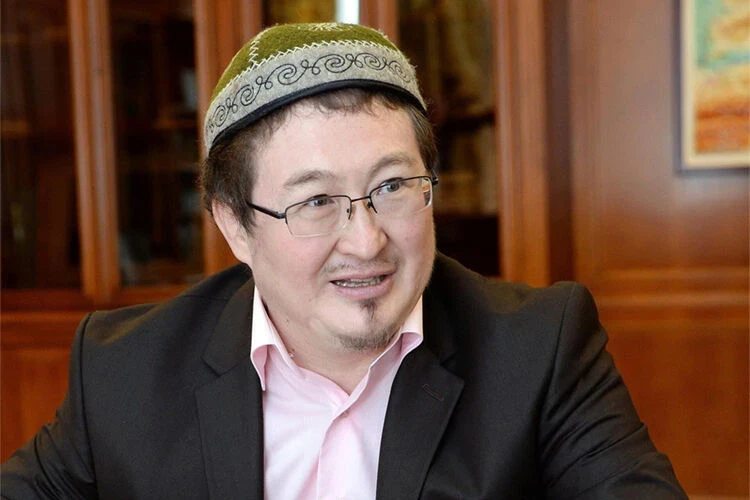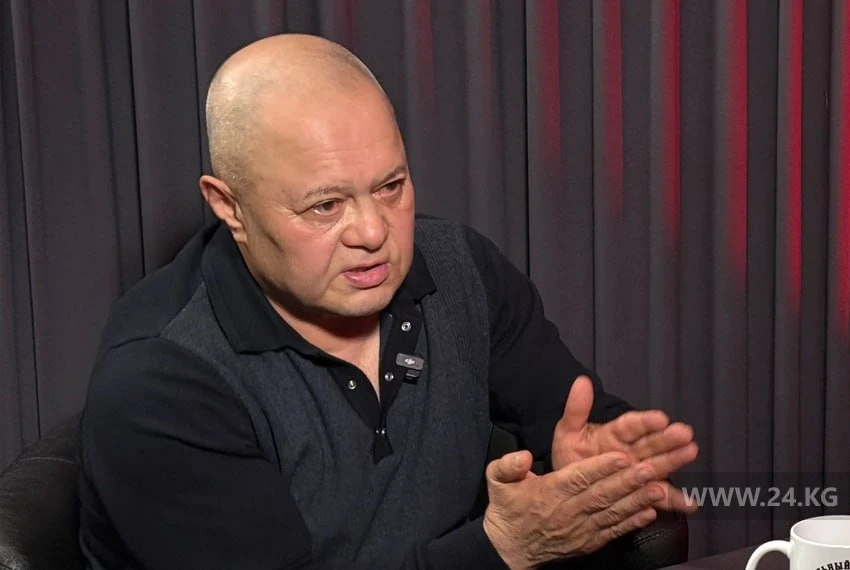
About the traditions associated with this important event, 24.kg spoke with Abibilla aji Kadyrberdiev, a representative of the Spiritual Administration of Muslims of Kyrgyzstan.
What does Eid al-Fitr represent?
This is a time when people gather for spiritual purification, express gratitude, enjoy family moments, and share generosity. On this day, it is customary to pray, exchange greetings and gifts, treat loved ones to delicious dishes, and help those in need.
The celebration of Eid al-Fitr begins the day after the end of Ramadan. The date of the holiday depends on the phase of the new moon and therefore changes every year according to the Gregorian calendar.
Preparation for the celebration
On the eve of Eid al-Fitr, known as "arapa," it is customary to:
- prepare boorsoks;
- clean the house;
- prepare outfits for the whole family;
- prepare gifts, if possible.
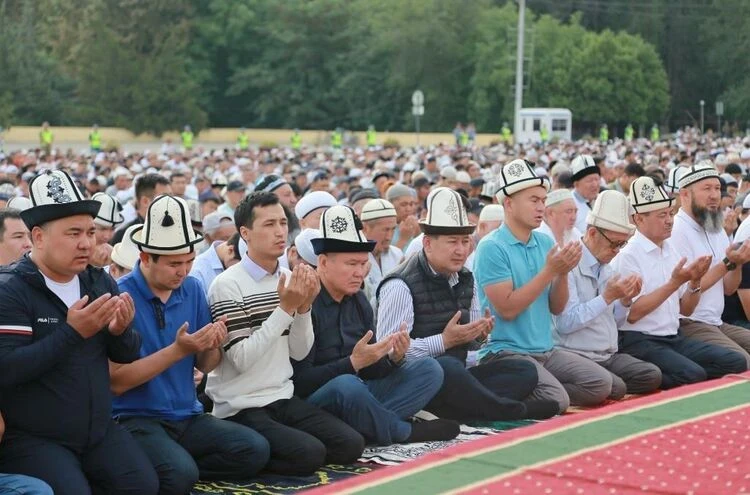
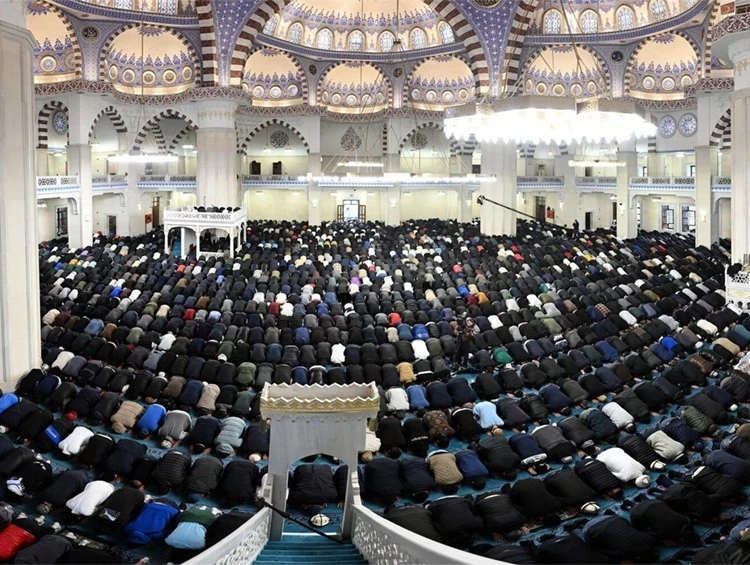
Photo from the internet. Eid prayer in the mosque
How should this holiday be celebrated?
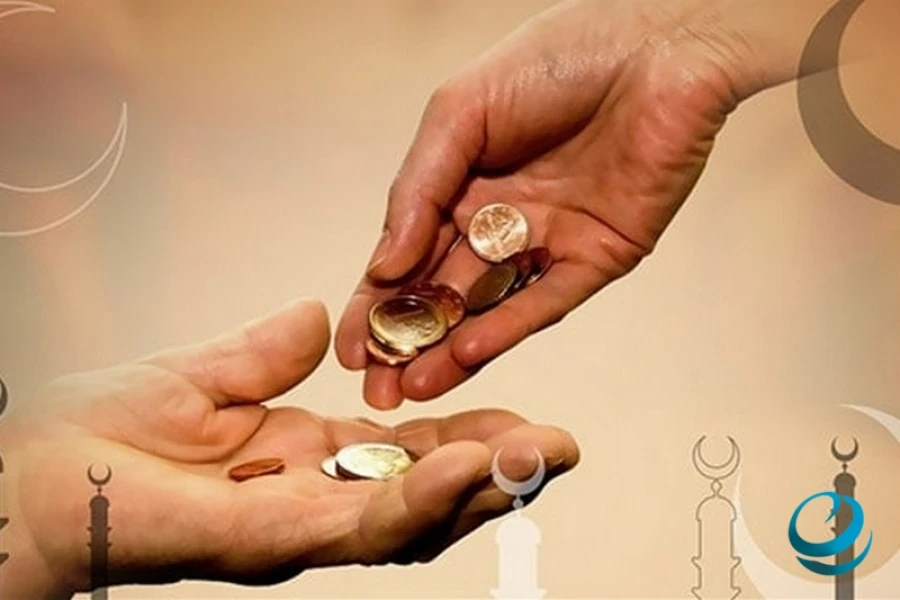
The celebration begins early in the morning. Believers perform ablution, dress in clean and festive clothes, and head to the Eid prayer. Before this prayer, it is customary to give alms — sadaqa or fitr-sadaqa, to help those in need and share the joy of the holiday with others.
On this day, Muslims strive to show generosity and care for those in need.
Sadaqa on Eid al-Fitr serves as a reminder of gratitude to the Almighty for the completion of fasting. By helping others, believers share their joy with those who need support.
What is allowed to do on Eid al-Fitr:
- invite guests and organize family celebrations;
- give gifts and sweets to children and loved ones;
- participate in prayers and charitable events;
- wear festive clothing and rejoice together with family.
What is prohibited on this day?
On Eid al-Fitr, fasting is prohibited, so it is necessary to break the fast. If there is a desire to make up for missed days, this should be done after the holiday.
Quarreling and conflicts are unacceptable, as this holiday is a time for forgiveness.
Ignoring those in need is also not permissible: almsgiving and assistance to the poor are obligatory if a person has the financial means.
Additionally, consuming alcohol is not allowed on this day.