The continuation of one of the most discussed series of recent years has hit the screens — the film “Black Yard.” This project is considered a new milestone in the development of Kyrgyz cinema.
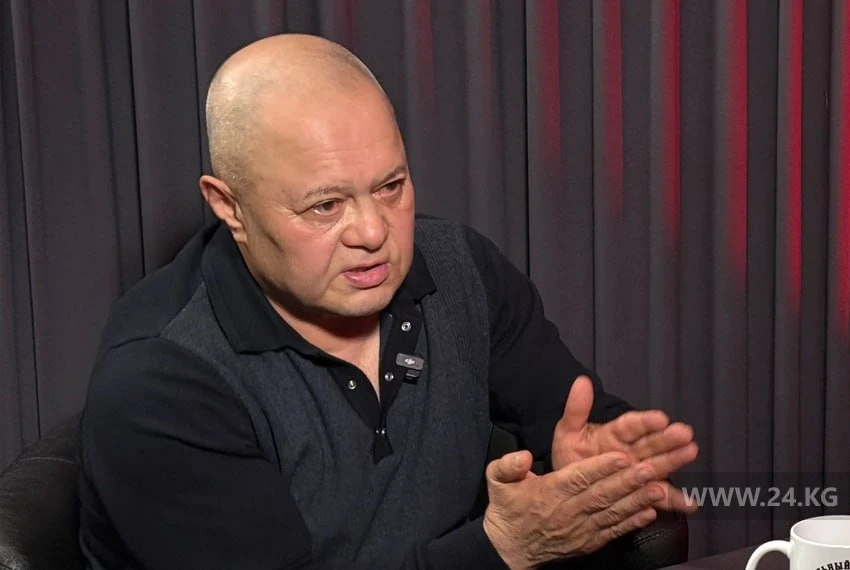
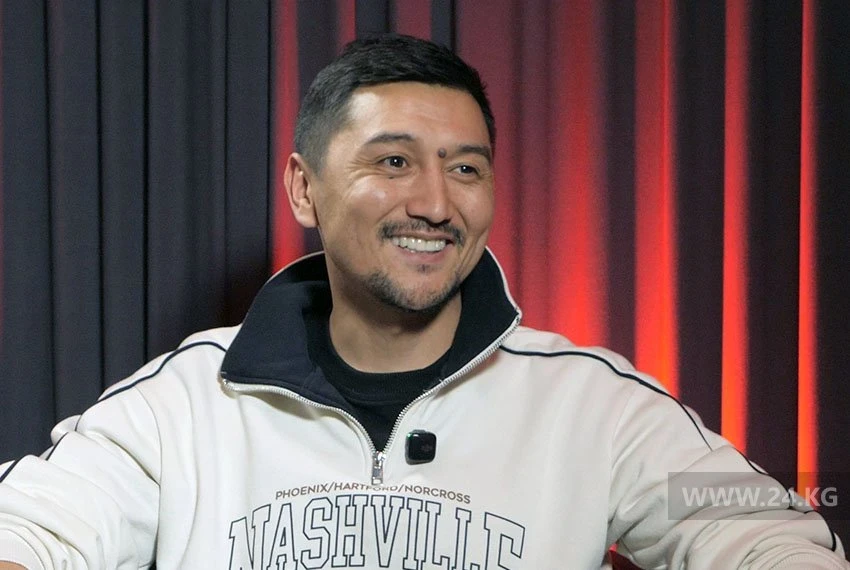
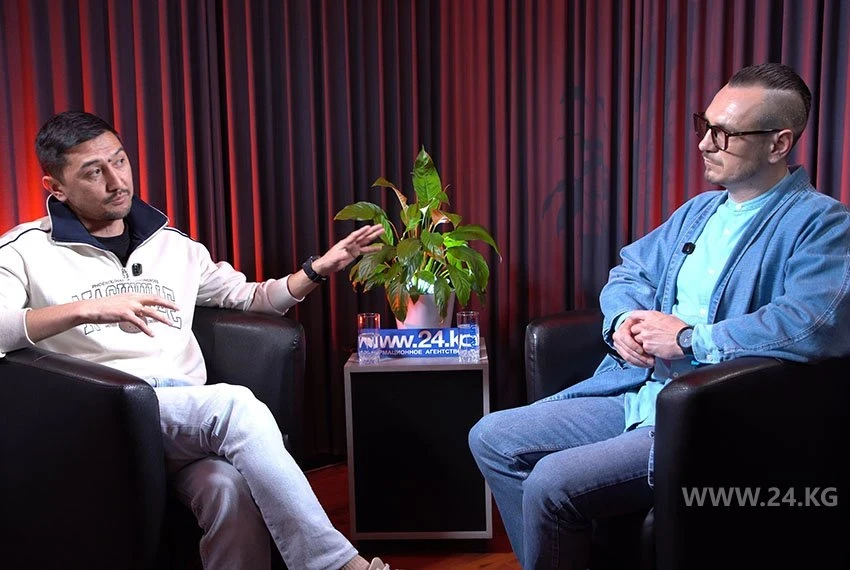
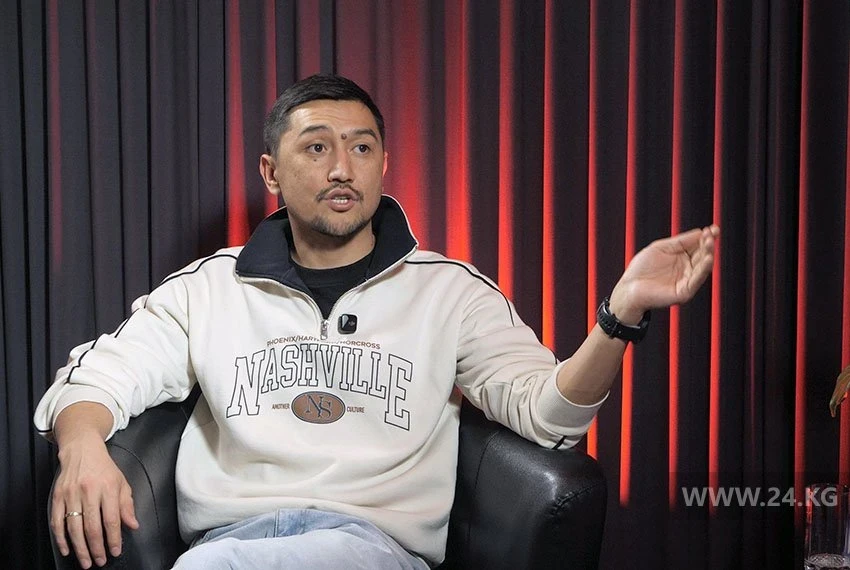
What is behind the rapid development of the film industry in the country? How did KVN players become leading producers, and does “Black Yard” really represent more than just a film? Askat Tabaldiev, the general producer of 1.1 Studio, shared his thoughts on this in an interview with 24.kg.
Photo 24.kg
“Birtuuganchik” provided us with funding and confidence
— You came from KVN. When did it become clear that this was a path to cinema, not just performances on stage?
— The turning point for us was the project “Birtuuganchik.” We earned about half a million dollars, which was a huge sum for us. Before that, we were doing various side jobs and pawning our cars to keep working. And then suddenly — we create content that people like, they are willing to pay for it, and this allows us to take care of our families. It was a revelation.
— Was that when you decided: it’s time to move into cinema?
— Yes, we realized that we wanted not only to shoot but also to develop production. And not just at the level of “we shot — we earned,” but with ambitions to enter the international market. At that time, it seemed crazy, but we decided to move forward.
“We fought on set — two directors, two lions”
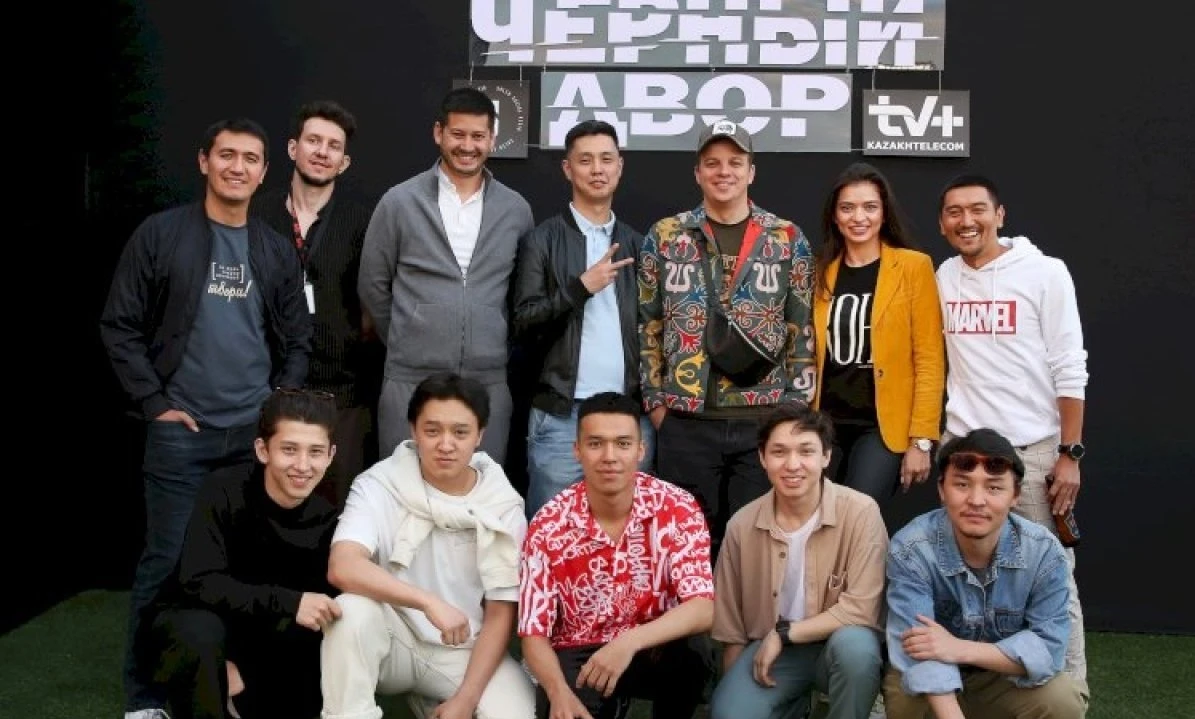
— You have a rare case: business with friends. Usually, this leads to conflicts.
— Things didn’t always go smoothly for us either. Danich and I really fought on set. Two different directors, two different personalities. We fell to the floor, choking each other (laughs).
— Seriously?
— Absolutely. But soon we realized: either we fall apart, or we learn to listen to each other. We divided the areas of responsibility — creative and organizational. That helped.
— Is the system now established?
— Yes. We have contracts, clear roles, and rules. But the main thing is respect. We are very different, and that is our strength. One is a mathematician, another is pure creativity, the third is an ambitious leader. I balance somewhere between them.
“KVN players create cinema in Kyrgyzstan because there’s no one else”
— Recently, there has been a lot of criticism: “KVN players and bloggers make movies.” What do you think about that?
— That’s the reality. We don’t have developed film schools like in Russia or other countries. There’s KVN, and it has really become a training ground.
— So there are no alternatives?
— Yes, KVN players are people who are not afraid to take action. We are adventurers. We don’t waste time thinking — we just take and shoot. That’s how the new film industry emerged.
— But the numbers are impressive.
— Yes, about 80% of the box office is taken up by Kyrgyz films. More than 80 films are shot each year. For our country, these are crazy numbers.
“If the government starts dictating — we will leave”
— The government has started investing in cinema. Is this a positive moment or a risk?
— It’s normal if there is dialogue. The government has its own interests — that’s logical. But if it turns into dictatorship, then no.
— So?
— If we are told: “Shoot this, and you can’t shoot that” — then the conversation is short. We lived without this and can continue. But now, to be honest, the dialogue is established. A creative industries park has appeared, and there is cooperation with the Ministry of Culture.
— Are there joint projects?
— Yes, we are working on several projects with the government. For example, a series about football — that’s our dream. We want to motivate young people to engage in sports.
“On the seventh day, the money ran out”
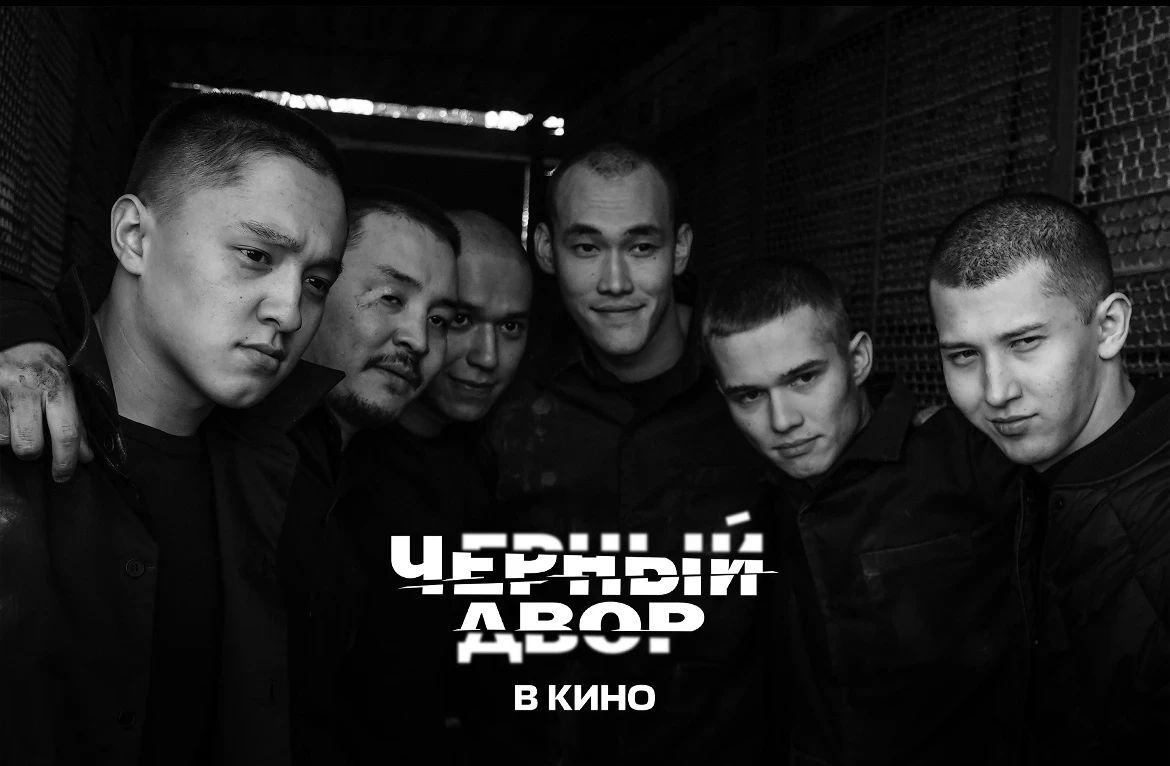
— Let’s talk about “Black Yard.” The series has become a real phenomenon. How was it created?
— Everything was very tense. On the seventh day of filming, we ran out of money, and a whole month of work was still ahead.
— And what did you do?
— We sat down, looked at each other, and realized: either we quit, or we continue until the end. We invested our own funds. We risked everything.
— Did you realize you were creating a hit?
— I felt it was something strong, but I didn’t know how strong. There was just a feeling: this is a new level.
— And with such a budget...
— About $200,000 for the entire series. 12 episodes. For comparison, one episode for Netflix can cost from $1.5 to $2 million.
— And with this budget, you made it to the festival in Busan?
— Yes, we were nominated alongside Netflix. We lost to Netflix India, but that’s okay. The very fact is already a victory.
“We didn’t want to kill the cult”
— After such success, it would be logical to shoot a second season. Why didn’t that happen?
— Because the story ended. We didn’t want to turn it into a conveyor belt. There are projects that should remain cult.
— But the film still appeared.
— Yes, after some time. We grew as producers and realized: there is a franchise, there is demand. And most importantly — there is a story that can be continued.
“We hit a nerve, but we don’t fully understand how”
— What is the secret to the success of “Black Yard”?
— It’s a combination of many factors: cast, marketing, the era. But the main thing is the theme.
— What exactly is the theme?
— It’s about the relationship between parents and children. If a child doesn’t receive love, he breaks. That’s the foundation. The audience feels it.
— So it’s not about crime?
— No, it’s about choice. About consequences. About life.
“We don’t romanticize — we warn”
— Some believe the film romanticizes crime.
— I disagree with that. If you look at the structure, in classic stories, the heroes first achieve success — money, power, success, and then they fall.
— And in your case?
— We go straight down. With each episode, it gets worse. Mistakes, betrayals, losses. This is an anti-example. It’s not “watch and repeat,” it’s “watch and don’t do that.”
“The Russian language is the organic of the time”
— Why is the film in Russian, and why has it been successful in Kyrgyzstan?
— Because we show the 2000s when everyone spoke Russian. It’s organic. Plus, the series became popular throughout the CIS, and we already had a large fan base.
“First become a champion at home”
— You are now moving to the international level. What is the strategy?
— It’s very simple. You can’t go straight to Netflix. First, you need to become a champion at home.
— And then what?
— Then you will be noticed. But only if you have your own code — your own soul, your own story, like the Koreans. They first created their market, and then conquered the world.
— Are you following the same path?
— Yes. First Central Asia, then Southeast Asia, Indonesia, Malaysia. These are huge markets.
“How much did the film cost? — None of your business”
— The film looks expensive. Tell me honestly: how much did it cost?
— We will understand the total expenses later — marketing is still ongoing.
— Well, at least the production?
— None of your business (laughs).
— So you won’t say?
— I won’t say. There are things that are better left inside. But I will say this: we invested seriously. For us, the result is more important than the number.
— And is there a result?
— Yes, viewers are coming, supporting, discussing — so it’s all worth it.
— But you have already become leaders in box office?
— Yes, we became leaders in box office for the weekend in two countries — Kyrgyzstan and Kazakhstan.
— That’s the level of a regional hit.
— That’s our goal. We initially wanted to create not just a local product “only for ourselves,” but a story that would be interesting to the entire region. And now we see that it’s real.
— Can we say that “Black Yard” is no longer just a film, but a phenomenon?
— I think so. It’s not just about the box office. It’s about discussion, emotions, recognition of oneself. When people leave the hall and continue the conversation — it means we hit the target.
“We are just getting started”
— Are you currently in your best form?
— I think not. We are just getting started. We have a lot ahead.
— What is the main principle?
— To do it honestly. To do it with soul. Not to be afraid. Because, as practice shows, even if there’s no money, if there’s an idea, you can still realize it.
“Black Yard” is not just a film. It is a reflection of a generation that grew up on the streets, on mistakes and choices. And perhaps the first large-scale signal: Kyrgyz cinema is ready to speak to the world as equals.