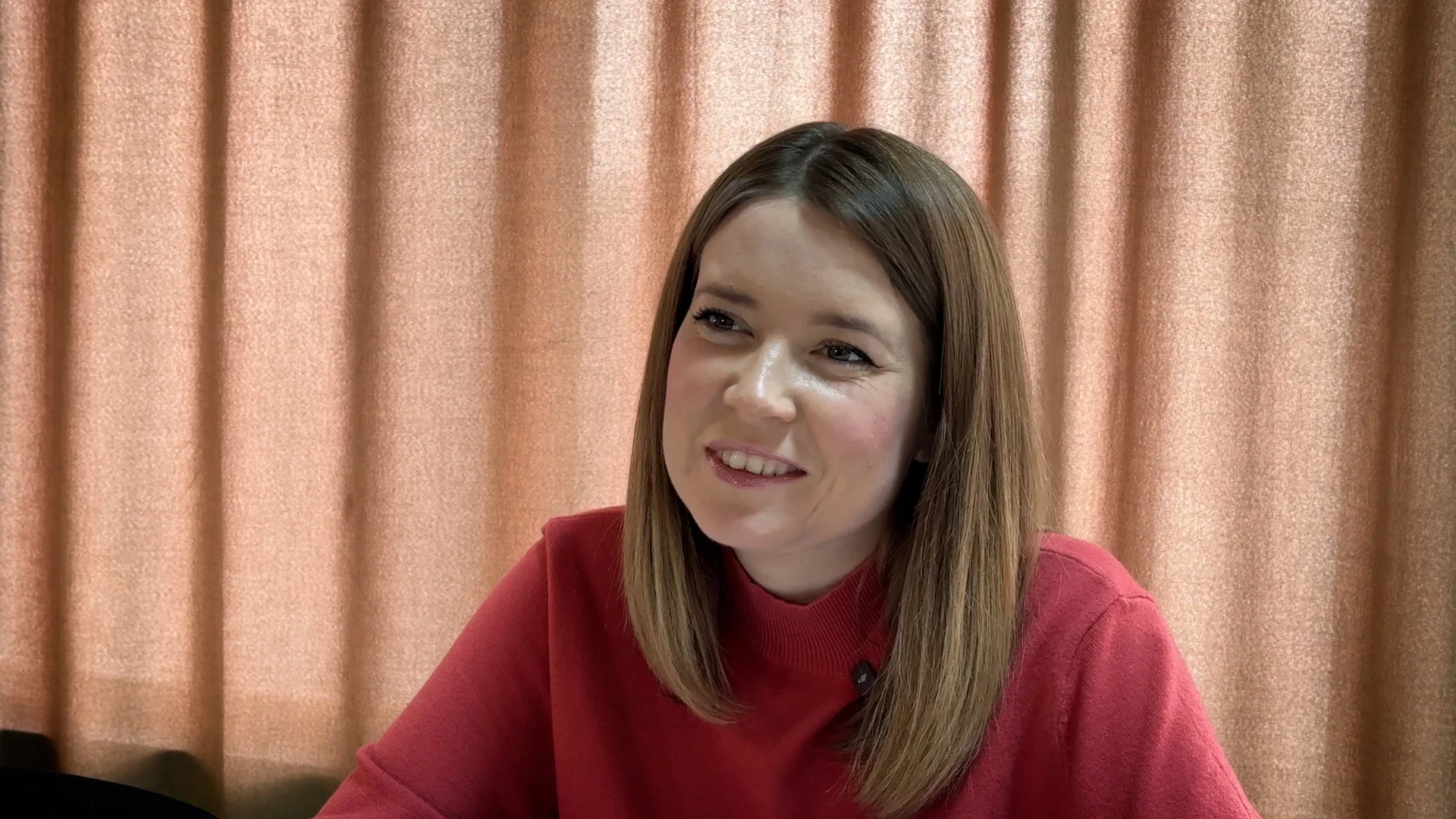
In an interview with 24.kg, Victoria shared her methods that will help learn the language faster.
Photo 24.kg. Victoria Krinwald
— Victoria, tell us about your journey in learning the Kyrgyz language and why you decided to share your knowledge with others?
— I was born in Kazakhstan and studied in a Kazakh school until the fifth grade. My environment contributed to my quick acquisition of the Kazakh language, which is very similar to Kyrgyz.
When I turned 10, we moved to Kyrgyzstan. At first, I had difficulties and confused both languages, but over time everything fell into place.
Learning English also came quite easily to me. At 17-18 years old, I started teaching English to children and soon thought about trying my hand at mentoring in Kyrgyz. I posted an advertisement, and my first students began to come to me. Initially, we worked with textbooks, completing standard assignments and translating texts, and with each lesson, I gained experience.
Currently, I am studying in the correspondence department of the Kyrgyz language faculty. My goal is not only to obtain a diploma but also to gain a deeper understanding of this field.
— How does your methodology differ from traditional approaches?
— I try to explain the Kyrgyz language by comparing it with Russian, emphasizing the simplicity of material perception. I put myself in the students' shoes and think about how I would like the language to be explained to me.
In Russian, there are prepositions like "without," while in Kyrgyz, this concept is conveyed through affixes. For example, the phrase "tea without sugar" in Kyrgyz would be "chai kantsyz."
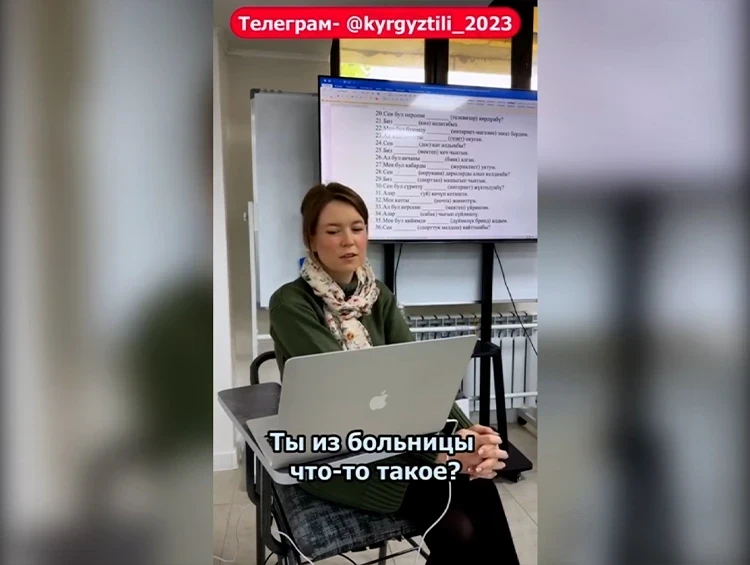
I never thought I would create my own manual, but I always had notes and ideas that eventually led to the creation of a textbook. In it, I compiled tables of verbs, adjectives, and other useful materials. In my methodology, I try to use simple examples to minimize difficulties for students, as learning a language is always a challenge.
For me, the Kyrgyz language is logic; there are clear formulas and structures that can be memorized from the first lesson. I focus on developing logical thinking in students so they can formulate sentences independently. When you learn a language through its constructions, it makes the process much more engaging.
— Who do you find it more interesting to work with: children or adults?
— Many children need help with their homework. Especially many such requests came during the pandemic. I remember parents calling and saying that their children were getting only failing grades, which affected their performance.
At first, I focused on completing homework, but soon realized that this did not bring real benefits to the children.
Thus, the idea of creating a Telegram channel was born, where I began sharing words, simple phrases, conducting quizzes and tests. Adults showed interest in this, who, as I noticed, were learning themselves and then explaining the material to their children.
Working with adults is more interesting for me. They actively comment on lessons, ask questions, and this encourages me to delve into the materials and generate new ideas. Adults are generally more motivated, understanding why they need to learn the language.
— Who are your students? Are there any medical professionals and educators among them, as they also need to know the language?
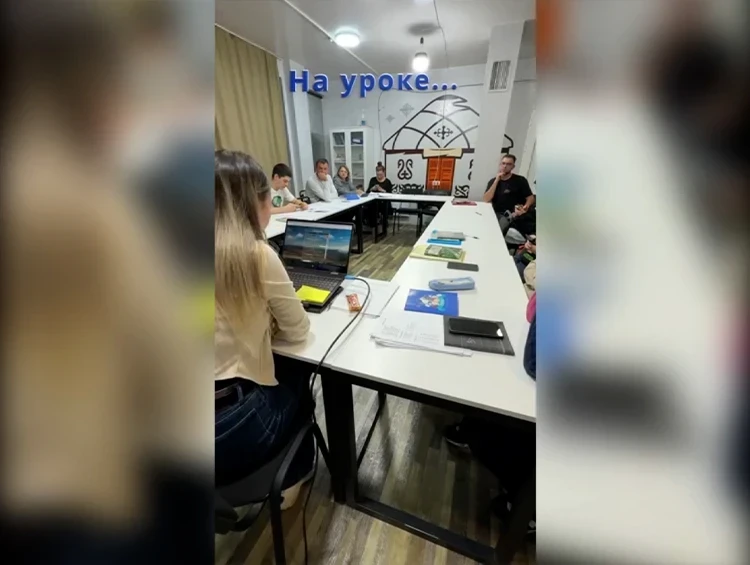
— My courses attract a wide variety of people. Many of them say they came not out of necessity but because they realized that the language can be learned if you understand its structure and logic. There are even those who have lived in Kyrgyzstan for many years and decided to learn the language simply because they wanted to.
— What usually prevents people from speaking the language — fear, shyness?
— Everyone has their own reasons. Perhaps someone just hasn't thought about it before or is indeed shy.
Sometimes, when I ask something in Kyrgyz from a vendor at the market, they might laugh, but this is not due to mistakes, but because it may sound unusual to Kyrgyz people. I have also faced similar situations. For example, I ask a driver to stop at a bus stop in Kyrgyz, and he laughs, but then always praises me for knowing the language.
I can definitely say that there's no need to be shy — you need to practice. Mistakes are a normal part of learning foreign languages. And if someone laughs, just smile in response.
— How much time is needed to speak at least at a basic level?
— Learning any language requires time and effort.
If a student attends classes three times a week for an hour, that is not enough. At that pace, it will take a year or more to start speaking at a basic level. However, if a person additionally reads literature, watches movies, listens to music, and practices — the learning process will significantly accelerate.
I particularly recommend listening to Kyrgyz songs. I went through this myself and now love Kyrgyz pop music. The Kyrgyz language in songs sounds different — very melodic.
Many students, after leaving my classes, start noticing signs around the city, hearing familiar words within a month or two, and this inspires them to deepen their studies. Of course, success depends on individual abilities and memory.
We also have a conversation club for those who want to practice more. Here we help students open up and overcome shyness.
I am not the only one conducting classes; we have several teachers on our team, including my sister. They all work according to my methodology.
— You launched free Kyrgyz language courses. How is that project going?
— I conducted free courses for a year, had three groups, and held classes in different parts of the city. It was a very engaging experience, and there was never enough space. I still have the desire to continue, but life circumstances — taking care of family and household — forced me to pause the project. Nevertheless, I maintain a free Telegram channel where I regularly publish useful information.
— How to maintain interest in learning the language in the long term?
— It all depends on individual goals. Perhaps for someone, it is enough to take a couple of courses. The more engaging the classes, the more motivation students have not to miss lessons.
In fact, it is possible to learn a language, as Kyrgyz is logical and has clear structures and formulas. This understanding helps keep students in the courses.
Some retirees come to classes for communication, combining the useful with the pleasant. For them, the courses are an opportunity to distract from everyday routine and spend time in interesting company.