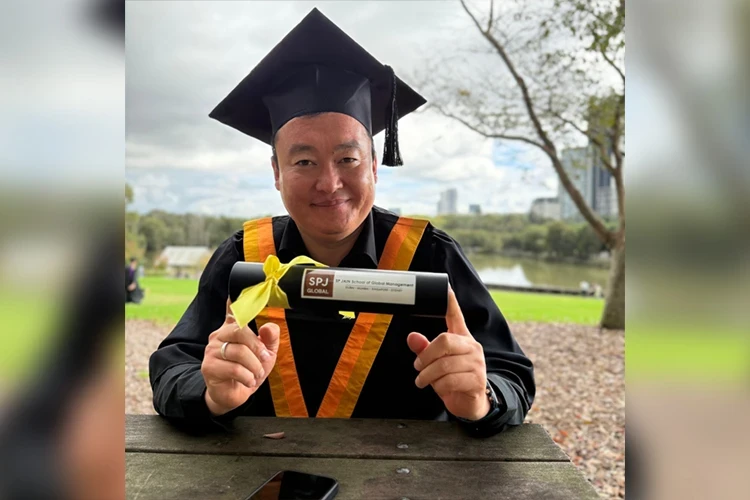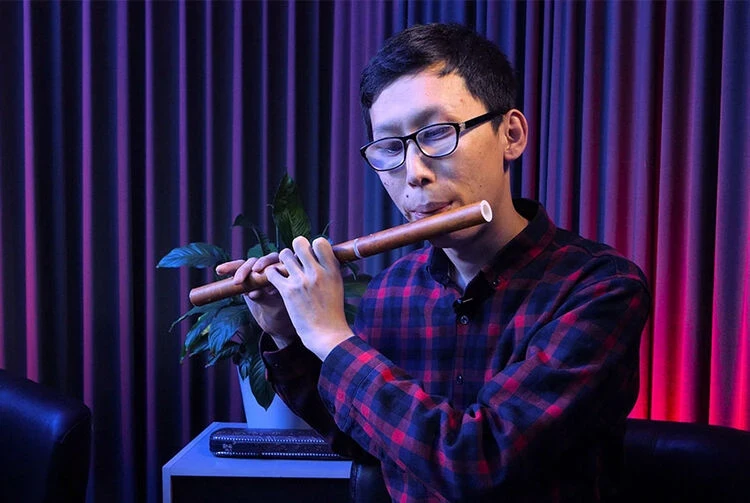
Buzurman Esenbekov, despite his vision difficulties, chose the path of a musician and is currently studying at the folklore department of the B. Beishenaliev Arts University. In this interview, he shares his experiences, challenges, and how music has changed his life.
The path to music: Buzurman's bold choice
After graduating from the boarding school for the visually impaired in Bishkek, Buzurman faced the choice of profession that many of his peers encountered.
For people with visual impairments, the options are often limited: many become teachers or massage therapists. Buzurman initially decided to become a music teacher and enrolled in a pedagogical university, following the usual route.
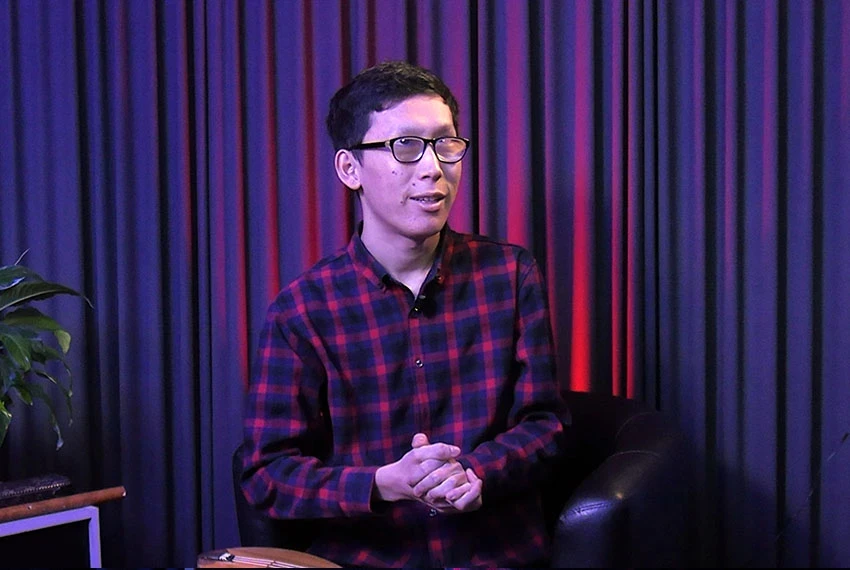
However, after studying for a year, he realized that it was not enough. “I understood that this was not quite my path. The desire to develop in music became stronger,” says Buzurman.
This decision was not easy. Leaving the university and starting over is a serious step. “It was scary, of course. But I knew that if I didn’t try now, I would regret it later,” he notes.
Changing fate: the project "Jurogumdo Music"
Buzurman became a student again and is now in his third year, mastering the folklore direction.
His interest in music arose during his studies at the boarding school, where he participated in the television project "Jurogumdo Music." Six students from the boarding school learned to play Kyrgyz national instruments, and Buzurman chose the komuz.
Although his grandfather was a talented komuz player, he had not shown interest in this instrument until participating in the project.
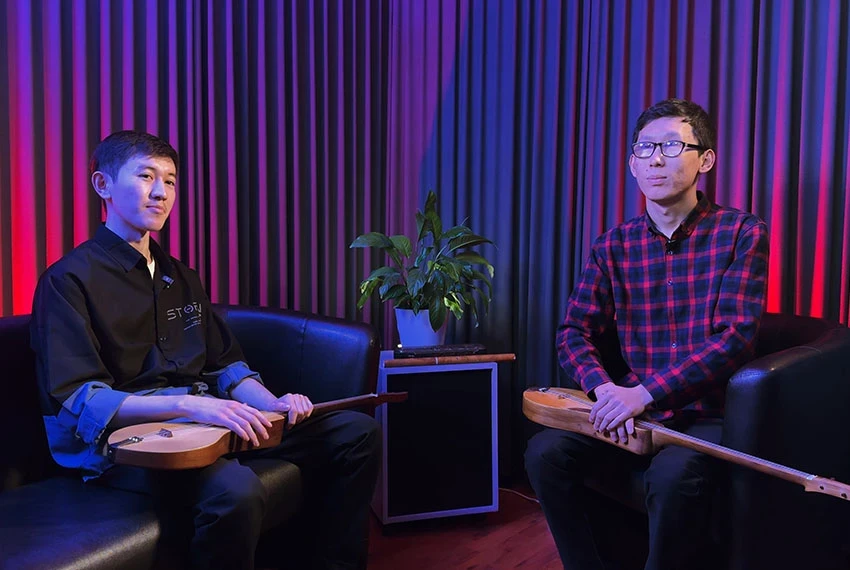
The project lasted three months, during which the participants intensively practiced traditional melodies and ultimately performed at a final concert. It was then that Buzurman began to seriously think about a future connected with music.
After the project ended, he continued his studies with the teacher Bakai Turatbek uulu. Music gradually ceased to be just a hobby and became an important part of his life. Buzurman began to delve into performance techniques and work on complex pieces.
Challenges of learning: working with notes with visual impairments
At the university, his mentor became the renowned komuz player Bek Alagushyev, who helped Buzurman adapt to the learning process. Due to his vision problems, he finds it difficult to work with regular sheet music, so the teacher began printing them in enlarged format. Even with +12 vision, the strain remains high.
“Sometimes I need several days to decipher one piece. What takes others a few hours takes me much longer. But I have gotten used to it,” shares Buzurman.
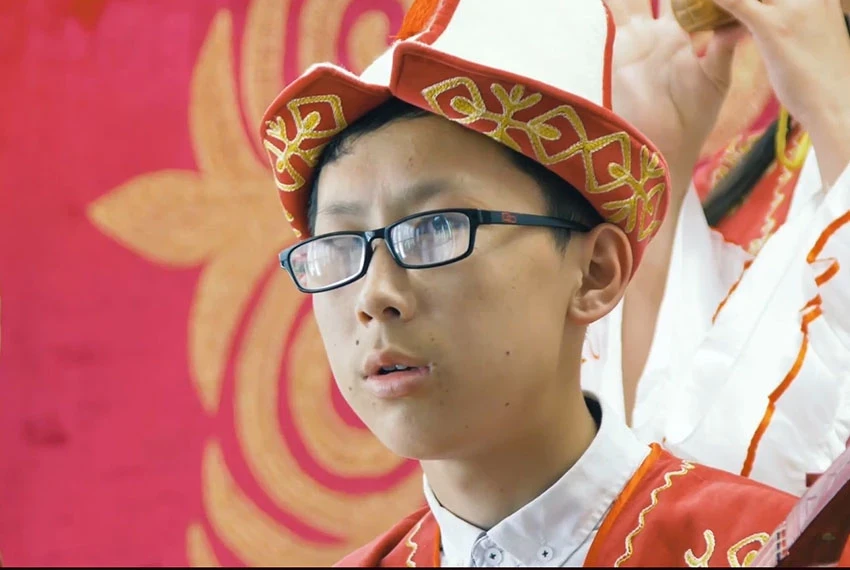
Despite the challenges, he strives to keep up with his classmates. His determination earns him respect among his peers. “When the desire to relax arises, just looking at him brings immediate motivation to continue,” says his friend and classmate Sanjar Ryspekov.
Music has changed him not only as a professional but also as a person. Previously, Buzurman was sensitive and touchy, but now he has become more disciplined, patient, and self-confident.
Returning to the boarding school: from student to mentor
Buzurman receives tremendous support from his family and friends, who have always believed in him and supported his musical aspirations.
It has been seven years since he participated in the project, and during this time, Buzurman has become convinced of the correctness of his choice.
He is currently doing an internship at the very boarding school where he studied. Together with a friend, he teaches children to play the komuz for free.
“Not long ago, I was learning myself, and now I can share my knowledge,” says Buzurman.
In the future, he dreams of mastering the komuz perfectly, creating a folklore ensemble with his classmates, and performing on big stages. He is inspired by the ensemble "Kambarakan," and hopes to reach a similar level.
Advice from Buzurman
- Don't be afraid to dream. If someone says "it's impossible," keep moving towards your goal.
- Develop every day. Even small steps lead to results if you persistently move towards your goal.
- Seek support. Mentors, friends, and family can help in difficult times.
- Don't compare yourself to others. Everyone has their own rhythm and capabilities.
- Look at difficulties as opportunities for growth. What seems like an obstacle actually makes you stronger and teaches you to value success.
“The main thing is not to stop and believe in yourself,” emphasizes Buzurman. “If you have a dream, go for it, no matter what.”