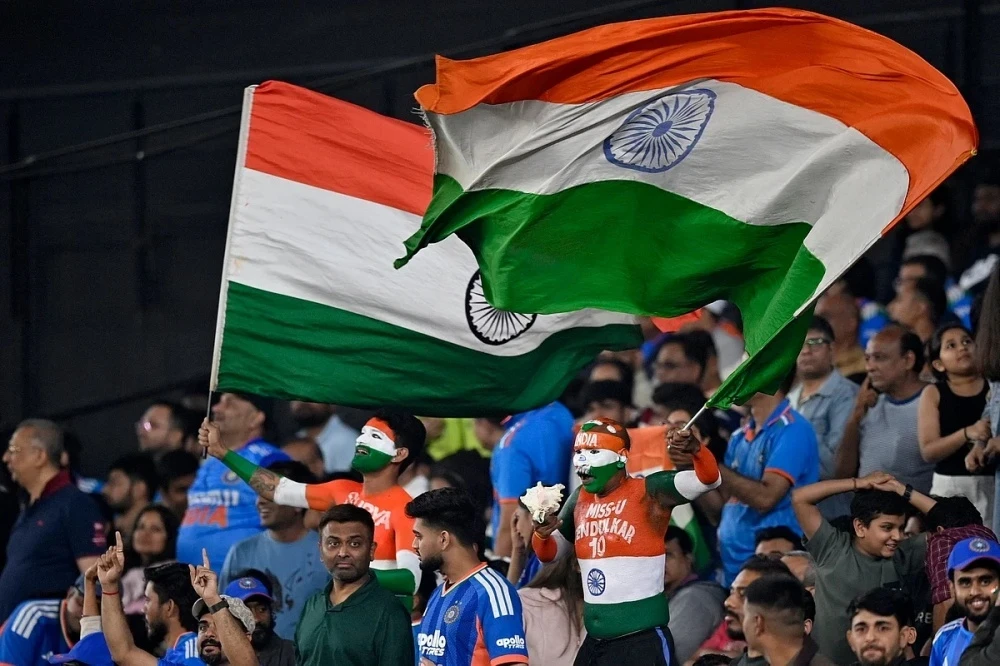
On a warm evening in November, over 130,000 fans gathered at the "Narendra Modi" stadium in Ahmedabad not for a concert, but for the final of the cricket world championship. This match became not just a sporting event, but a true celebration that encompassed hotels, cafes, highways, and conference rooms. This event symbolized a new confidence in the country, ready for the global stage and operating with a clear strategy.
Cricket remains the main driving force. According to the Board of Control for Cricket in India (BCCI), in the 2023-24 fiscal year, revenue reached a record 97.41 billion rupees, of which 57.61 billion rupees came from the Indian Premier League (IPL). Interest in the league goes beyond finances: the IPL 2024 season attracted around 446 million unique viewers, and the 2025 final became one of the most popular sports broadcasts in the country’s history with 169 million viewers.
However, India's sports economy is expanding beyond cricket fields. According to industry research, the sports industry in India is on track to grow at an annual rate of 12-14%, and by 2030, its volume could reach approximately $40 billion. This is linked to investments in infrastructure, media, technology, and mass development programs across various sports disciplines.
The sports ecosystem in India is no longer waiting for a breakthrough. It is actively shaping new economic centers and cultural exchanges throughout the country. This growth has become a reality visible in stadiums and arenas.
Take field hockey — the national sport that is regaining popularity. The Indian men's team, which won bronze medals at the Tokyo and Paris Olympics, has inspired the public and attracted corporate support. The Hockey India League (HIL), revived in a new format, is expected to attract international players and attention from global broadcasters, while tournaments in Bhubaneswar and Rourkela consistently draw full crowds.
Kabaddi has also become a bright example of success. The Pro Kabaddi League (PKL), founded in 2014, attracts about 200 million viewers each season, making it one of the most popular non-cricket leagues in the country, especially among residents of tier two and three cities.
Football is finding its audience through the Indian Super League (ISL), which attracts international players and coaches. Average match attendance is comparable to leading Asian leagues, and the television audience in recent seasons has exceeded 150 million viewers, confirming the growing interest in this sport.
Tennis is also gaining recognition: the return of ATP and WTA tournaments, such as the Chennai Open and Bengaluru Open, has established India as a significant location on the international tennis map. Although these competitions lag behind cricket in scale, their economic impact remains noticeable.
Badminton continues to gain popularity, and the India Open Super 750 tournament regularly attracts the world's top players and demonstrates high television ratings.
The situation in women's sports is also improving: from record television viewership of women's cricket to increasing sponsorship and attendance at leagues, it is becoming clear that sports in India are becoming more inclusive.
These changes align with the country's broader ambitions. The Indian Olympic Association, supported by the government, has approved India's bid to host the Commonwealth Games in 2030, which is expected to stimulate infrastructure upgrades and attract international participants, similar to the effect of the 2010 Commonwealth Games in New Delhi.
Cultural events also contribute to this growth. For example, Coldplay's Music of the Spheres concerts in Ahmedabad generated an economic impact of around 641 crore rupees, attracting over 220,000 spectators and increasing demand for hotels, restaurants, and transportation.
It is worth noting that this growth is not limited to megacities. In 2025, numerous large-scale concerts with audiences of over 5,000 people took place across the country, from Kochi to Guwahati.
Economists talk about the multiplicative effect: a major event not only sells tickets but also fills hotels, energizes transportation systems, boosts retail sales, and creates temporary jobs.
For the youth of India, this is of immense significance. A generation that once watched international events only on television can now experience them live in their cities, significantly contributing to their participation and ambitions.
In the future, the main challenges will be sustainability and scaling. India is not just hosting events — it is defining the rules.